Where Calm Essential Oil Blend Comes From: Sourcing, Extraction and Quality
A bottle of Calm Essential Oil Blend smells simple when you open it. Bright citrus first, then soft flowers, then a gentle, apple-like warmth. Behind that first impression sits a chain of decisions: which plant, which part of the plant, how the oil is taken from it, and how three separate oils are brought together. This deep dive follows that chain from field to bottle.
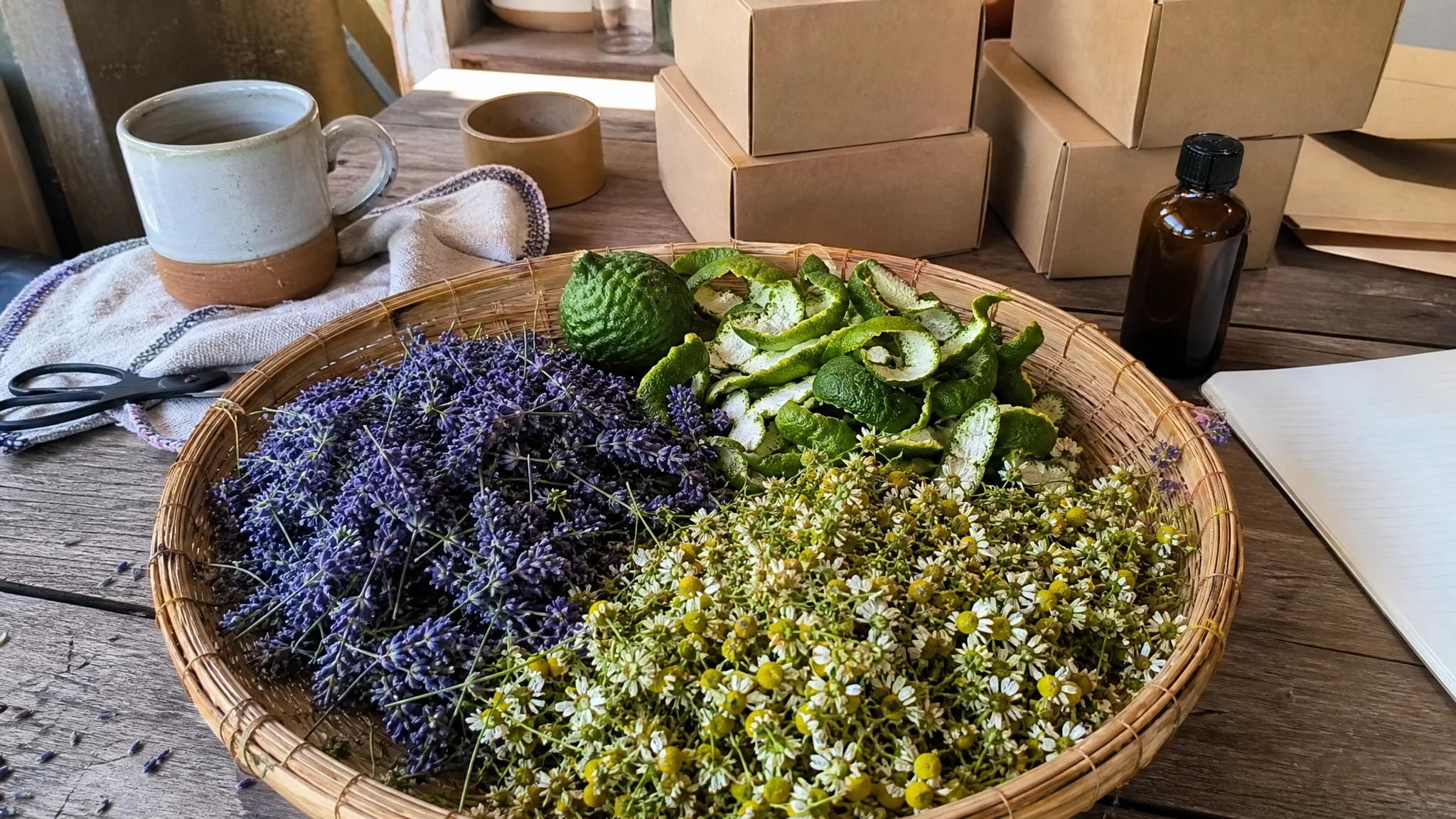
The blend combines three botanicals. Lavandula angustifolia (lavender), Citrus bergamia (bergamot) and Matricaria chamomilla (chamomile) are each processed on their own. They only meet at the blending stage. That detail matters, because each plant needs a different method to capture its aroma.
Three Plants, Three Parts, Two Methods
Essential oils are concentrated aromatic materials, and the part of the plant used shapes the final scent. The table below summarizes how each oil in this blend is made.
| Botanical | Plant part | Method | Aroma contribution |
|---|---|---|---|
| Lavandula angustifolia | Purple flower spikes | Steam distillation | Soft, floral, herbaceous |
| Citrus bergamia | Rind (peel) of the fruit | Cold pressing | Bright, citrusy opening |
| Matricaria chamomilla | Small white and yellow blooms | Steam distillation | Gentle, apple-like warmth |
Steam Distillation: Lavender and Chamomile
In steam distillation, steam passes through plant material and carries volatile aroma molecules with it. The vapor is then cooled and condensed, and the oil is separated from the water. Lavender flower spikes and chamomile blossoms are both handled this way in this blend.
Why does this matter for quality? Distillation is a controlled process. Time, temperature and the condition of the plant material all influence what ends up in the finished oil. Research on essential oils in general suggests that harvest timing, growing conditions and processing choices can all shift the balance of aroma compounds from one batch to the next. That natural variation is one reason small-batch production and batch records are worth asking about.
Lavandula angustifolia
This is the species commonly described as true lavender. Its flower spikes yield an oil with a soft floral note and an herbaceous edge. In this blend, lavender provides the middle of the scent, the part that settles in after the first citrus snap fades.
Matricaria chamomilla
Chamomile blooms are small and delicate, which is part of why the oil carries a quieter character. Its gentle, apple-like warmth tends to show up last. It rounds off the blend and keeps the overall scent from reading sharp.
Cold Pressing: Bergamot
Citrus bergamia follows a different path. Bergamot oil is cold-pressed from the rind of the fruit. Instead of using steam, the peel is mechanically pressed to release the oil held in tiny pockets in the rind. Because no steam is involved, the oil keeps the fresh, zesty character you would notice if you scratched a fresh peel.
This is why the blend opens with a bright citrus note. Of the three oils, bergamot is the one most associated with that first impression.
Blending in Small Batches
Once each oil is ready, the three are combined in careful proportions to create one consistent blend. The product is made in small batches. For a blend, consistency is the real challenge. Three natural ingredients that each vary slightly by crop and season need to be balanced so the finished scent reads the same bottle after bottle.
The result is a scent profile that most people describe as rounded and herbaceous rather than sharp or sweet. The sequence is predictable: bergamot opens, lavender settles in the middle, and chamomile finishes.
One note on grade. This blend is a combination of three oils and is not sold as a 100% single-source grade. If a brand's label does not say what is in the bottle and how it was made, that is worth questioning. Here, the botanical names, plant parts and methods are all stated openly.
Ready to try Calm Essential Oil Blend?
Sold in sizes from 0.5 oz to 16 oz, lab-tested and shipped fast.
Shop Calm Essential Oil BlendWhat Research Suggests About These Botanicals
Scientific interest in aromatic plants is broad, and it is worth reading it with care. Laboratory analysis of essential oils, usually done with a method called gas chromatography, is the standard way researchers describe what an oil contains. Published studies suggest that the aroma compounds in lavender, citrus peel oils and chamomile differ in both type and proportion, and that those proportions can vary with where and how a plant was grown.
Some research has explored how people respond to the scent of these plants in relaxed settings, and some participants report a pleasant, calming atmosphere. Results across studies are mixed, sample sizes are often small, and scent preference is personal. These observations are educational. They are not claims about what this product will do for you.
What the research does support is a practical point: composition is not fixed. Two bottles carrying the same botanical name can smell different. That is why sourcing details matter more than the label alone.
Quality Indicators to Look For
You do not need a laboratory to shop thoughtfully. These indicators are worth checking on any essential oil blend:
- Full botanical names. Lavandula angustifolia, Citrus bergamia and Matricaria chamomilla should appear, not just "lavender" or "citrus."
- Plant part and method. Flower spikes, rind and blossoms, with steam distillation or cold pressing named for each.
- Batch information. Small-batch production and a batch or lot number make it easier to ask questions.
- Dark glass packaging. Light and heat can dull aroma over time.
- Scent that matches the description. Expect a bright citrus opening, a floral middle and a soft, apple-like finish.
- Willingness to share analysis. A reputable seller can explain how a blend is made and tested.
You can browse the full range, including this blend, in our shop.
Safety Profile and Contraindications
Essential oils are highly concentrated, so safe handling comes first. These are general guidelines:
- Dilute before skin contact. Do not apply the blend directly to skin. Mix a small amount into an unscented carrier such as lotion, and follow a recognized dilution guide.
- Patch test first. Apply a small diluted amount to a small area of skin and wait 24 hours before wider use.
- Take care with sunlight. Cold-pressed citrus peel oils, bergamot among them, are traditionally handled with caution before sun exposure. Avoid applying a citrus-containing blend to skin you plan to expose to direct sun or tanning beds.
- Know your sensitivities. Chamomile belongs to the daisy family. If you react to plants in that family, skip this blend or ask a physician first.
- Do not ingest. This blend is for scenting only.
- Keep out of reach of children and pets. Some animals are especially sensitive to aromatic oils, so ventilate any room where you diffuse.
- Ask a professional if you are pregnant, nursing or taking medication. A qualified physician can advise on your situation. Essential oils should never replace professional guidance or anything your doctor has recommended.
Using the Blend Once You Have It
Many people keep this blend near a diffuser for everyday scenting of a living room or office. It pairs well with cedarwood, vanilla or sandalwood in a diffuser mix. Other ways to carry the fragrance:
- Stir a small amount into melted soap base or a batch of candle wax.
- Layer it into unscented body lotion, following dilution guidance.
- Mix it into a spray bottle of water and witch hazel for a simple room mist.
- Tuck a scented cotton pad inside a dresser drawer or gym bag. The fragrance can linger for weeks.
Keep the bottle capped, upright and away from heat and sunlight. Stored this way, the aroma stays closer to how it smelled on day one.
The Takeaway on Sourcing
A good Calm Essential Oil Blend should be able to tell you where it comes from. Lavender flower spikes and chamomile blooms are steam-distilled. Bergamot rind is cold-pressed. The three oils are then blended in small batches for a consistent, floral, citrusy and herbaceous scent. Knowing that sequence makes it easier to judge any blend you pick up.
Curious to smell the result yourself? Visit our shop or return to the home page to explore more.