 Benefits & Uses
Building a Bedroom Scent Routine: Using a Calming Blend in a Dresser Drawer or Room Mist Near Your Bed
Type "essential oils sleep" into a search bar and most of what comes back treats scent like a dosage: three drops here, five minutes there, as if the oil itself were acting on your brain the moment you inhale it. That's not really what's happening, and understanding the actual mechanism changes how you'd use a blend like this in a bedroom.
Table of Contents
Key Takeaways
- Smell signals travel directly to the amygdala and limbic system, skipping the thalamus that sight and sound pass through.
- A 2014 systematic review found self-reported sleep quality often improved, but the studies were small and the effect looked behavioral.
- A dresser drawer sachet gives a low-level, passive scent cue that lingers for weeks through pajamas and linens.
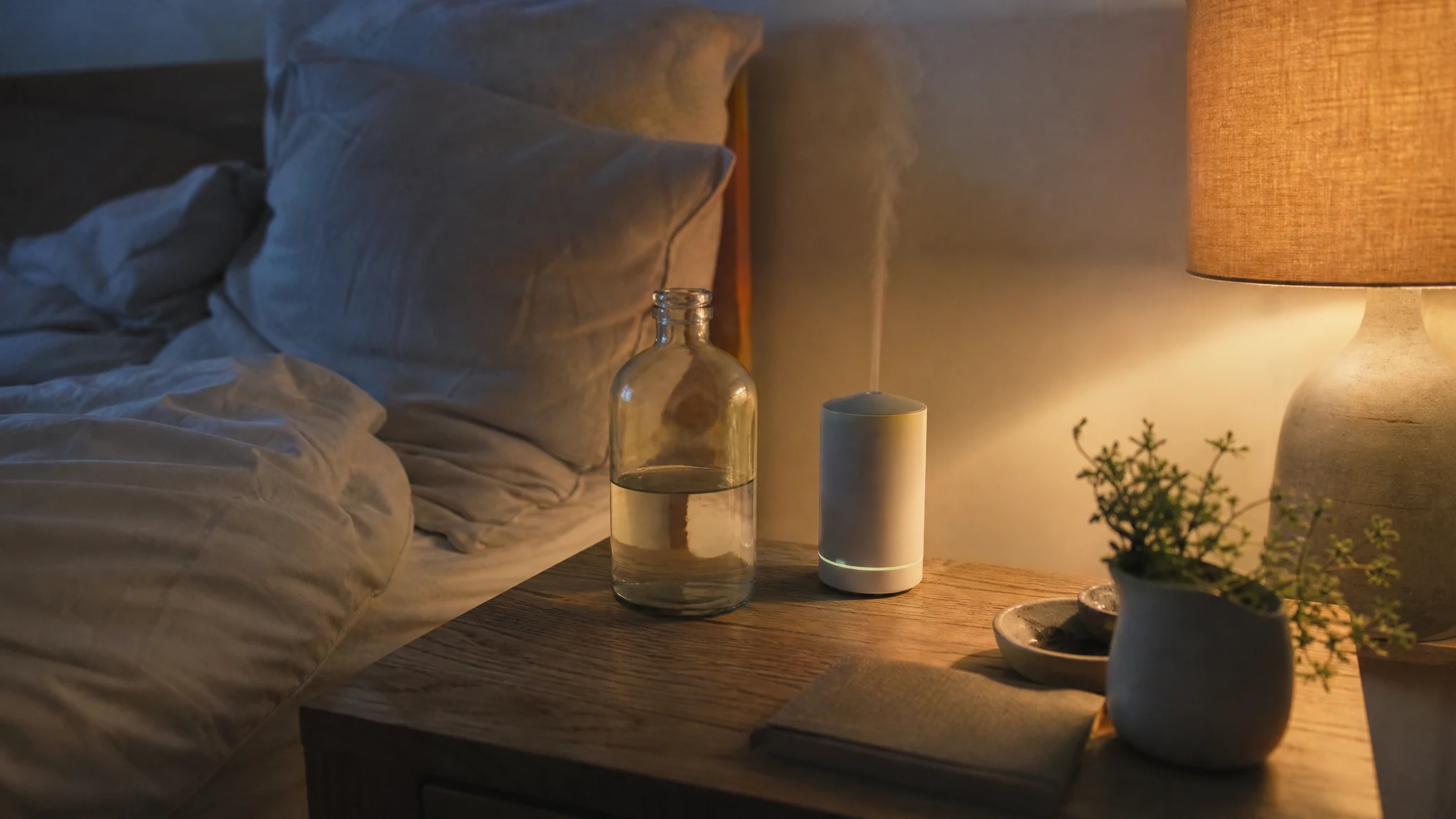
- A bedside room mist works as a deliberate pre-bed ritual signal, most useful when used at the same point each night.
- Cold-pressed bergamot contains furanocoumarins that can cause phototoxic skin reactions under UV light.
What a calming scent is actually doing
Smell is wired differently than your other senses. Signals from the olfactory bulb route directly into the amygdala and the limbic system, the brain regions tied to emotion and memory, without first passing through the thalamus the way sight and sound do (Soudry et al., "Olfactory System and Emotion: Common Substrates," European Annals of Otorhinolaryngology, Head and Neck Diseases, 2011). That direct line is why a smell can summon a memory or a mood almost instantly. It's also why a consistent scent, encountered at the same point in your evening, becomes a cue your brain learns to associate with winding down.
That's a very different claim than "this oil sedates you." The research on inhaled essential oils and sleep backs that up: a systematic review of the available studies found that self-reported sleep quality often improved with regular use, but the evidence was thin, the studies were small, and the effect looked more behavioral than pharmacological (Lillehei & Halcon, "A Systematic Review of the Effect of Inhaled Essential Oils on Sleep," Journal of Alternative and Complementary Medicine, 2014). The National Center for Complementary and Integrative Health is blunter about it, noting that rigorous evidence for aromatherapy's effects on sleep remains limited (NCCIH, "Aromatherapy," nccih.nih.gov). None of that means scent is useless here. It means the benefit comes from building a reliable sensory routine, not from inhaling something that works like a sleep aid.
Two different jobs: the drawer sachet and the room mist
Once you think of it as a cue instead of a dose, the dresser drawer and the bedside mist stop being interchangeable. They're doing two different things.
The drawer sachet: a slow, background cue
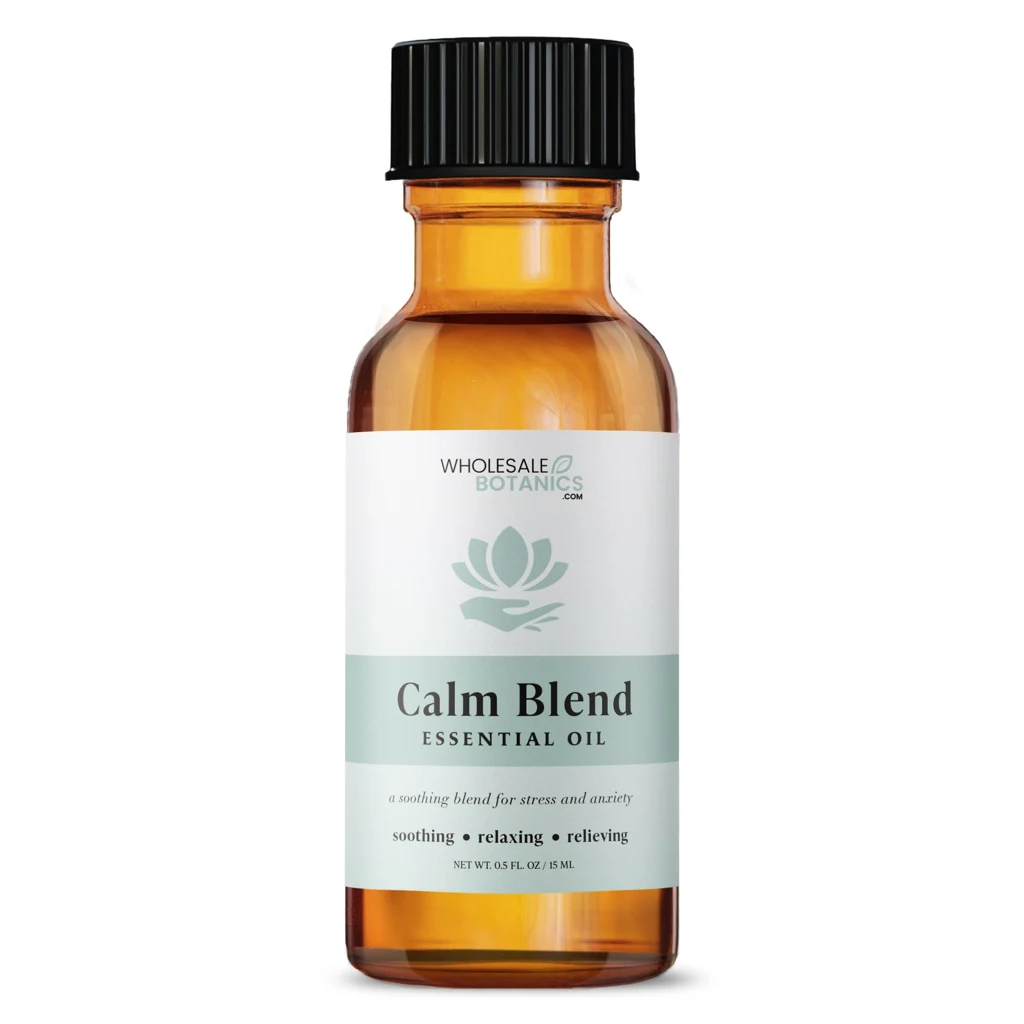
Tucking a cotton pad with a few drops of our Calm Essential Oil Blend into a dresser drawer gives you a low, passive scent that lingers for weeks rather than minutes. It's not strong enough to notice consciously most of the time, but it touches the pajamas and linens you reach for every night, which is exactly the kind of repeated, low-grade association that builds a routine cue over time rather than a single dramatic one.
The room mist: a deliberate, pre-bed signal
A simple mist, made by combining a small amount of the blend with witch hazel (which helps the oil disperse in water instead of floating on top) and water in a spray bottle, works more like a ritual marker. Spritzing it lightly over the air near your bed, or on the sheets before you turn them down, gives your brain a distinct, intentional signal: this is the moment the day is ending. That deliberateness is arguably more useful than the oil itself.
Ready to try Calm Essential Oil Blend?
Sold in sizes from 0.5 oz to 16 oz, lab-tested and shipped fast.
Shop Calm Essential Oil BlendPutting the two together as a routine
Pick one anchor, not both at first. If you're not naturally a ritual-builder, a drawer sachet asks nothing of you after the initial setup. If you like a more active wind-down, the mist gives you something to do with your hands at the same point every night. A few practical notes either way:
- Keep concentration low. A few drops on a cotton pad, or a few drops per ounce of water-and-witch-hazel mix, is plenty. Overloading a small bedroom with scent tends to make it harder to notice, not easier, since your nose adapts quickly to strong, constant smells.
- Do it at the same point each night. The cue matters more than the quantity. Spraying the pillow while you turn down the bed, or opening the same drawer for pajamas, gives the scent a consistent trigger to attach to.
- Give it weeks, not one night. The modest improvements seen in the sleep-and-aromatherapy literature showed up with sustained use, not a single exposure (Lillehei & Halcon, 2014).
- If you want more depth in the room generally, this blend's bergamot-lavender-chamomile profile pairs well with cedarwood, vanilla, or sandalwood in a diffuser elsewhere in the room, layered rather than stacked directly into the mist.
Where this doesn't help, and what to watch for
This is worth saying plainly: a calming blend is not a treatment for insomnia or a sleep disorder, and it shouldn't be used as a substitute for addressing one. If sleep trouble is persistent, a physician or a sleep medicine specialist is the right next step, not a different essential oil.
A couple of other things are worth knowing before you build this into a nightly habit. Cold-pressed bergamot oil contains furanocoumarins, including bergapten, which are known to cause phototoxic skin reactions in the presence of UV light; this matters far more for daytime topical use than for a bedtime mist, but it's a reason to avoid applying this blend to skin that will see direct sun afterward (Kaddu, Kerl & Wolf, "Accidental Bullous Phototoxic Reactions to Bergamot Aromatherapy Oil," Journal of the American Academy of Dermatology, 2001). If there are cats in the house, be mindful of essential oils in enclosed bedrooms generally, since cats process certain plant compounds differently than humans or dogs and are more sensitive to concentrated exposure (ASPCA, "Essential Oils," aspca.org). A sealed drawer sachet or a light mist is a far lower exposure than running a diffuser, but it's still worth keeping scented items out of a cat's direct reach. And if you're pregnant, nursing, or managing a fragrance sensitivity or migraines triggered by strong smells, check with your doctor before making any scented product part of a nightly routine, since the right threshold varies a lot from person to person.
None of that is a reason to skip this kind of routine. It just means the honest pitch is a modest one: a consistent, pleasant scent near your bed can become a genuine cue that your evening is winding down, and that's a real, useful thing, even if it isn't the chemical sedative the search results sometimes imply.
Frequently Asked Questions
How do I make a bedside room mist with this blend?
Combine a small amount of the blend with witch hazel and water in a spray bottle. The witch hazel helps the oil disperse in water instead of floating on top. Use only a few drops per ounce of the mixture, then spritz lightly over the air near your bed or on the sheets before turning them down.
How long does a dresser drawer sachet last?
A scented cotton pad in a dresser drawer gives a low, passive scent that lingers for weeks rather than minutes. A few drops of the blend are enough. It touches the pajamas and linens you reach for every night, building a repeated, low-grade association that works as a routine cue over time.
Should I start with the sachet or the mist?
Pick one anchor first rather than starting with both. A drawer sachet asks nothing of you after the initial setup, which suits people who aren't natural ritual-builders. The mist suits those who like a more active wind-down, giving you something to do with your hands at the same point every night.
How long before I notice a difference from a scent routine?
Give it weeks, not one night. The modest improvements in the research on inhaled oils and sleep appeared with sustained use rather than a single exposure. Using the scent at the same point each night matters more than quantity, because the consistent cue is what your brain learns to associate with winding down.
Is it a good idea to use essential oils in a bedroom with cats?
Use extra caution if cats are in the house. Cats process certain plant compounds differently than humans or dogs and are more sensitive to concentrated exposure, so be mindful of essential oils in enclosed bedrooms generally. Keeping the concentration low, as the article recommends, is also sensible.
When should I talk to a doctor about my sleep?
If sleep trouble is persistent, see a physician or a sleep medicine specialist. A calming blend is a sensory routine, not a substitute for addressing a sleep disorder. The article notes the research evidence is thin and the effect looks behavioral rather than pharmacological, so scent works best as a wind-down cue.