 Benefits & Uses
What Aromatherapy Can Realistically Offer: Scent Enjoyment, Routine and Mood-Setting Without Medical Claims
Most people reach for a diffuser the way they'd reach for a supplement bottle, expecting the thing inside to go to work on a problem. That's a reasonable instinct to bring to a lot of products. It's the wrong instinct to bring to a bottle of essential oil, and understanding why actually makes the oil more useful, not less.
Table of Contents
Key Takeaways
- Smell signals connect directly to the amygdala and hippocampus, skipping the thalamus relay that other senses pass through.
- A scent can bring up a mood or memory before you consciously recognize what you're smelling.
- FDA rules separate cosmetic scent claims from drug claims about the body's structure, function, or specific health conditions.
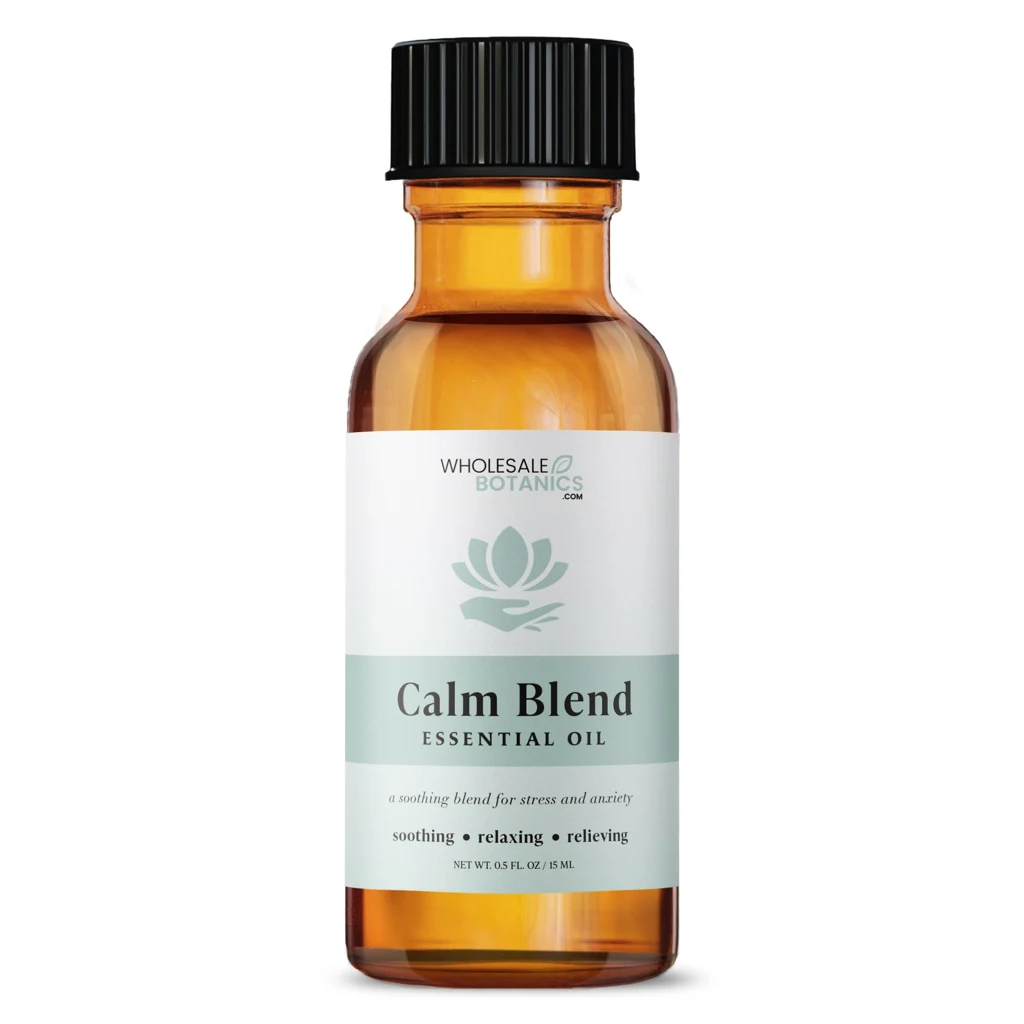
- Calm Blend combines steam-distilled lavender and chamomile with cold-pressed bergamot oil, made in small batches.
- Bergamot oil contains bergapten, which can make skin more reactive to UV light after topical contact.
Why a smell can shift your mood before you've even named it
There's a real anatomical reason scent feels so immediate compared to, say, a song or a photo. Sensory information from your eyes and ears gets routed through the thalamus, a kind of relay station, before it reaches the parts of the brain that assign meaning and emotion to it. Smell skips that stop. Signals from the olfactory bulb connect directly into the amygdala and hippocampus, the structures tied to emotion and memory (Soudry et al., "Olfactory system and emotion: common substrates," European Annals of Otorhinolaryngology, Head and Neck Diseases, 2011). That's the whole trick. A smell doesn't have to be decoded first. It lands on the emotional centers of your brain almost as fast as it lands in your nose, which is why a specific scent can pull up a mood, or a memory, before you consciously recognize what you're smelling (Herz, "The Role of Odor-Evoked Memory in Psychological and Physiological Health," Brain Sciences, 2016).
That's a genuinely useful mechanism. It's also the entire explanation for what aromatherapy can do. It isn't evidence that an oil is acting on a condition in your body. It's evidence that scent has a shortcut into mood and memory, and that shortcut is worth using on purpose.
Where a lot of marketing overreaches
Here's the distinction worth being honest about: a fragrance product can legally and legitimately claim to affect how a room or a person smells. The moment a claim suggests it affects the structure or function of the body, or addresses a specific health condition, it crosses from cosmetic into drug territory under FDA rules, which require a different kind of evidence entirely (FDA, "Is It a Cosmetic, a Drug, or Both? (Or Is It Soap?)" fda.gov). A lot of essential oil marketing blurs that line on purpose, because "smells nice and might lift your mood" doesn't sell as well as "fixes your stress." We'd rather be plain about it: this is a scent product. A good one, with a real mechanism behind why scent matters, but a scent product all the same.
Ready to try Calm Essential Oil Blend?
Sold in sizes from 0.5 oz to 16 oz, lab-tested and shipped fast.
Shop Calm Essential Oil BlendWhat that looks like day to day
Once you stop expecting an oil to do something and start using it to set a scene, the practical uses get a lot clearer. Our Calm Essential Oil Blend is a combination of steam-distilled lavender (Lavandula angustifolia), steam-distilled chamomile (Matricaria chamomilla), and cold-pressed bergamot peel oil (Citrus bergamia), each processed on its own before the three are combined in small batches. It opens with the bright snap of bergamot, settles into lavender's soft floral note, and finishes on chamomile's gentle, apple-like warmth, reading as rounded and herbaceous rather than sharp or sweet.
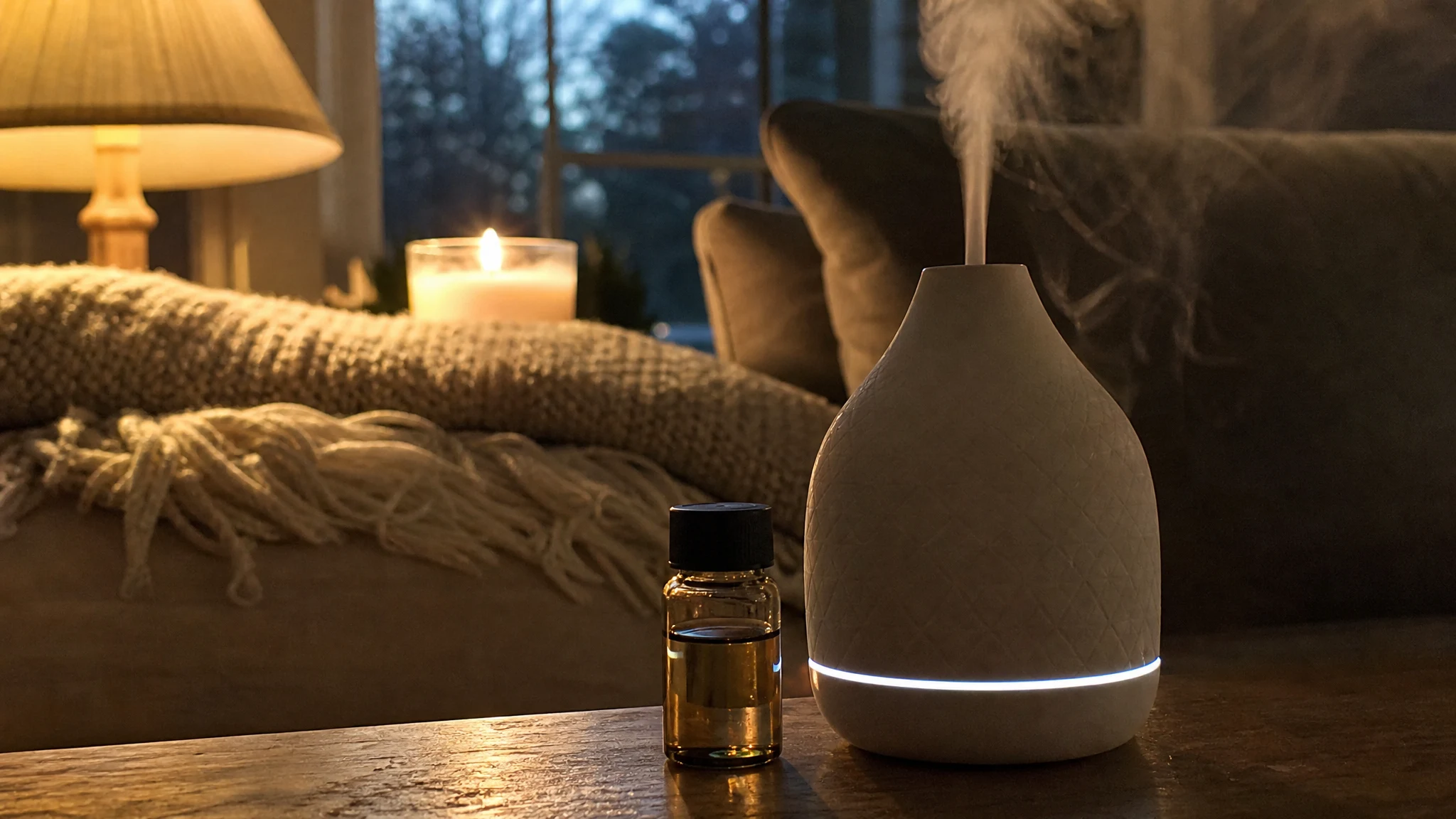
That profile works well in a diffuser for everyday scenting of a living room or office, and it layers nicely with cedarwood, vanilla, or sandalwood if you want to build a more complex diffuser blend. Beyond the diffuser, stirring a small amount into melted soap base or candle wax carries the scent into something you'll use for weeks. A cotton pad tucked into a dresser drawer or gym bag does the same job passively. Added to unscented lotion, or to a spray bottle of water and witch hazel, it becomes a simple room mist.
Building a ritual, not chasing an effect
Given how directly scent ties into the brain's emotional circuitry, pairing a specific scent with a specific moment, the same blend every time you wind down for the evening, say, is a reasonable way to build an association over weeks. That's a learned connection you're creating on purpose, not the oil producing a biological outcome on its own. The distinction matters because it changes what you should expect: consistency and repetition do the work here, not concentration or dose.
When this isn't the right fit
If you're dealing with ongoing anxiety, depression, or sleep problems that are actually interfering with your life, that calls for a licensed mental health provider or physician, not a diffuser. Scent can be part of a calming routine; it isn't a substitute for care from someone trained to evaluate what's actually going on.
A few other things worth knowing before you dive in. People who are pregnant or nursing, have asthma, or know they're sensitive to fragrance should check with a doctor before making diffuser use a daily habit, since essential oils are concentrated and everyone's tolerance differs. Keep diffusers out of small, enclosed spaces shared with infants or pets, and don't apply this blend to skin undiluted.
There's also a specific caution worth naming because it applies directly to this blend: bergamot oil is cold-pressed from citrus peel, which means it carries furocoumarins, including a compound called bergapten, that can make skin more reactive to UV light after topical contact (Tisserand & Young, Essential Oil Safety, 2nd ed., 2014). That's exactly why industry safety standards cap how much bergapten-containing bergamot oil can go into leave-on skin products (International Fragrance Association, Standard on Furocoumarins). If you want to use this blend on skin rather than just in the air, dilute it well, skip sun exposure for a while afterward, and run anything beyond occasional casual use past a dermatologist first.
What it's actually worth
None of this makes aromatherapy less interesting, it just puts the value in the right place. A blend like this is good at exactly one thing: changing how a room or a moment feels, instantly and reliably, because of how directly scent wires into emotion and memory. Used that way, as atmosphere and ritual rather than as medicine, it does something genuinely worth having. Used as a stand-in for actual care, it will let you down, because that was never the job it was built for.
Frequently Asked Questions
Why does scent affect mood so quickly?
Scent signals skip the thalamus relay and connect directly to the amygdala and hippocampus, the structures tied to emotion and memory. Because a smell doesn't have to be decoded first, it can bring up a mood or memory before you consciously recognize what you're smelling.
Can I use the Calm Essential Oil Blend on my skin?
Only diluted, and with caution. Never apply it undiluted. Bergamot oil is cold-pressed from citrus peel and carries bergapten, which can make skin more reactive to UV light. If you use it on skin, dilute it well, avoid sun exposure afterward, and check anything beyond occasional use with a dermatologist.
How can I use the blend around the home?
Use it in a diffuser for everyday scenting of a living room or office. You can also stir a small amount into melted soap base or candle wax, tuck a scented cotton pad into a drawer or gym bag, or add it to unscented lotion or a water-and-witch-hazel room mist.
What does the Calm Essential Oil Blend smell like?
It smells rounded and herbaceous rather than sharp or sweet. It opens with bright bergamot citrus, settles into lavender's soft floral note, and finishes with chamomile's gentle, apple-like warmth. It also layers well with cedarwood, vanilla, or sandalwood in a diffuser blend.
Who should check with a doctor before using a diffuser daily?
People who are pregnant or nursing, have asthma, or know they're sensitive to fragrance should check with a doctor first. Essential oils are concentrated, and tolerance differs from person to person. Keep diffusers out of small, enclosed spaces shared with infants or pets.
When should I see a professional instead of relying on a diffuser?
See a licensed mental health provider or physician if mood or sleep problems are interfering with your life. Scent can be part of a calming routine, but it isn't a substitute for care from someone trained to evaluate what's actually going on.