 Benefits & Uses
Five Low-Effort Ways to Scent Your Evening Wind-Down: Diffuser, Room Mist, Scented Cotton Pad and More
Before you buy another gadget or follow another ten-step routine, ask one question: where does your evening actually happen? Some people end the day on the couch. Some end it at a desk with the laptop finally closed, or in a bedroom that doubles as a laundry-folding station. The best way to scent a wind-down is the one that puts the aroma where you already are, with no extra setup. That matters more than which method is fanciest.
Table of Contents
Key Takeaways
- Scent works best as a consistent cue, so pick one aroma and keep it in your evening ritual.
- Use less than you think: olfactory adaptation makes a strong-smelling room seem unscented within about twenty minutes.
- Five low-effort methods include a diffuser, room mist, scented cotton pad, diluted body lotion, and simply opening the bottle.
- Dilute before skin contact and patch-test, since cold-pressed bergamot oil can make skin more reactive to sunlight.
- Pets, pregnancy, asthma, skin conditions, and small children call for caution, vet or doctor advice, or skipping these methods.
Scent works best as a signal, so keep it the same
Here is the view we hold about aromas in a routine. We don't think of them as something you apply to get a result. We think of them as a cue. If the same lavender, bergamot and chamomile scent is in the room when you put your phone down and dim the lamps, your nose starts to link the two. Over a few weeks the smell becomes part of the ritual. We make no claims about what any oil does to your body or your sleep. The ritual is the part that is yours to build, and the aroma is a pleasant way to mark it.
That points to a rule we'd give anyone: pick one scent and keep it. Swapping a new oil in every few nights makes it harder for any of them to become a cue.
It also points to a second rule: use less than you think you need. Your sense of smell adapts to a steady odor, so a room that smells strong at minute one can seem unscented by minute twenty. This is called olfactory adaptation, and it is well documented in sensory science. It is also why a heavy hand doesn't work. The person who walks into the room smells it clearly, and you, sitting in it, soon don't. A faint scent that you notice when you first sit down is the goal.
Five ways, matched to where you are
1. The diffuser, for a room you stay in
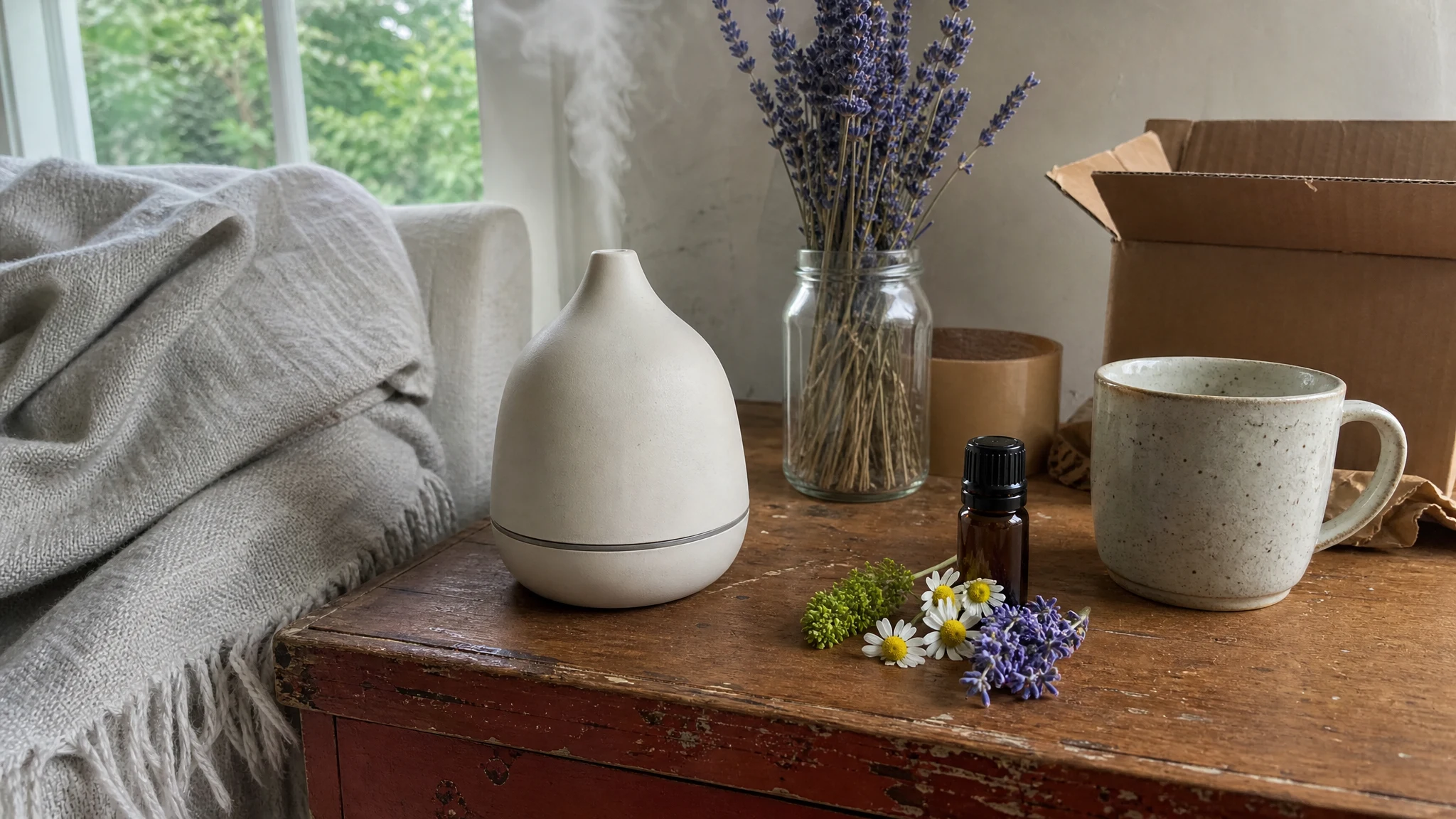
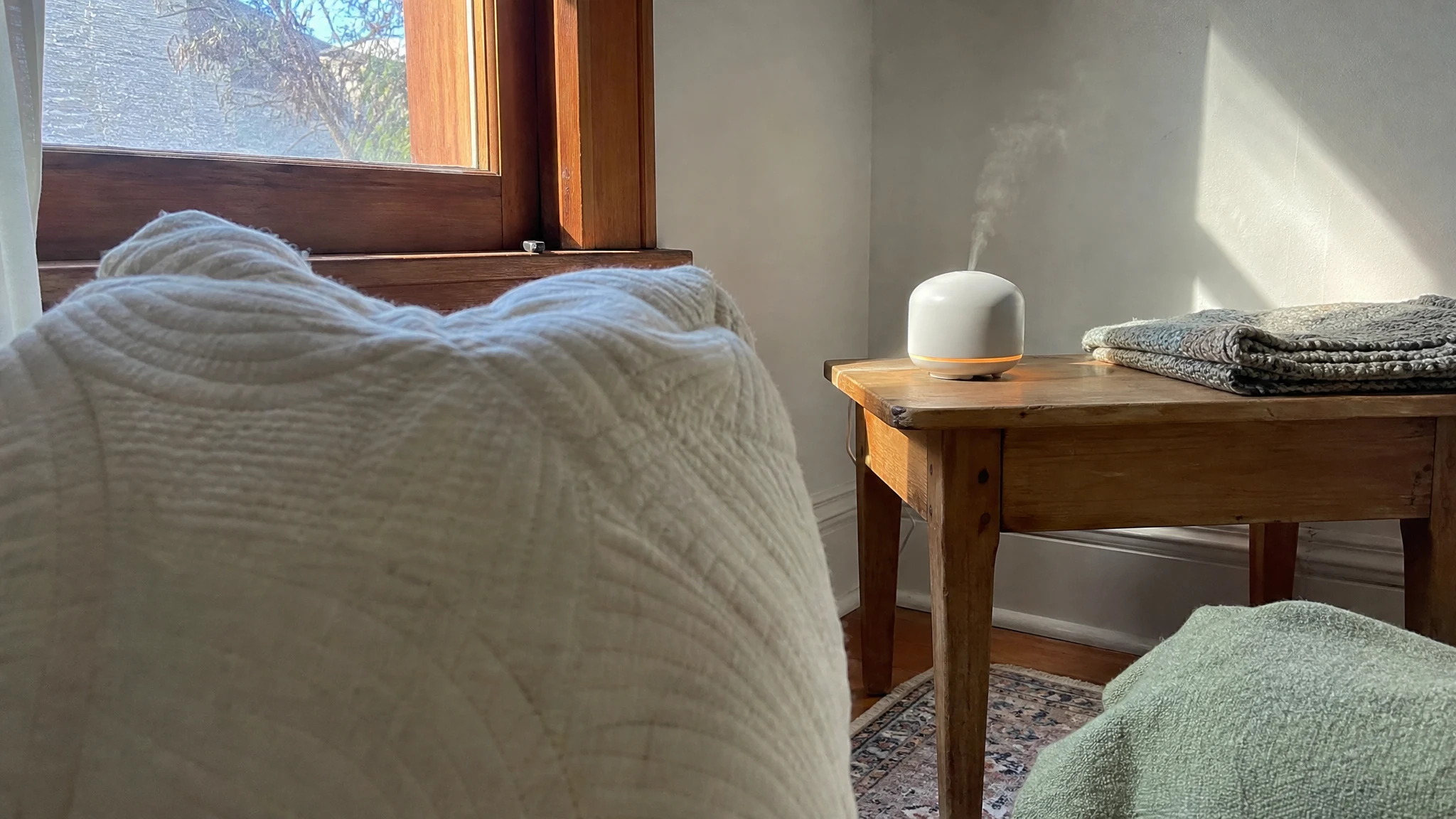
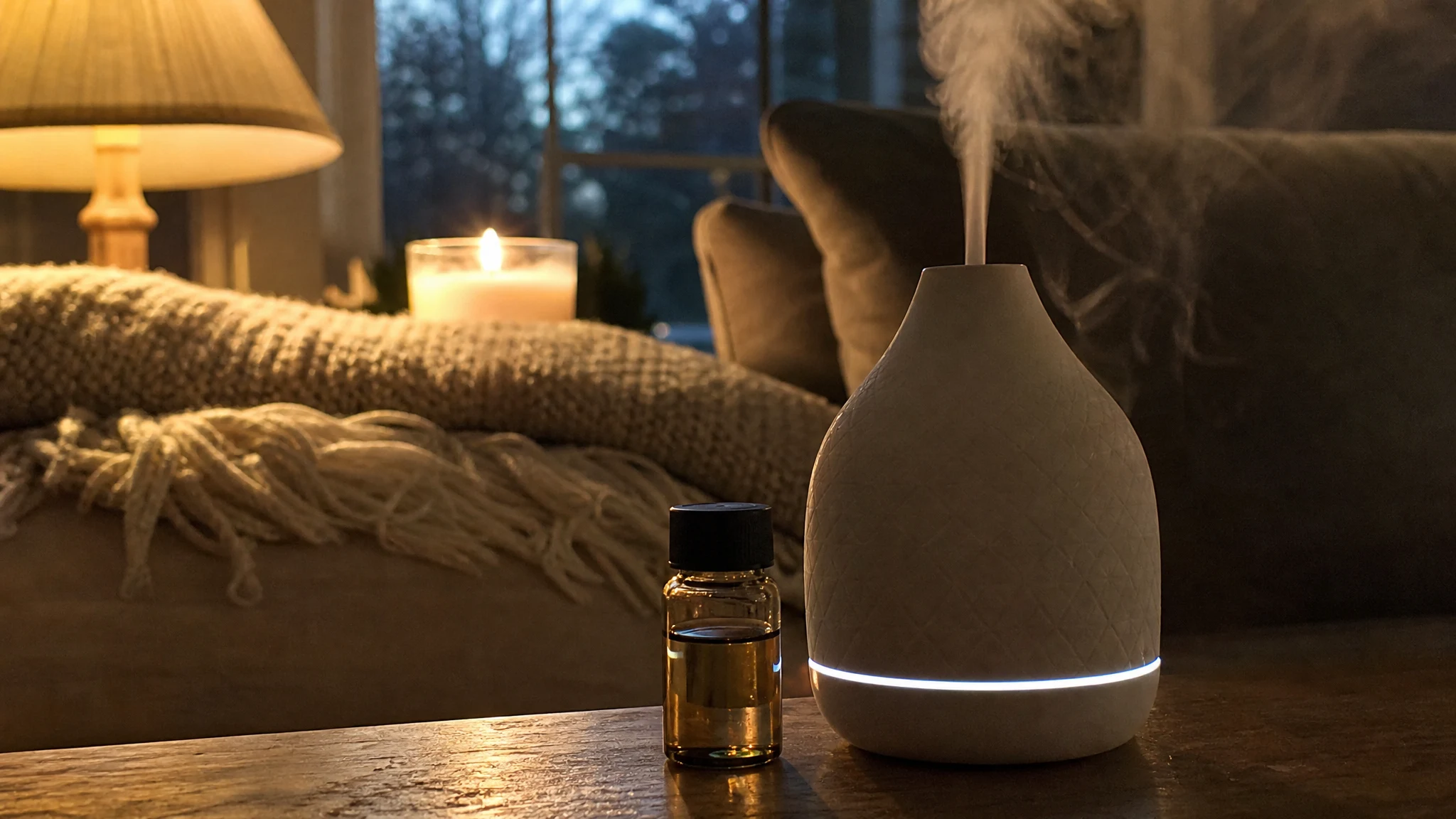
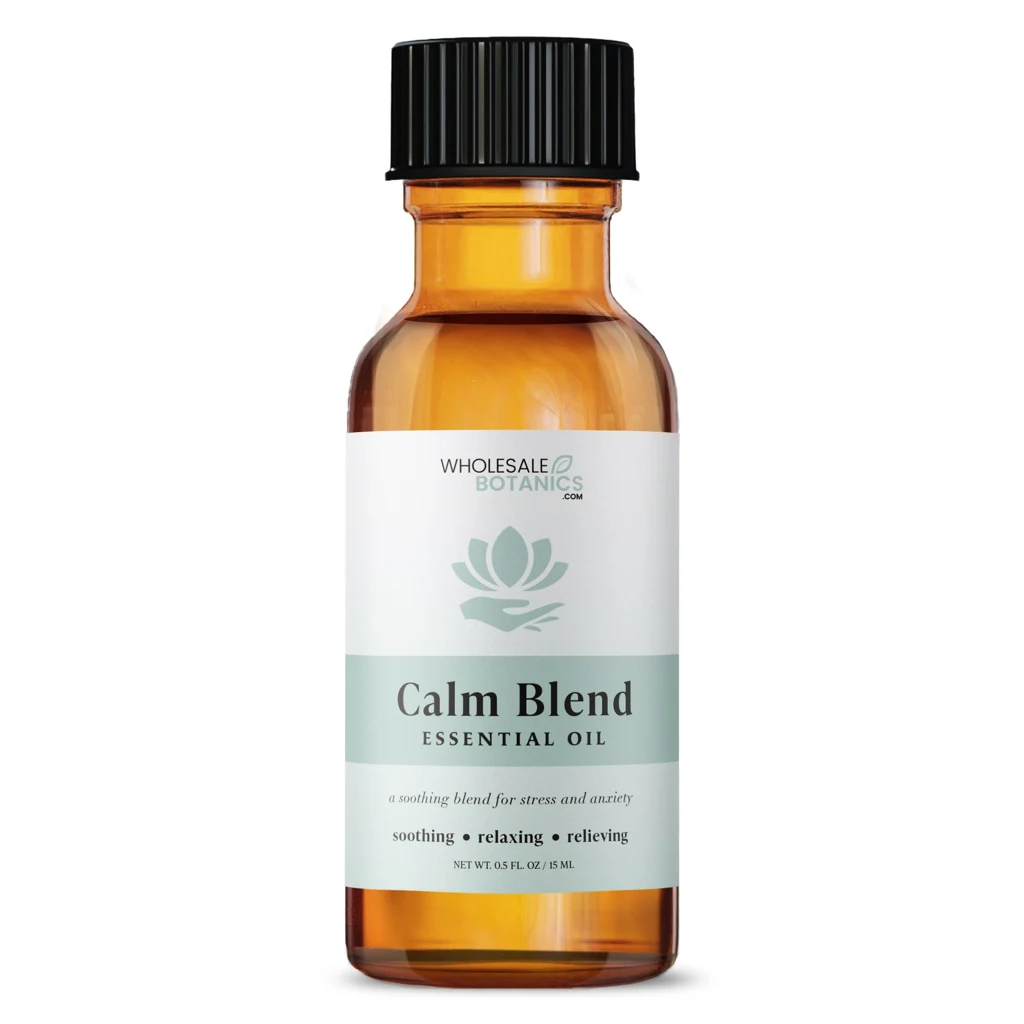
If your evening is spent mostly in one room, a diffuser is the least fuss. Add a few drops of our Calm Essential Oil Blend to the water, start it when you sit down, and let it run for a limited stretch. You don't need it on all night. Because of adaptation, an hour or so is plenty. If you like a warmer, woodier feel, the blend pairs well with cedarwood, vanilla or sandalwood.
2. A room mist, for a quick reset
A spray bottle of water and witch hazel with a few drops of the blend works for freshening a room before you settle in. Oil and water don't mix, so shake the bottle before every spray. Spray into the air, not onto a favorite sofa or a wood finish. Oils can mark fabrics and finishes, so test a hidden spot first if you want to use it near either. Make small batches so you aren't storing a bottle for months.
3. A scented cotton pad, for small spaces
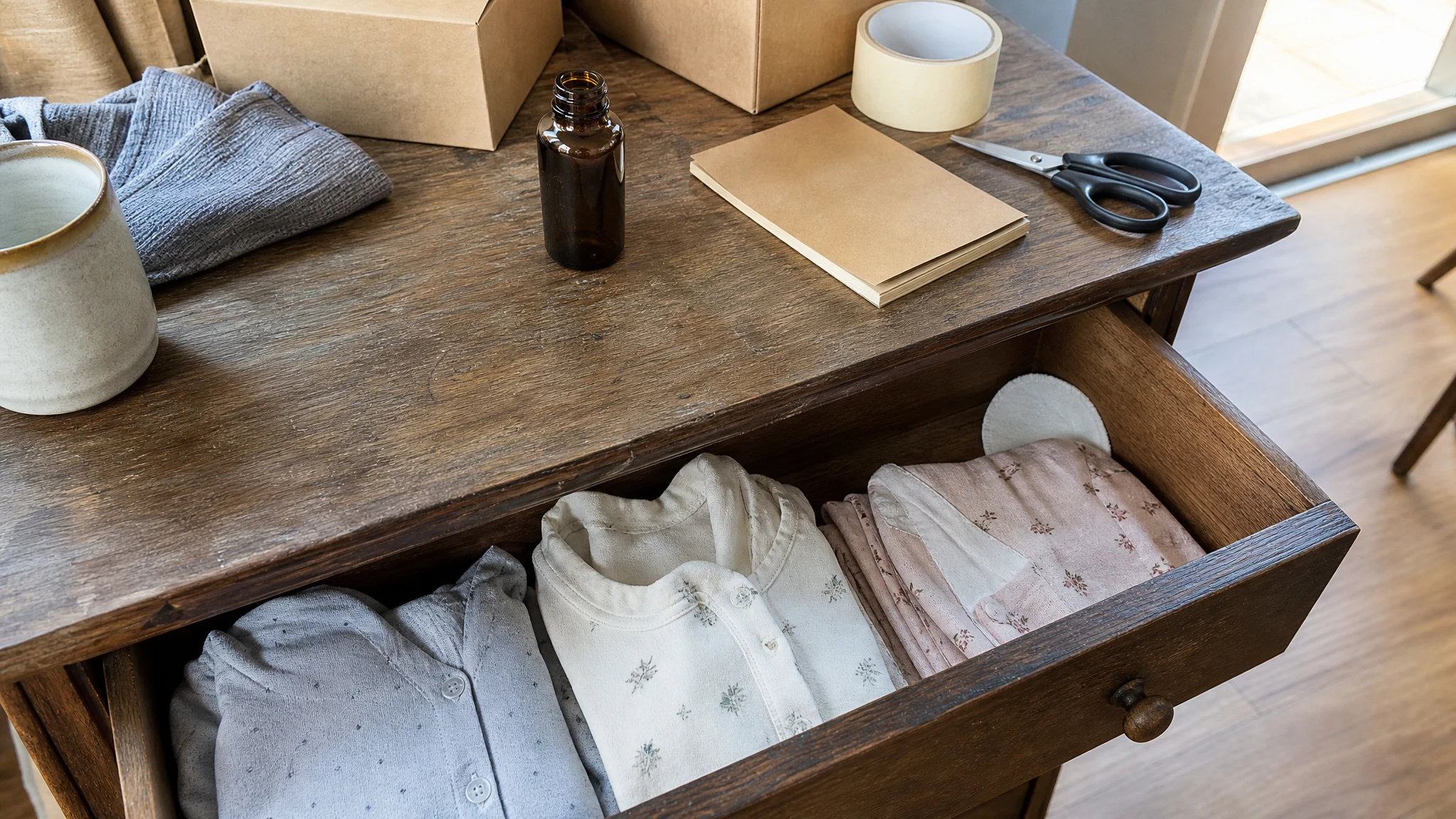
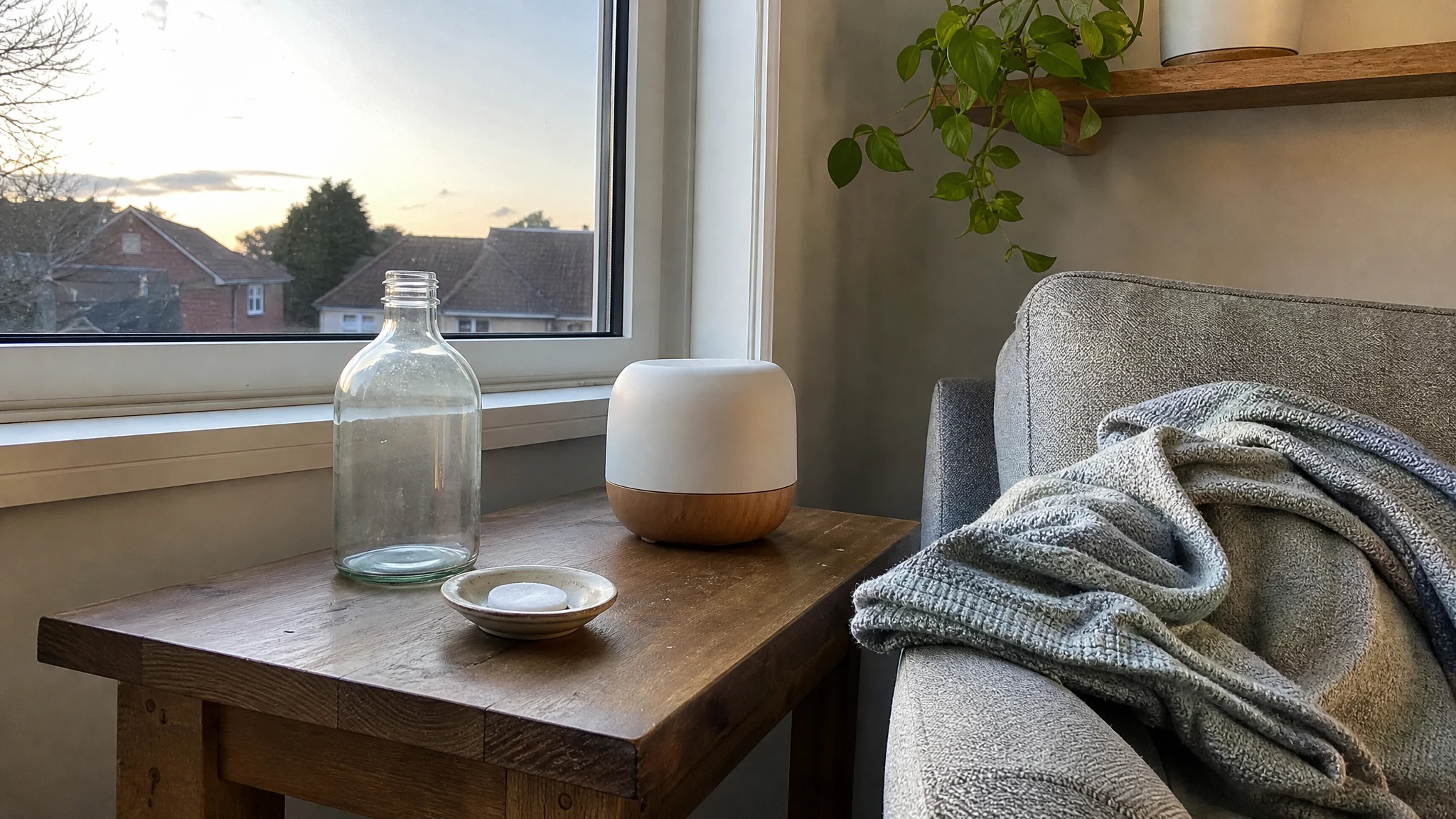
This is our favorite for the lowest-effort option. Put a drop or two on a cotton pad and tuck it in a dresser drawer, a closet shelf or a gym bag. The scent can linger there for weeks. Keep the pad off the clothing itself, in a small dish or a corner of the drawer, because undiluted oil can leave a mark on fabric.
4. Unscented body lotion, for your own routine
You can stir a small amount of the blend into unscented body lotion. This is the one method where the oil touches your skin, so it is the one we ask you to take seriously. We recommend diluting before skin contact. Mix a little at a time, test it on a small patch of skin first, and skip it if you notice any irritation. Bergamot deserves a specific mention. Cold-pressed citrus peel oils can make skin more reactive to sunlight, and the fragrance industry's standards body, IFRA, sets limits on bergamot oil in products applied to skin (IFRA Standards Library). Our blend contains cold-pressed bergamot peel oil, so we'd keep it to evening use on areas that stay covered, or off skin entirely.
5. Just open the bottle, for when you have 30 seconds
This isn't a product trick, only an honest option. Unscrew the cap and take a slow breath from a short distance. The blend opens with the bright snap of bergamot, settles into lavender, and finishes with a warm, apple-like chamomile note. That arc is worth noticing on its own, and it costs nothing beyond the bottle.
Ready to try Calm Essential Oil Blend?
Sold in sizes from 0.5 oz to 16 oz, lab-tested and shipped fast.
Shop Calm Essential Oil BlendWhen we'd suggest a different approach
A few people should adjust or skip these methods:
- Pets. Cats in particular process aromatic compounds differently from people, and birds have sensitive respiratory systems. If you share your home with them, ask your veterinarian before diffusing, and make sure they can leave the room.
- Pregnancy, asthma, or any respiratory or skin condition. Check with your doctor or pharmacist first. Scented air can bother some sensitive airways, regardless of how pleasant it smells.
- Small children. Keep bottles out of reach and ask a pediatrician before diffusing in a child's room.
- Anyone who dislikes the smell. A scent you don't enjoy won't become a comforting cue, so there is no benefit in persisting.
If you see headaches, a scratchy throat or skin redness, stop and ventilate the room. Keep the oil closed and stored away from heat and light. We don't suggest candle-making or soap-making as part of an easy routine, though the blend can be added to melted soap base or candle wax if you enjoy those crafts. Both take more effort and care than the five above.
How to tell it's working
Give it a week or two in the same spot at the same point in your evening, and then ask three plain questions. Do you notice the scent when you first sit down, then lose track of it? That's what you want. Do you ever catch yourself reaching for the smell? That means the cue is forming. Is anyone in the house bothered by it? If so, use less or move it to the drawer or the cotton pad.
If none of the five suits your evenings, that is fine. Match the method to your habits, rather than the other way around. If you'd like more ideas, our other articles cover blending and everyday use, and the Calm Essential Oil Blend is the one this piece is about.
Frequently Asked Questions
How long should I run a diffuser in the evening?
An hour or so is plenty, and you don't need to run it all night. Because your sense of smell adapts to steady odors, a limited stretch works well. Start it when you sit down, and use only a few drops of the blend in the water.
Why does my room stop smelling of the scent after a while?
This is olfactory adaptation, a well-documented effect in sensory science where your nose adjusts to a steady odor. A room that smells strong at first can seem unscented within about twenty minutes. That's why a faint scent noticed when you first sit down is the goal.
How do I make a simple room mist with the blend?
Add a few drops of the blend to a spray bottle of water and witch hazel. Oil and water don't mix, so shake before every spray. Spray into the air rather than onto sofas or wood finishes, and make small batches instead of storing a bottle for months.
Is it safe to put the blend in body lotion?
Only with care, since this is the one method where oil touches your skin. Stir a small amount into unscented lotion, test on a small patch first, and skip it if irritation appears. Bergamot is cold-pressed and can increase skin's sunlight reactivity, so use it in the evening on covered areas.
Who should avoid diffusing the blend or ask a professional first?
Several groups should adjust or skip these methods. Cats and birds are sensitive, so ask your veterinarian first. People who are pregnant or have asthma or skin conditions should check with a doctor or pharmacist. Ask a pediatrician before diffusing in a child's room.
How can I tell if my scent routine is working?
Give it a week or two in the same spot at the same point in your evening. Signs it's working include noticing the scent when you first sit down and then losing track of it, and catching yourself reaching for the smell, which means the cue is forming.