 Buying Guides
Choosing a Bedtime Scent: Comparing Lavender, Chamomile and Bergamot Aromas by Personal Preference
Walk into almost any search for the best oils for sleep and you'll land on the same three names, usually in the same order: lavender, chamomile, bergamot. What those lists rarely mention is that the three smell nothing alike, and the one a roundup crowns "best" might be the one you reach past every night because you don't actually like it.
Table of Contents
Key Takeaways
- A 2009 review found expectations and personal associations shape scent response as much as, or more than, chemistry.
- A 2013 review found inhaled lavender changed EEG activity and self-reported mood under lab conditions.
- Bergamot is cold-pressed from citrus peel, so it smells bright and citrusy, unlike lavender or chamomile.
- Cold-pressed bergamot contains bergapten, which makes skin more reactive to UV light, so avoid applying it before sun exposure.
- Chamomile belongs to the same family as ragweed, so people with ragweed or daisy allergies can react to it.
That's the part worth sorting out before you buy anything. Not which oil has the most studies attached to its name, but which one you'd choose to have filling a room while the evening winds down.
Why there's no single "best" sleep scent
Most sleep-oil content treats lavender, chamomile, and bergamot as interchangeable entries on a ranked list, as though chemistry alone decides the outcome. Smell research doesn't back that up. Rachel Herz's 2009 review in the International Journal of Neuroscience, "Aromatherapy Facts and Fictions," found that a person's expectations and personal associations with a scent shape their response to it as much as, or more than, the scent's chemical makeup. A smell that reminds you of your grandmother's hand cream carries a different weight than the same molecule in an unfamiliar bottle, regardless of what's inside it.
That's the real mechanism behind most "this scent worked for me" stories. The oil didn't act on someone independent of their history with it. Their nose, their memories, and their own preferences were doing a lot of the work.
What the lavender research actually shows (and doesn't)
Lavender gets cited constantly, so it's worth being precise about what the evidence covers. A 2013 review by Koulivand, Khaleghi Ghadiri, and Gorji in Evidence-Based Complementary and Alternative Medicine looked at inhaled Lavandula angustifolia and found measurable changes in EEG activity and self-reported mood among study participants (Koulivand et al., 2013). That's a real, documented finding under lab conditions. It isn't evidence that lavender's aroma works the same way for every person, and it isn't a stand-in for a sleep disorder diagnosis. Essential oils are regulated by the FDA as cosmetics when sold for their scent, not as drugs, and the agency draws that line specifically because a fragrance product isn't reviewed or labeled for use against disease (FDA, "Is It a Cosmetic, a Drug, or Both?"). If sleep is a persistent, serious problem, that's a conversation for a physician, not a shelf of bottles.
Three very different noses
Set the research aside for a moment and just compare the three aromas on their own terms, because that's the comparison that actually matters at eleven at night.
Lavender, steam-distilled from the purple flower spikes of Lavandula angustifolia, reads as soft, floral, and herbaceous. For some people that's the smell of clean laundry and childhood bedrooms. For others it's closer to the medicine cabinet, and no amount of research citations makes that association pleasant.
Bergamot is the outlier of the three: it's cold-pressed from the peel of Citrus bergamia, not distilled from a flower, and it smells like it, bright and citrusy with the same character that makes Earl Grey tea recognizable. People who find lavender too floral often gravitate here instead.
Chamomile, steam-distilled from the small white and yellow blooms of Matricaria chamomilla, brings a gentle, apple-like warmth that's rounder and less sharp than either of the other two. It reads as the quietest of the three notes, the one that fills in rather than announces itself.
Ready to try Calm Essential Oil Blend?
Sold in sizes from 0.5 oz to 16 oz, lab-tested and shipped fast.
Shop Calm Essential Oil BlendWhy a blend exists at all
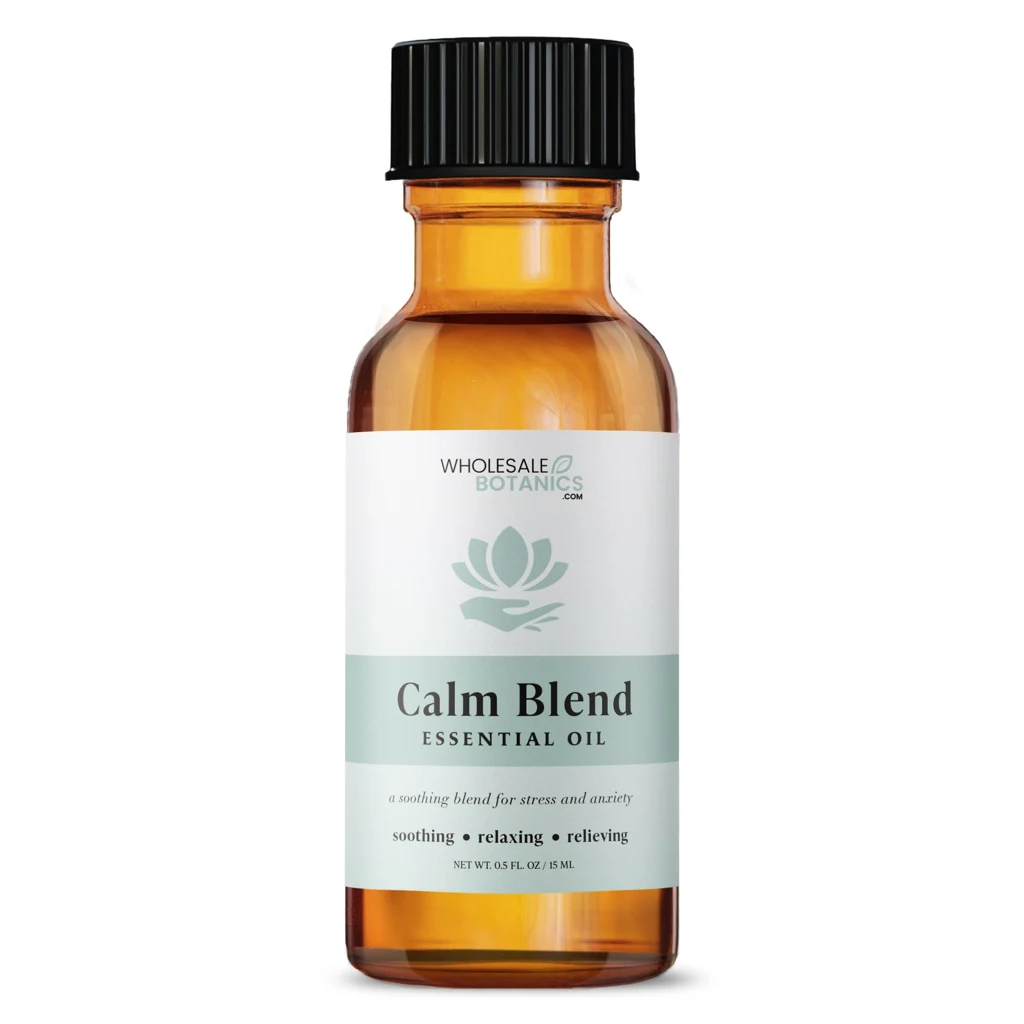
If someone likes all three but isn't fully committed to any single one, that's the gap our Calm Essential Oil Blend is built for. Each oil is processed on its own first, lavender and chamomile steam-distilled, bergamot cold-pressed, then combined in careful proportions rather than mixed to taste. Opened fresh, it leads with bergamot's citrus snap, settles into lavender's floral middle, and finishes on chamomile's warm note, reading as rounded and herbaceous rather than sweet or sharp. It also layers well in a diffuser alongside cedarwood, vanilla, or sandalwood for anyone building out a more complex evening scent rather than running one note on its own.
How people actually use a scent like this
Most of the use cases are simple and low-effort. A diffuser running in a living room or office is the most common setup, and the same blend stirred into melted soap base or candle wax carries the fragrance into finished goods instead of staying bottle-bound. A cotton pad with a small amount dabbed on and tucked into a dresser drawer or gym bag holds the scent for weeks without any equipment at all. Mixed into an unscented lotion, or into a spray bottle with witch hazel and water for a simple room mist, it functions as a scenting method rather than anything applied with the expectation of a physiological effect.
Where to be careful
A few genuine limits are worth naming rather than glossing over. Cold-pressed bergamot oil contains bergapten, a compound that makes skin more reactive to UV light; the International Fragrance Association restricts how much expressed bergamot oil belongs in leave-on skin products for exactly this reason (IFRA). Avoid applying this blend to skin before direct sun exposure. Chamomile belongs to the Asteraceae family, the same family as ragweed, and people with ragweed or daisy allergies can react to it; the NIH's National Center for Complementary and Integrative Health notes this cross-reactivity specifically (NCCIH, "Chamomile"). As with any concentrated essential oil, dilute before skin contact, patch test first, and check with a pediatrician or veterinarian before using it around infants or pets, whose sense of smell and sensitivity to concentrated aromatics differ a great deal from an adult's.
None of that makes this an oil for everyone, and it shouldn't. The honest answer to "which is the best oil for sleep" is that the best one is whichever of the three, or whichever blend of them, someone would be glad to smell for twenty minutes before the light goes off. That's not a dodge; it's the actual deciding factor the generic rankings skip over. More comparisons like this live over in our articles section.
Frequently Asked Questions
Why might a scent I personally like work better for me than a popular one?
Your personal associations with a scent matter a great deal. A 2009 review by Rachel Herz found that expectations and personal associations shape a person's response as much as, or more than, a scent's chemical makeup. A smell tied to a pleasant memory carries different weight than the same molecule in an unfamiliar bottle.
How does bergamot smell compared with lavender and chamomile?
Bergamot smells bright and citrusy, setting it apart from the other two. It is cold-pressed from the peel of Citrus bergamia rather than distilled from a flower, and shares the character that makes Earl Grey tea recognizable. People who find lavender too floral often gravitate toward it instead.
What does chamomile add to the aroma?
Chamomile adds a gentle, apple-like warmth. Steam-distilled from the small white and yellow blooms of Matricaria chamomilla, it is rounder and less sharp than lavender or bergamot. The article calls it the quietest of the three notes, one that fills in rather than announces itself.
How does the Calm Essential Oil Blend smell from start to finish?
It opens with bergamot's bright citrus snap, settles into lavender's soft floral middle, and finishes with chamomile's warm, apple-like note. Overall it reads as rounded and herbaceous rather than sweet or sharp. Each oil is processed separately first, then combined in careful proportions.
Which scents pair well with the blend in a diffuser?
Cedarwood, vanilla, and sandalwood pair well with the blend in a diffuser. Layering them lets you build a more complex evening scent instead of running one note on its own. The blend also layers nicely with unscented lotions or candle wax.
What simple ways can I use the scent around the home?
Run it in a diffuser, or make a room mist. Most uses are low-effort: a diffuser in a living room or office, a cotton pad tucked in a dresser drawer or gym bag, or a spray bottle with witch hazel and water. It can also be stirred into soap base or candle wax.