 Benefits & Uses
Citrus Opening, Floral Middle, Warm Finish: Using a Blend's Scent Stages to Pace a Meditation Session
Most advice about scenting a meditation space treats the oil like a light switch: on or off, calming or not. Pick lavender, diffuse it, sit down. What that advice skips is that a real blend doesn't hold still. It changes in your nose over the course of the sit, and that change can do something more useful than just smelling nice in the background — it can mark time without a phone screen or a chime pulling you back into thinking mode.
Table of Contents
Key Takeaways
- Fragrance notes separate by molecule weight, with light citrus molecules evaporating fastest and heavier ones lingering longest.
- The Calm blend opens with bright bergamot, settles into soft lavender, and finishes with warm chamomile.
- Scent fade works only as a rough cue for pacing, not a precise timer, since airflow and nose adaptation vary.
- Cedarwood, sandalwood, or vanilla can be added to the diffuser to stretch out the closing chamomile phase.
- This pacing method suits solo home sitting but doesn't work in shared spaces or when exact timing matters.
Why a blend doesn't smell the same at minute one and minute twenty
Perfumers have long organized fragrance into top, middle, and base notes based on how quickly different molecules evaporate off the skin or out of a diffuser. Smaller, lighter molecules — the kind found in abundance in citrus peel oils — volatilize fastest and reach your nose first. Larger, heavier molecules take longer to release and linger after the light stuff has burned off (Tisserand & Young, Essential Oil Safety, 2nd ed., Elsevier, 2014). That's not marketing language, it's basic vapor pressure.
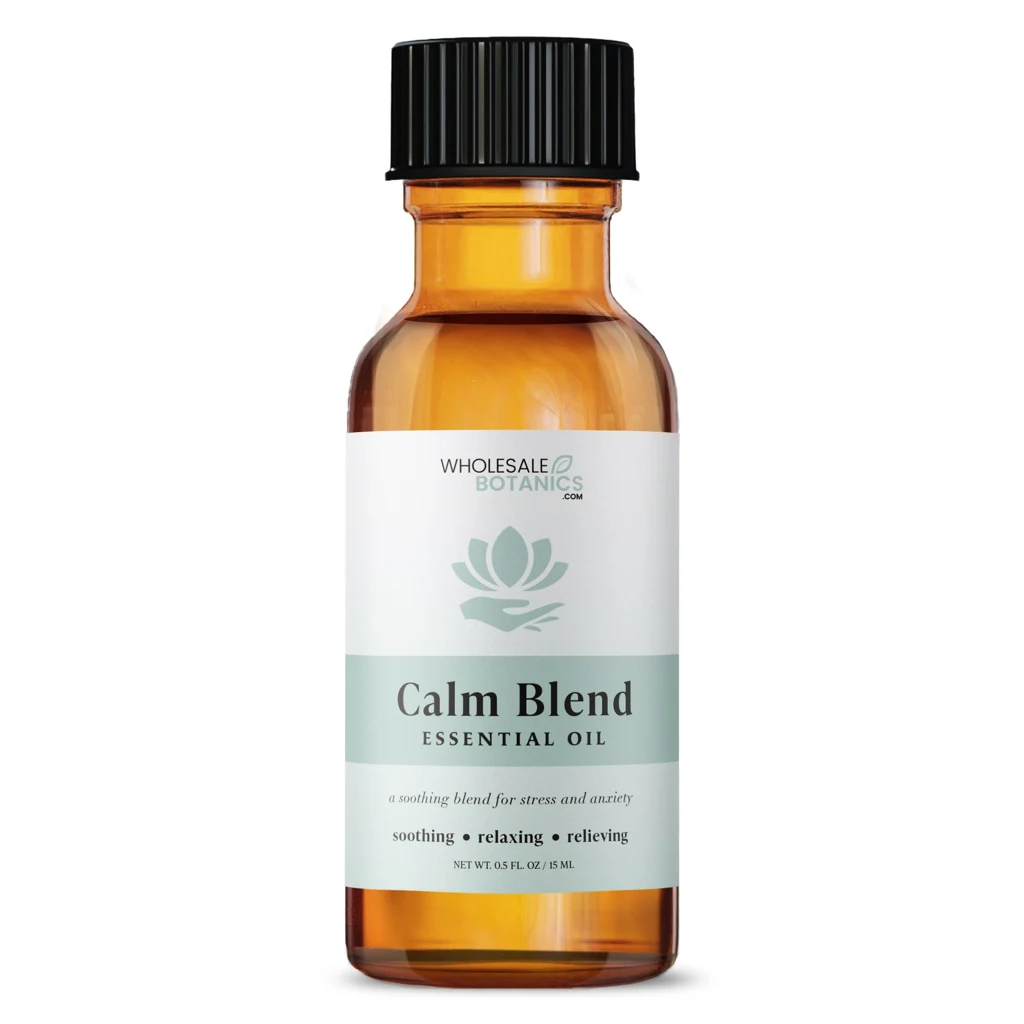
Our Calm Essential Oil Blend is built from three oils processed completely separately before they're combined: cold-pressed bergamot peel oil (Citrus bergamia), steam-distilled lavender flower oil (Lavandula angustifolia), and steam-distilled chamomile flower oil (Matricaria chamomilla). Because bergamot is cold-pressed citrus peel oil, it's rich in the kind of small, fast-evaporating monoterpenes that read as a bright snap the moment a diffuser starts running. Lavender's floral compounds are a step heavier and arrive as a softer, rounder note once the citrus has thinned out. Chamomile brings the heaviest, slowest-releasing compounds in the blend, which is why its gentle, apple-like warmth is the one that's still there after the first two have faded into the background.
That's the actual mechanism behind the phrase on the label — citrus opening, floral middle, warm finish. It isn't a tasting-note description for its own sake. It's a rough timeline you can use.
Ready to try Calm Essential Oil Blend?
Sold in sizes from 0.5 oz to 16 oz, lab-tested and shipped fast.
Shop Calm Essential Oil BlendMatching the stages to a sit, not a stopwatch
Here's where it's worth being blunt about something a lot of wellness content glosses over: you cannot use scent fade as a precise timer. Diffuser output varies with water level and room temperature, airflow from an open door or a vent changes how fast a note clears, and your own nose adapts to a steady smell and stops registering it as strongly within a few minutes regardless of what's actually still in the air. None of that makes the note sequence useless — it just means it's a cue, not a clock.
Used as a cue, the three stages map reasonably well onto how a seated session actually unfolds:
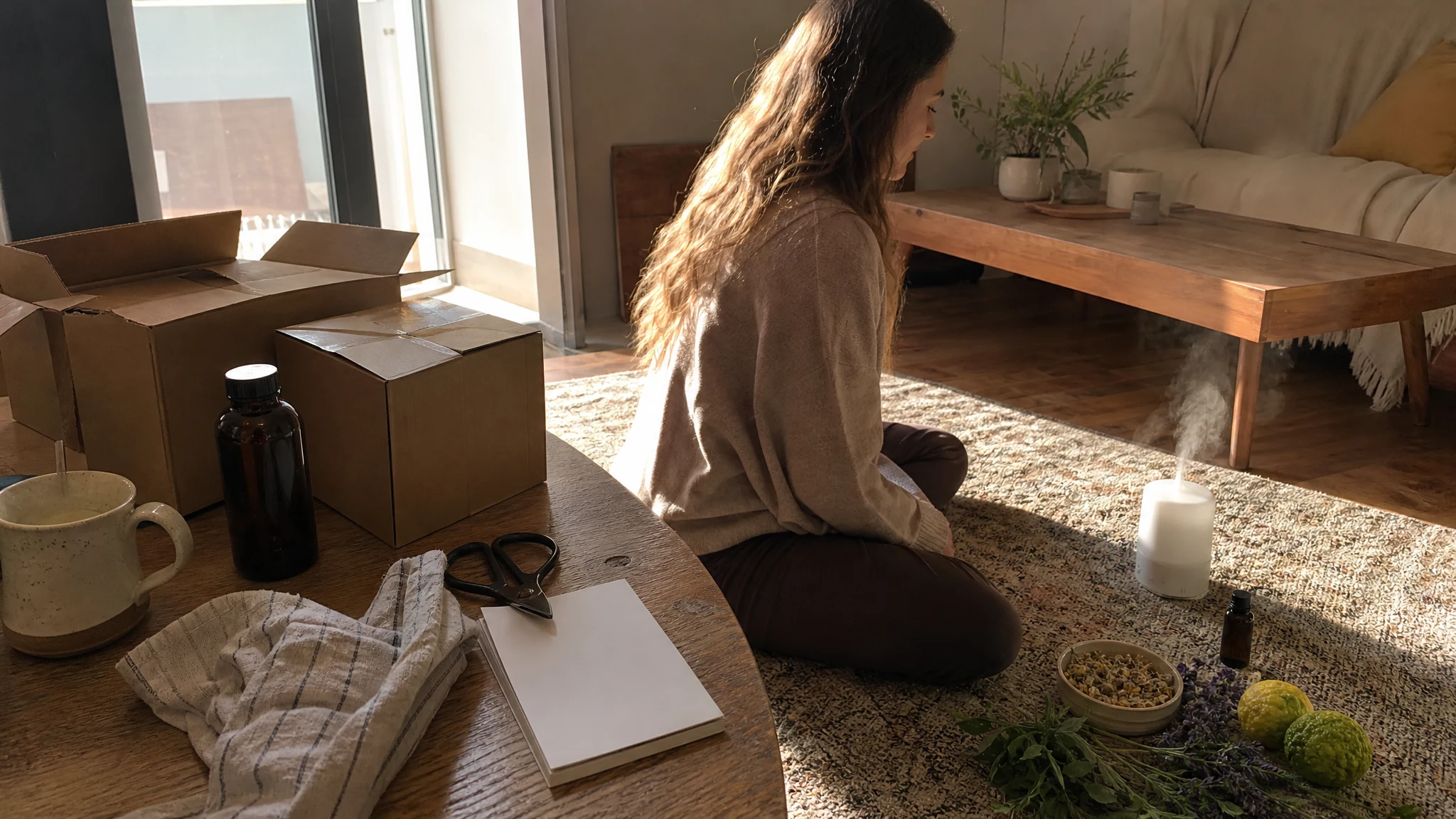
- Arrival. Start the diffuser right as you sit down, or a minute or two before. The bergamot top note is the brightest and most immediate thing the blend does, which makes it a decent nonverbal signal that you've switched out of task mode and into sitting. Use it for settling your posture and taking the first few slower breaths, not for anything that needs to last.
- Dwelling. As the citrus thins, lavender's floral note takes over and tends to stay present longer than the opening did. This is the stretch where most of the actual sitting happens — body scan, breath counting, open awareness, whatever your practice is. You don't need the scent to do anything here except exist steadily in the background while the thinking settles.
- Closing. Chamomile's warmer, rounder note is the one most likely to still be noticeable once the others have faded, which makes it a reasonable soft cue that the session is drawing toward its end. Treat it as a nudge to start widening attention back out, open your eyes, and return to the room.
If you want a slower arc overall, pairing the blend with cedarwood or sandalwood in the diffuser extends the base-note phase, since both are heavier, slower-releasing oils themselves. Vanilla does something similar if you prefer a sweeter finish. None of that changes what's in the Calm blend — it just stretches the tail end of the session you're already building around it.
Where this doesn't hold up, and who should skip it
This approach works best for solo, at-home sitting where you control the room. It falls apart in a shared space — a studio class, an office, a house with other people in it — where not everyone wants fragrance timing their session, or any fragrance at all. If precise session length actually matters to you (a fixed 20-minute practice, for instance), keep using a timer or bell and let the scent run alongside it as a secondary layer rather than the main structure.
Anyone meditating with infants, or pets, or anyone with asthma or fragrance sensitivity in the room should be cautious with diffused oils generally, independent of this blend specifically. And if you plan to use the blend on skin — stirred into an unscented lotion, say, rather than just diffused — know that cold-pressed bergamot oil contains bergapten, a compound that can make skin more reactive to UV light (Tisserand & Young, 2014). That's a nonissue for diffuser use, since you're not applying anything to skin, but if you do go the lotion route, keep the area out of direct sun afterward or check with a dermatologist first. Chamomile is also a member of the Asteraceae family, so anyone with a known sensitivity to ragweed, daisies, or marigolds should patch-test or talk to an allergist before using it on skin (National Center for Complementary and Integrative Health, nccih.nih.gov/health/chamomile).
None of that makes the blend a poor fit for meditation — it just means the honest use case is diffused scent as a soft, imperfect pacing tool, not a skin-contact product and not a substitute for an actual timer when precision matters. Our Calm Essential Oil Blend is built with that opening-middle-finish structure on purpose; it's worth paying attention to on its own terms before you ever sit down to use it that way. More on how we think about pacing and using specific blends is over in our other articles.
Frequently Asked Questions
Why does a blend's smell change over time instead of staying constant?
It changes because the three oils evaporate at different rates based on molecule size. Bergamot's small citrus molecules volatilize fastest, lavender's floral compounds follow at a moderate pace, and chamomile's heavier molecules release slowest, which is why the scent shifts from citrus to floral to warm over a sitting session.
Can I rely on the scent stages as an exact timer for meditation?
No, the article is explicit that scent fade isn't precise enough for that. Diffuser output, room airflow, and nose adaptation to a steady smell all vary, so the note sequence works only as a soft cue, not a clock — use an actual timer or bell if session length matters.
What oils can I diffuse alongside the Calm blend to extend the calming session?
Cedarwood or sandalwood extend the base-note phase because they're heavier, slower-releasing oils, while vanilla gives a sweeter, similarly extended finish. Pairing either with the Calm blend stretches the closing chamomile stage without changing what's actually in the blend.
Is it safe to put the Calm Essential Oil Blend on skin?
Diffuser use is fine, but skin application needs caution. Cold-pressed bergamot contains bergapten, which can increase UV sensitivity, so sun exposure should be avoided afterward or a dermatologist consulted; chamomile is also in the Asteraceae family, so those sensitive to ragweed or daisies should patch-test first.
Who should avoid using this diffused blend during meditation?
The article advises caution for anyone meditating around infants, pets, or people with asthma or fragrance sensitivity, independent of this specific blend. It also notes the pacing approach doesn't work well in shared spaces like studio classes or offices where not everyone wants fragrance timing their session.
What are the three oils in the Calm Essential Oil Blend and how are they processed?
The blend combines cold-pressed bergamot peel oil, steam-distilled lavender flower oil, and steam-distilled chamomile flower oil. Each oil is processed completely separately before being combined in careful proportions, which is why they evaporate and reveal themselves at different stages during use.