 Benefits & Uses
Scent Cues for a Busy Workday: Keeping a Calming Aroma Near Your Office Diffuser
It's 2:40pm, your inbox has refilled itself for the third time, and someone two desks over is eating something that smells like a microwave disaster. This is the moment most people reach for a diffuser. What's actually happening when the scent reaches you, though, is more interesting than "lavender calms you down" — and understanding it changes how you should set the habit up.
Table of Contents
Key Takeaways
- Rachel Herz's research says scent mainly works through learned association, not direct pharmacology.
- The same smell is evaluated differently depending on what it's linked to and expected to do.
- Consistency in timing and placement matters more than which specific oil is used.
- The blend opens with bergamot, settles into lavender, and finishes with chamomile's apple-like warmth.
- Cold-pressed bergamot contains furocoumarins, which IFRA restricts in leave-on skin products due to sun sensitivity.
The scent isn't doing the work you think it's doing
There's a popular idea that lavender or chamomile contain some compound that crosses into the bloodstream through the nose and chemically dials down stress the way a medication would. That's not a fair description of how fragrance works on mood. Rachel Herz, a cognitive neuroscientist who has spent her career studying smell, reviewed the olfactory-mood research and concluded that most of the effect comes from learned association and expectation, not direct pharmacology — a scent you've paired with winding down starts to function as a cue for winding down, the same way a specific playlist or a specific mug can (Herz, 2009, International Journal of Neuroscience). Her earlier work on odor and context found something similar: the same smell gets evaluated differently depending on what you've linked it to and what you expect from it (Herz & von Clef, 2001, Perception).
This isn't a knock on using scent at your desk. It's actually the useful part. If the mechanism is mostly associative, then consistency matters more than which exact oil you pick. A scent that shows up at the same moment, in the same spot, day after day, starts to function like a bell for a routine you're training yourself into — closing your email tab, taking three slow breaths, starting the next task. The oil is the anchor. The repetition is what builds the association.
Why this particular blend works as an anchor
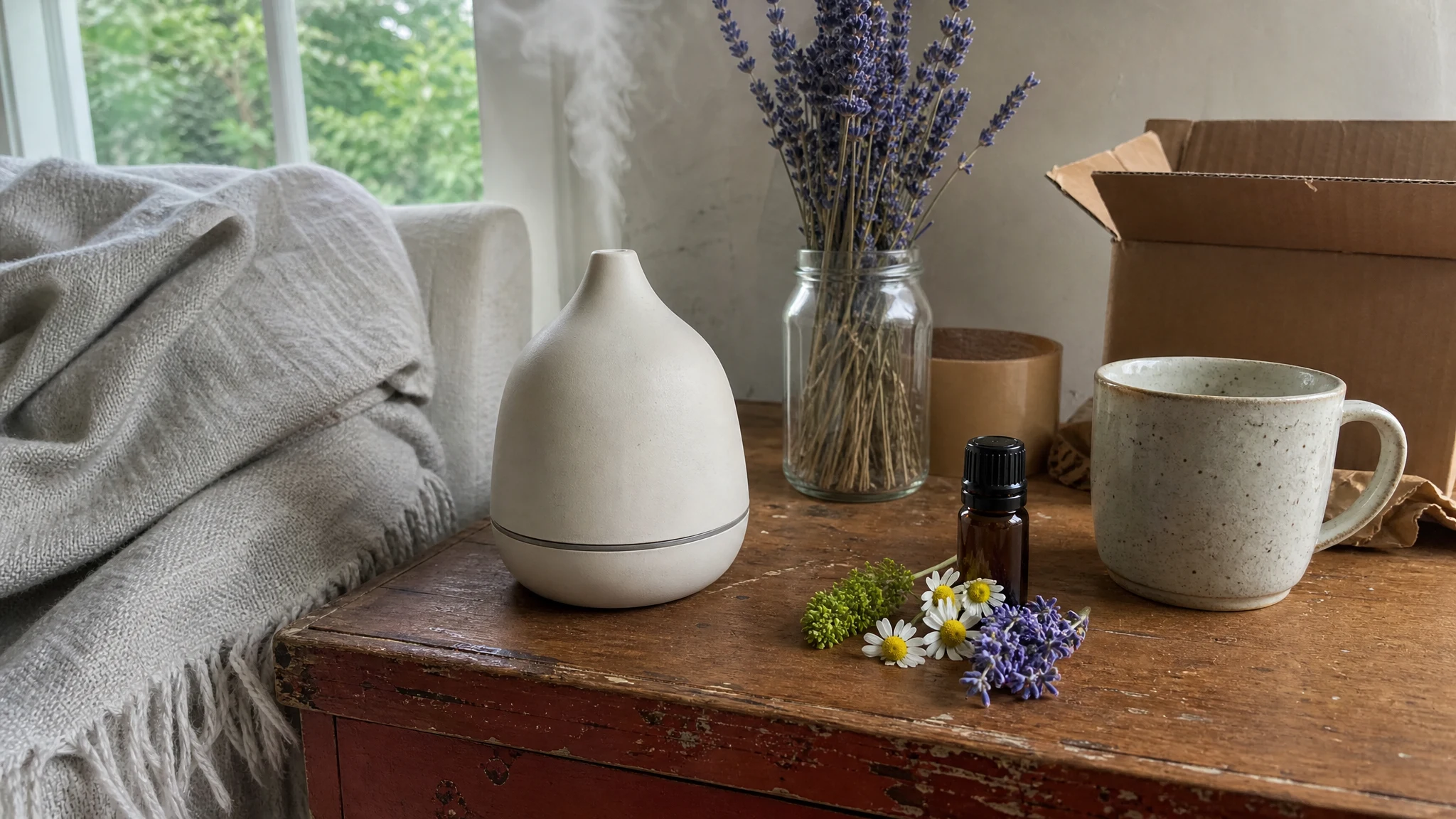
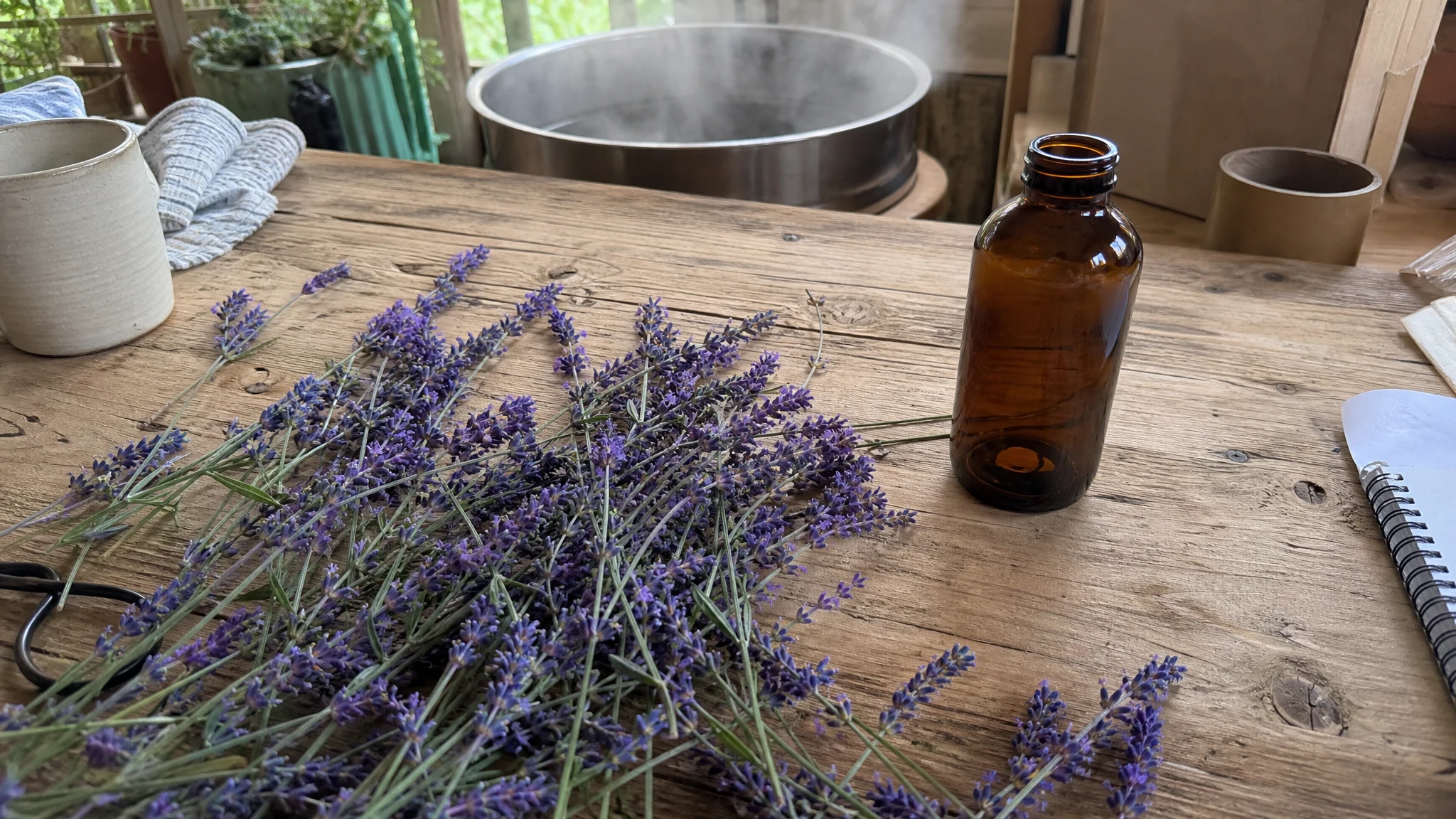
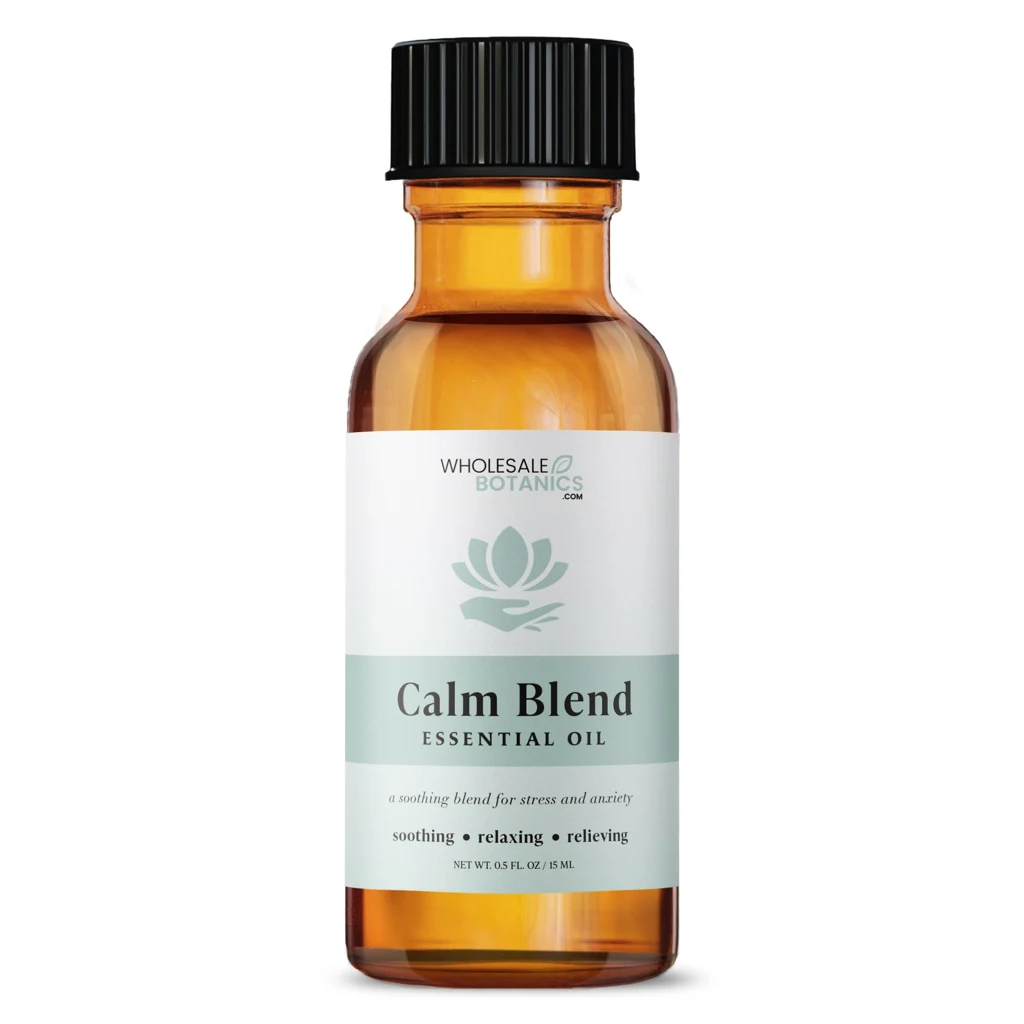
We make our Calm Essential Oil Blend from three oils that are each processed on their own before they're combined: lavender (Lavandula angustifolia) and chamomile (Matricaria chamomilla) are both steam-distilled from their flowers, while bergamot (Citrus bergamia) is cold-pressed from the peel. Smelling it, you get the bright citrus snap of the bergamot first, which settles into lavender's soft floral middle, and finishes on the gentler, apple-like warmth of chamomile. It reads as rounded and herbaceous rather than sharp or heavily sweet — which, practically speaking, makes it less likely to compete with or clash with whatever else is floating around a shared office.
That roundness is also why it layers well instead of needing to stand alone. It pairs nicely with cedarwood, vanilla, or sandalwood if you're blending in a diffuser, and a drop stirred into unscented lotion or candle wax carries the same profile into something you can use away from the diffuser entirely.
Ready to try Calm Essential Oil Blend?
Sold in sizes from 0.5 oz to 16 oz, lab-tested and shipped fast.
Shop Calm Essential Oil BlendBuilding the cue when you don't have free rein over the air in the room
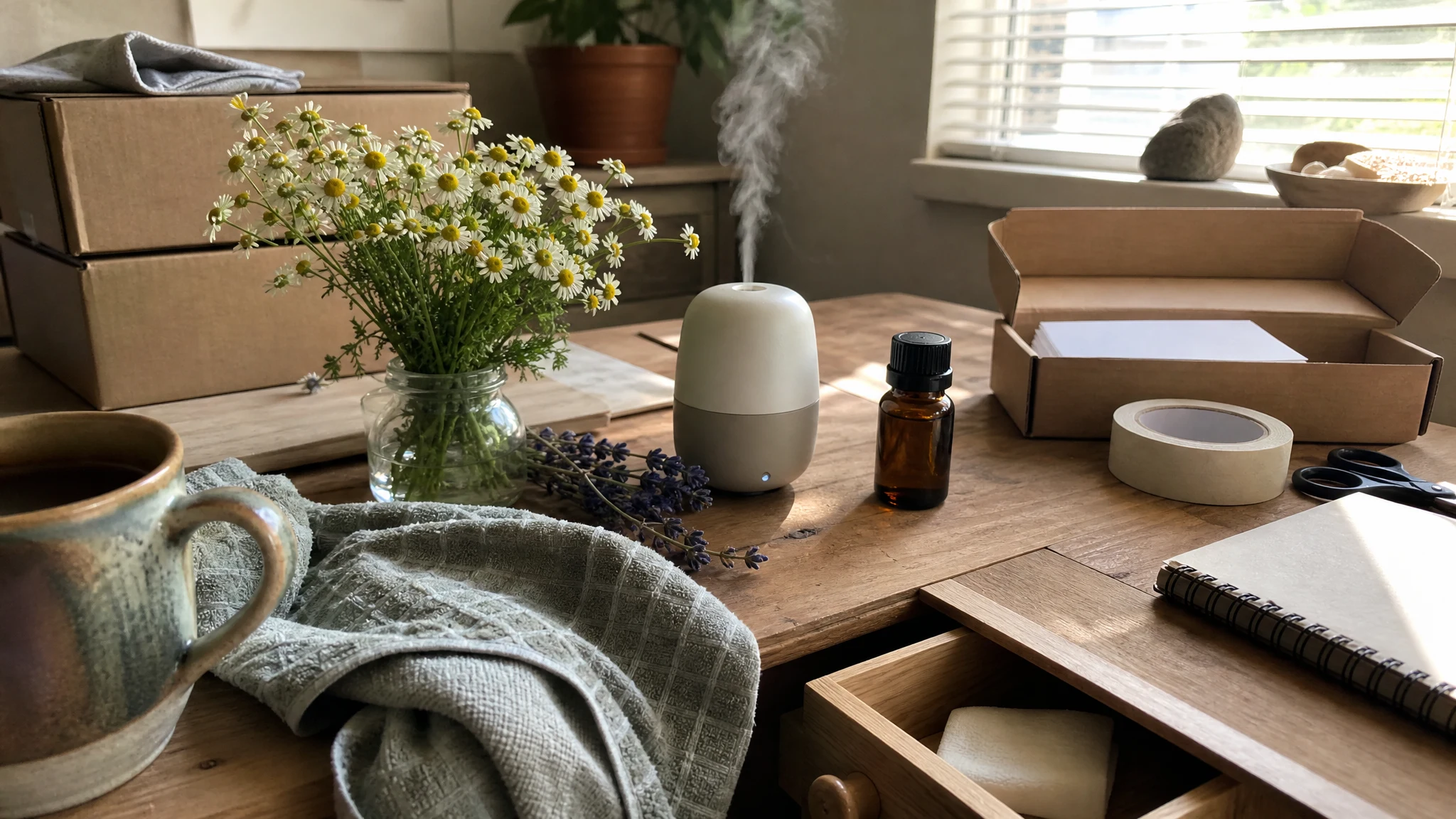
Most offices aren't set up for an ultrasonic diffuser running all day at your elbow, and even if yours is, a coworker's migraine or asthma doesn't care how nice the blend smells. A few lower-footprint ways to keep the cue consistent without filling a shared room with scent:
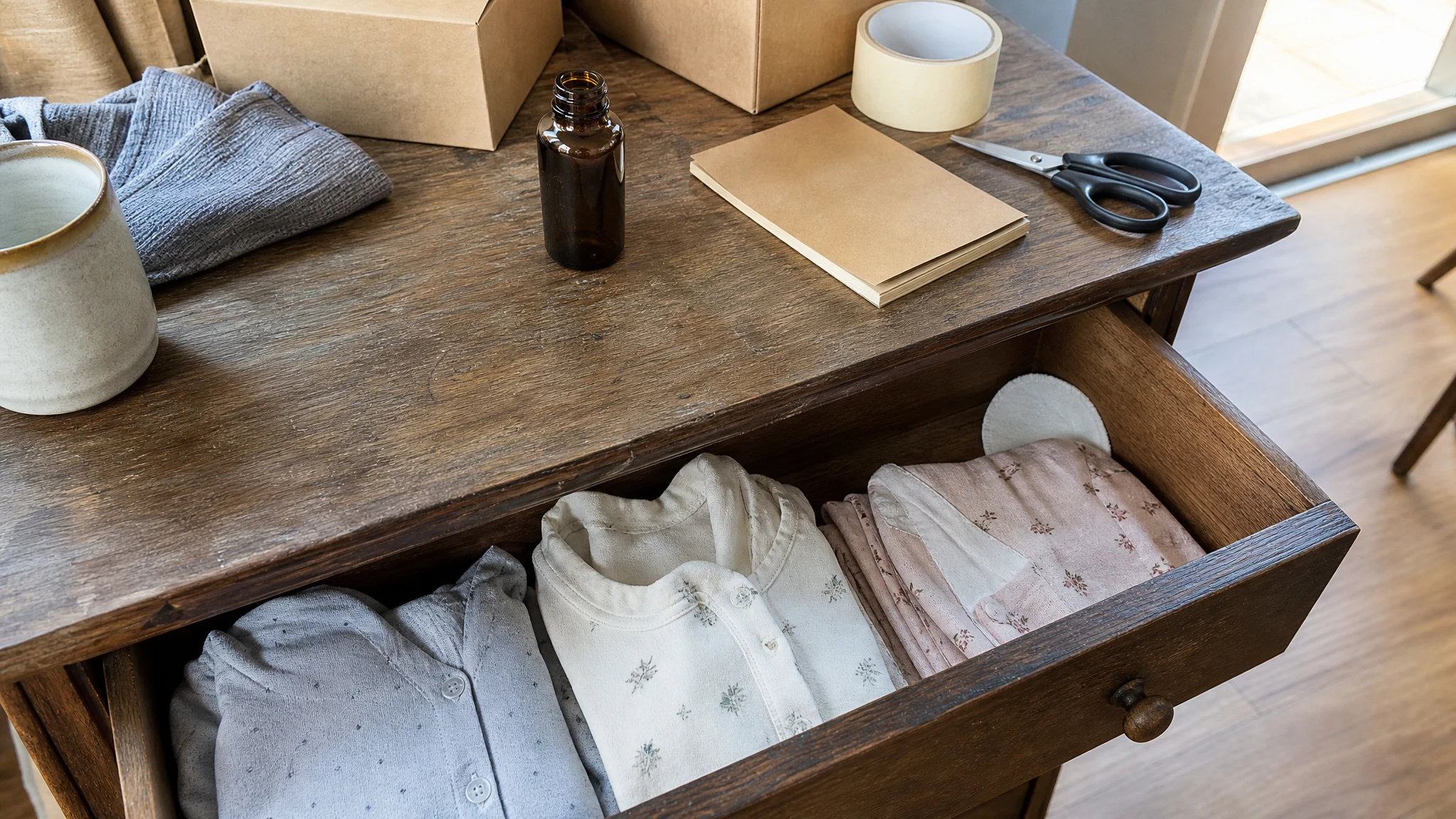
- A cotton pad with a few drops tucked inside a desk drawer keeps the fragrance contained to the space you open and close, and it holds for weeks before it needs refreshing.
- A small spray bottle of water and witch hazel with a few drops of the blend mixed in gives you a contained mist for your own chair or a fabric panel, rather than scenting the whole room.
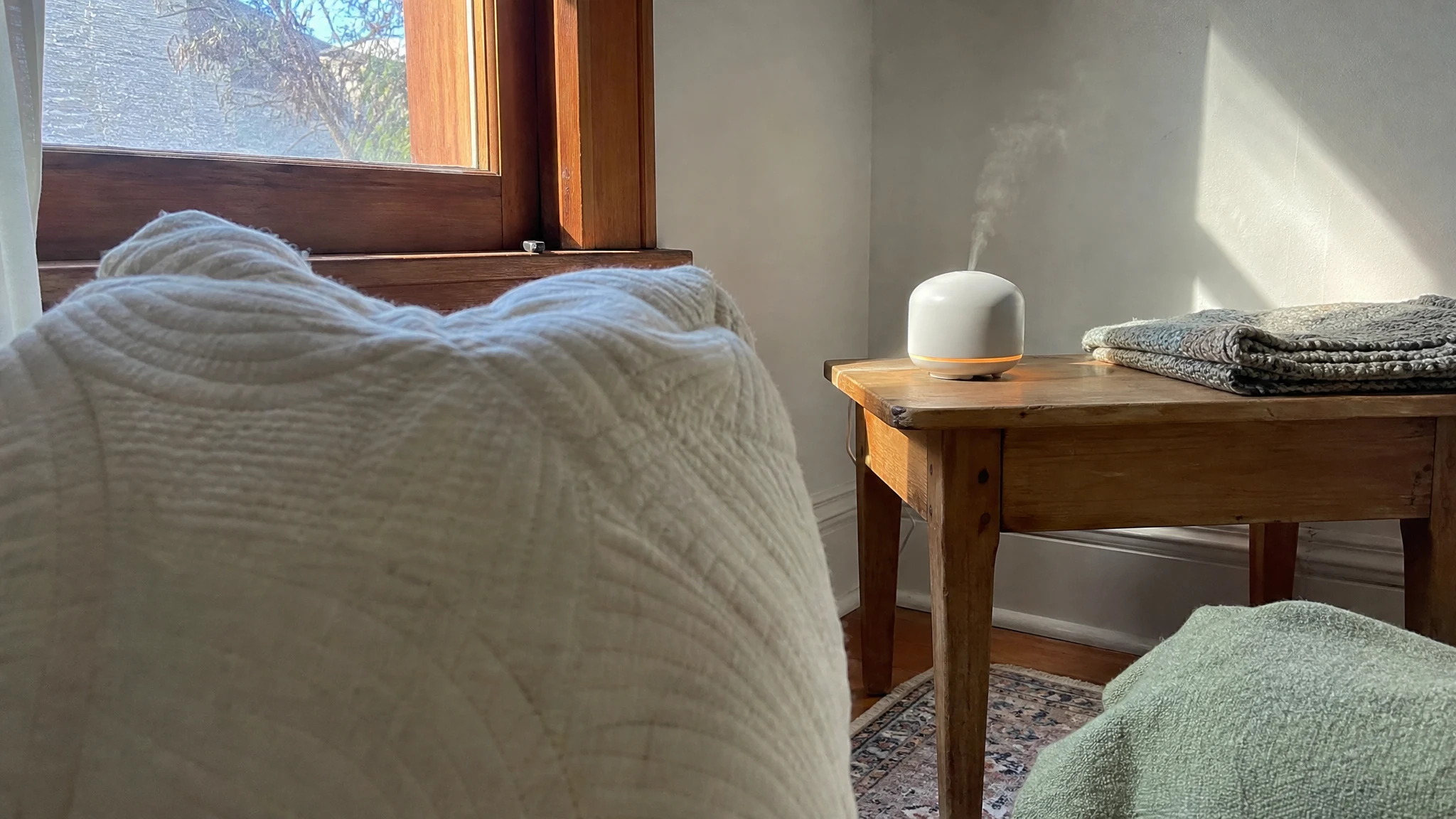
- If you do have a personal diffuser at a private desk or home office, running it at the same time each day — right when you sit down, or right before a specific recurring meeting — does more for building the association than running it constantly.
The habit part matters as much as the oil part. Pair the scent with an actual two-minute action — shoulders down, water refilled, one slow exhale — rather than just letting it diffuse in the background. That pairing is what gives the cue something to be a cue for.
Where this doesn't belong
Be straightforward about the limits. In a shared workspace, run anything scent-related past the people who share the air with you — fragrance sensitivity, asthma, and migraine triggers are common enough that this is a courtesy, not a formality. Cold-pressed bergamot oil contains furocoumarins, compounds that can make skin more reactive to sunlight; the International Fragrance Association restricts how much bergapten-containing bergamot oil belongs in leave-on skin products for this reason (IFRA, 2023 Standards). That matters if you're using the blend in a lotion near a sunny window — it's not a concern for diffusing or scenting a cotton pad, since nothing is sitting on skin.
It's also worth saying plainly: this is a scent, not a treatment. The National Center for Complementary and Integrative Health notes that the research behind aromatherapy's mood effects is limited and mixed, and that it shouldn't replace medical or mental health care (NCCIH, nccih.nih.gov/health/aromatherapy). If the stress you're feeling at your desk is more than an ordinary rough afternoon — if it's persistent, or it's affecting how you function day to day — that's a conversation for a doctor or licensed therapist, not something a diffuser blend is built to carry. Pregnant or nursing people, and anyone diffusing around small children or pets in an enclosed office, should also check with their own doctor or vet before adding a new fragrance to daily air.
Used with that context in mind, a consistent, pleasant scent by your desk is a genuinely reasonable small ritual — not because the oil is doing something mysterious to your nervous system, but because you're teaching yourself a cue, and a blend that opens bright and settles soft gives you something worth repeating every day. For more on how we build blends like this one, our other articles go into the individual oils in more depth.
Frequently Asked Questions
Does lavender actually reduce stress chemically?
Not according to the research the article cites. Rachel Herz concluded most of the mood effect comes from learned association and expectation rather than a compound crossing into the bloodstream and acting like medication. A scent you repeatedly pair with winding down becomes a cue for winding down, similar to a specific playlist or mug.
How should I use scent at my desk to build this cue?
Run it at the same time and spot each day, paired with a short action like shoulders down or one slow exhale. The article says repetition builds the association, not the specific oil, so consistency in timing matters more than variety.
What if I can't run a diffuser at a shared office desk?
The article suggests lower-footprint options: a cotton pad with a few drops tucked in a desk drawer, or a small spray bottle of water, witch hazel, and the blend for a contained mist. Both keep the scent to your own space instead of filling a shared room.
Is bergamot oil safe to use on skin?
Cold-pressed bergamot contains furocoumarins, which can make skin more reactive to sunlight, and IFRA restricts how much bergamot oil belongs in leave-on skin products. The article notes this matters for lotion use near sunny windows but isn't a concern for diffusing or a cotton pad since nothing touches skin.
Can this blend replace treatment for ongoing stress or anxiety?
No, the article is explicit that this is a scent, not a treatment. It cites NCCIH noting aromatherapy research is limited and mixed, and says persistent or function-affecting stress is a conversation for a doctor or licensed therapist, not a diffuser blend.
What other scents pair well with this blend?
The article says it layers nicely with cedarwood, vanilla, or sandalwood in a diffuser blend, and also works stirred into unscented lotion or candle wax. Its rounded, herbaceous profile is described as less likely to clash with other scents floating around a shared office.