 Buying Guides
Which Scent Families Do People Reach For When Winding Down: Citrus, Floral or Herbaceous?
Stand in front of a diffuser shelf for five minutes and you'll notice the real question isn't "which oil smells nicest" — it's "which one will still be doing anything for me twenty minutes from now." Citrus smells bright and immediate. Floral smells soft and round. Herbaceous smells grounded, almost green. Every bottle on that shelf gets marketed as the fix for a hard day. The honest answer to which family wins is: none of them, on their own, for very long — and that has less to do with the plant and more to do with how your nose actually works.
Table of Contents
Key Takeaways
- Olfactory adaptation causes the brain to stop registering a steady, unchanging scent within minutes.
- Lavender has the deepest research base, linked to relaxation via linalool and linalyl acetate acting on GABA pathways.
- A 2015 study found inhaled bergamot shifted parasympathetic activity and salivary cortisol in healthy adults.
- Chamomile research on anxiety mostly used oral extracts for diagnosed conditions, not diffused aroma.
- A blend's staying power comes from differing molecule volatility across top, middle, and base notes, not from combining scent families.
Your nose stops noticing before you think it will
Smell receptors adapt fast. Within minutes of steady exposure to a single, unchanging odor, the signal reaching the brain drops off — a well-documented phenomenon called olfactory adaptation (Dalton, P., "Psychophysical and behavioral characteristics of olfactory adaptation," Chemical Senses, 2000). This is why a candle that smelled strong when you lit it seems to vanish after you've been in the room a while, even though the molecules are still very much in the air. It's not that the scent family stopped working. It's that your nose stopped reporting it.
That matters for anyone picking an oil specifically to wind down, because winding down isn't a five-minute event. It's closer to twenty or sixty minutes of a diffuser running while you read, bathe, or get ready for bed. A single-note oil, however well-matched to your mood, is working against your own biology for most of that window.
What the research actually says about each family
It's worth being specific here rather than making a blanket case for "essential oils help with stress," because the evidence isn't evenly distributed across citrus, floral, and herbaceous.
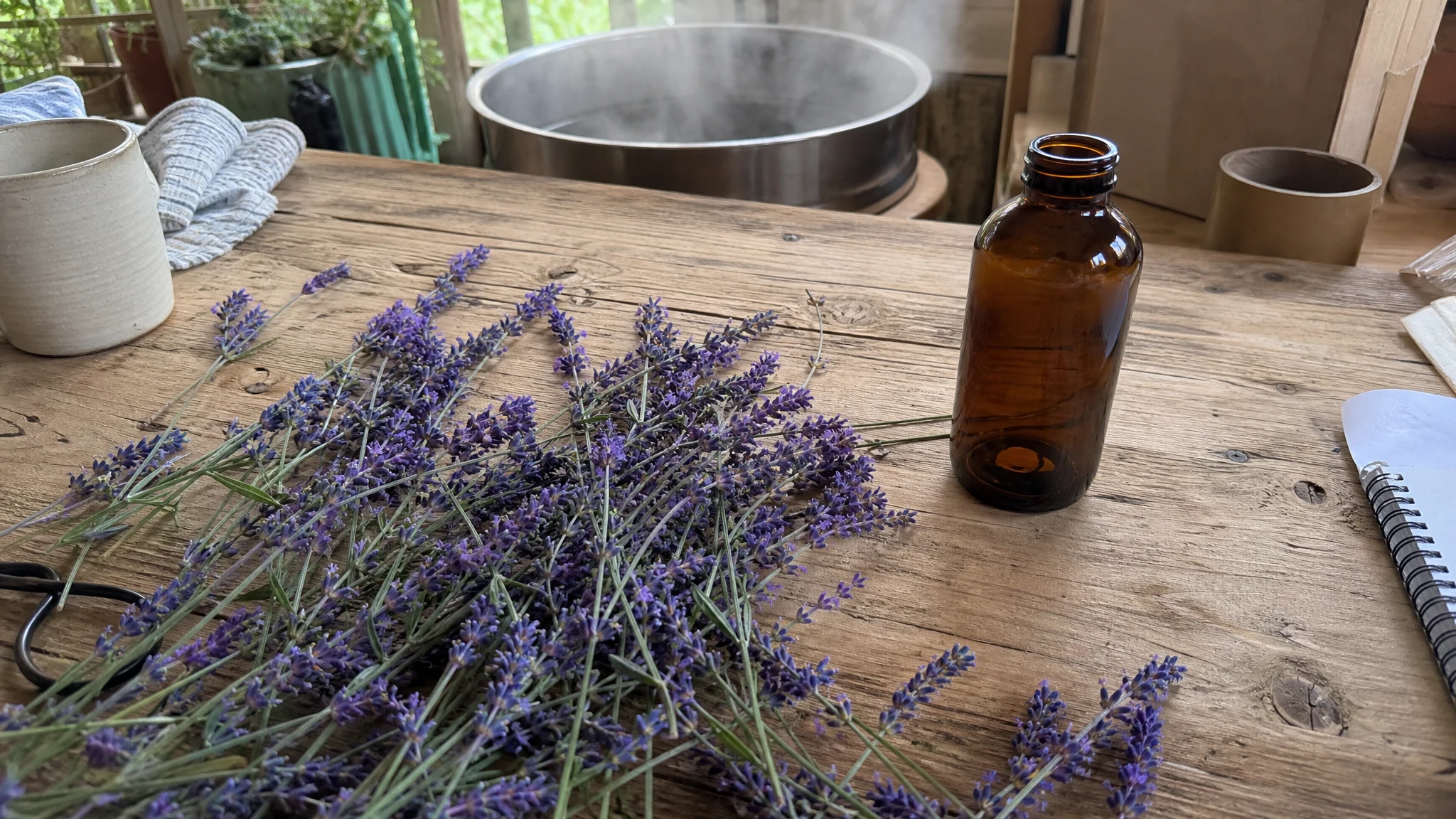
Floral has the deepest paper trail. Lavender (Lavandula angustifolia) inhalation has been studied repeatedly for its effect on self-reported relaxation and sleep quality, and a frequently cited review walks through proposed mechanisms involving linalool and linalyl acetate interacting with GABA pathways (Koulivand, P.H., Khaleghi Ghadiri, M., Gorji, A., "Lavender and the Nervous System," Evidence-Based Complementary and Alternative Medicine, 2013, ncbi.nlm.nih.gov/pmc/articles/PMC3612440). It's the family with the most to point to.
Citrus has a different kind of evidence, measured in the body rather than self-report. A 2015 study on inhaled bergamot (Citrus bergamia) oil tracked parasympathetic nervous system activity and salivary cortisol in healthy adults and found measurable shifts after exposure (Watanabe, E. et al., Journal of Neural Transmission, 2015). That's a genuinely different angle than "people said they felt calmer" — it's autonomic nervous system data.
Herbaceous is where I'll be straight with you: it's the thinnest leg of the stool, at least for the inhaled, diffused version. Chamomile (Matricaria chamomilla) has a long aromatic reputation, but most of the controlled research on chamomile and anxiety has tested it as an oral extract taken for a diagnosed anxiety condition, not as something you smell from a diffuser (Amsterdam, J.D. et al., Journal of Clinical Psychopharmacology, 2009). Drinking a chamomile extract under a doctor's supervision for an anxiety disorder is a different thing entirely from scenting a bedroom with it, and it's worth not blurring the two. If you're managing a diagnosed anxiety condition, that's a conversation for a physician or licensed therapist, not a scent choice.
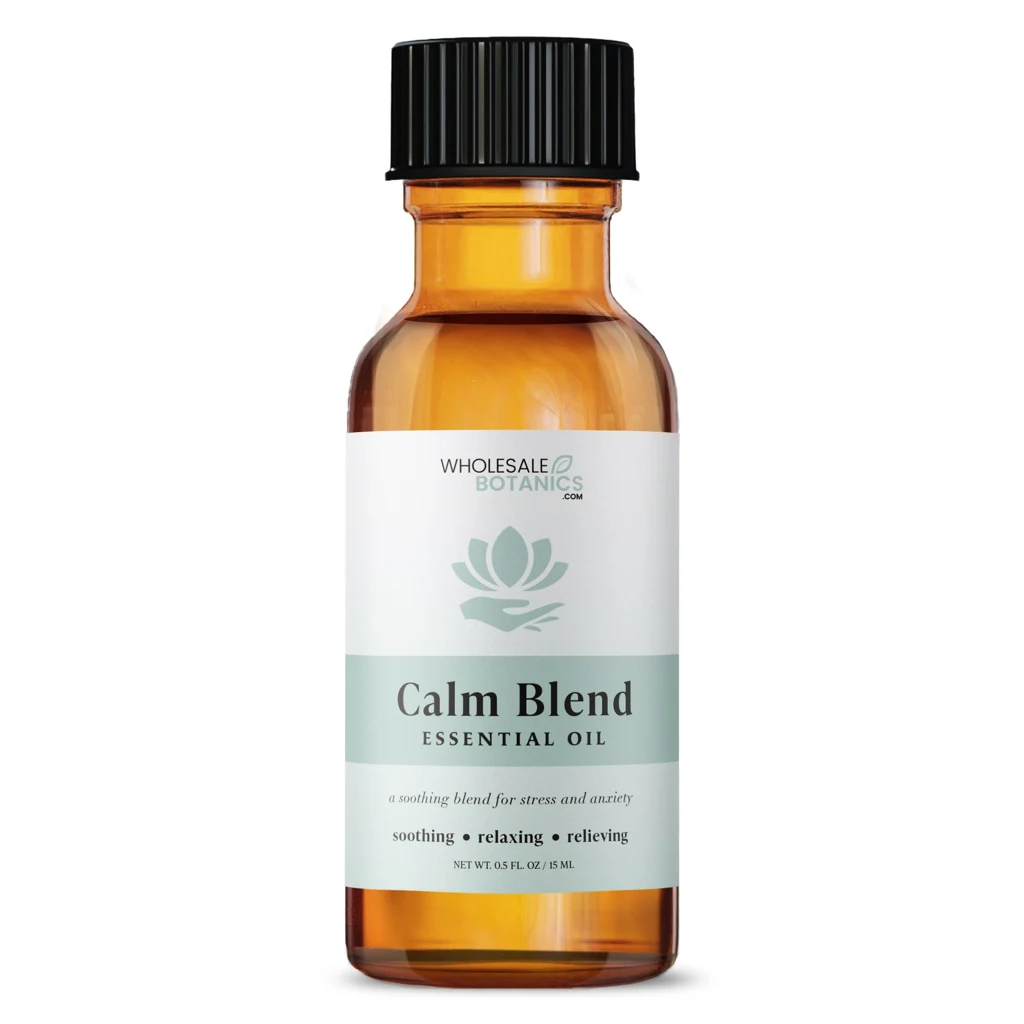
Ready to try Calm Essential Oil Blend?
Sold in sizes from 0.5 oz to 16 oz, lab-tested and shipped fast.
Shop Calm Essential Oil BlendSo which family should you actually pick?
Here's where I'll disagree with the usual advice, which is to just pick a lane — lavender if you want calm, citrus if you want uplift, herbaceous if you want grounded. That framing treats scent families like flavors, interchangeable and complete on their own. But perfumers have known for a long time that a fragrance's staying power has almost nothing to do with which family it belongs to and almost everything to do with the volatility of its molecules — how fast they evaporate (Tisserand, R. and Young, R., Essential Oil Safety, 2nd edition, Churchill Livingstone, 2014). Light monoterpene-rich oils like citrus peel oils evaporate fastest and read as a "top note." Florals tend to sit in the middle. Warmer, rounder notes linger longest as a "base."
Put a fast top note, a middle note, and a slower base note in the same bottle, and you get something your nose can't fully adapt to in one sitting, because the composition itself is changing as you smell it. That's the actual reason a blended scent holds your attention longer than a single-note oil does — not because three families are magically better than one, but because they decay at different rates.
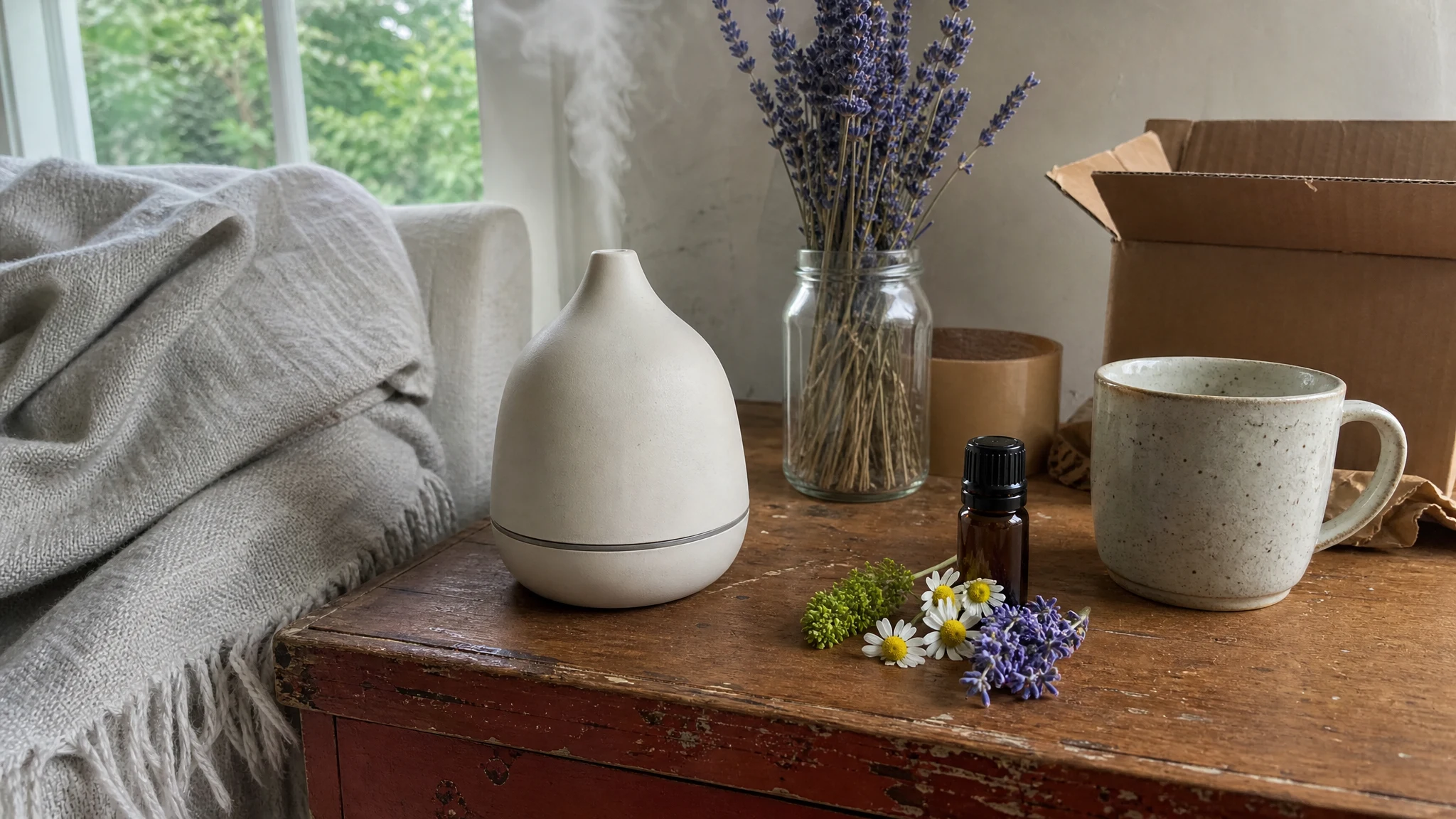
That's the logic behind how we built our Calm Essential Oil Blend: steam-distilled lavender flowers, steam-distilled chamomile blossoms, and cold-pressed bergamot peel, each processed on their own and then combined in careful proportions. Bergamot gives the bright opening snap, lavender settles in as the soft middle, and chamomile's gentle, apple-like warmth carries the finish. None of the three is doing all the work — together they read as rounded and herbaceous rather than sharp or sweet, and the shifting composition is what keeps it from going quiet in your nose the way a single-note oil would.
Putting it to use
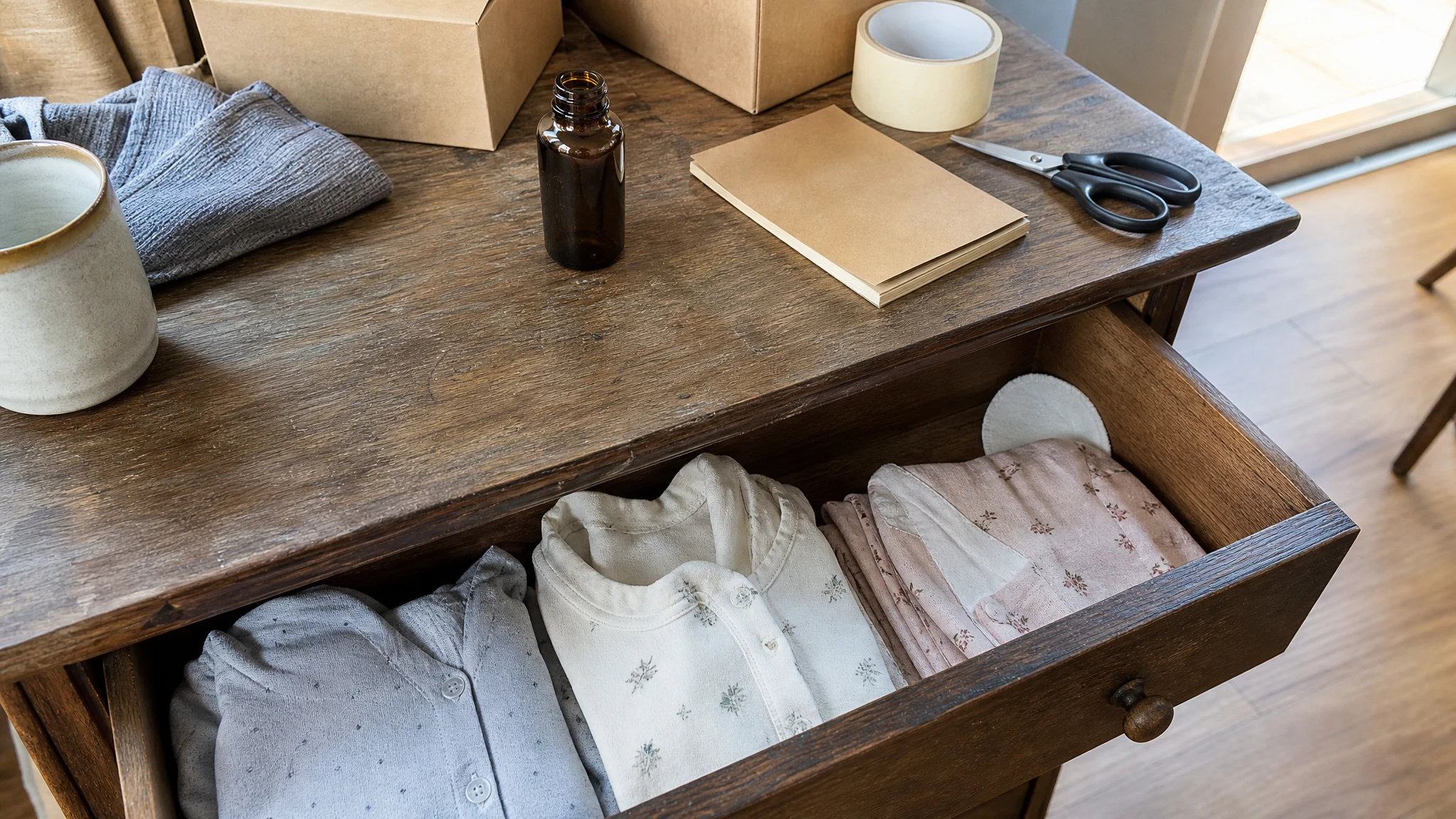
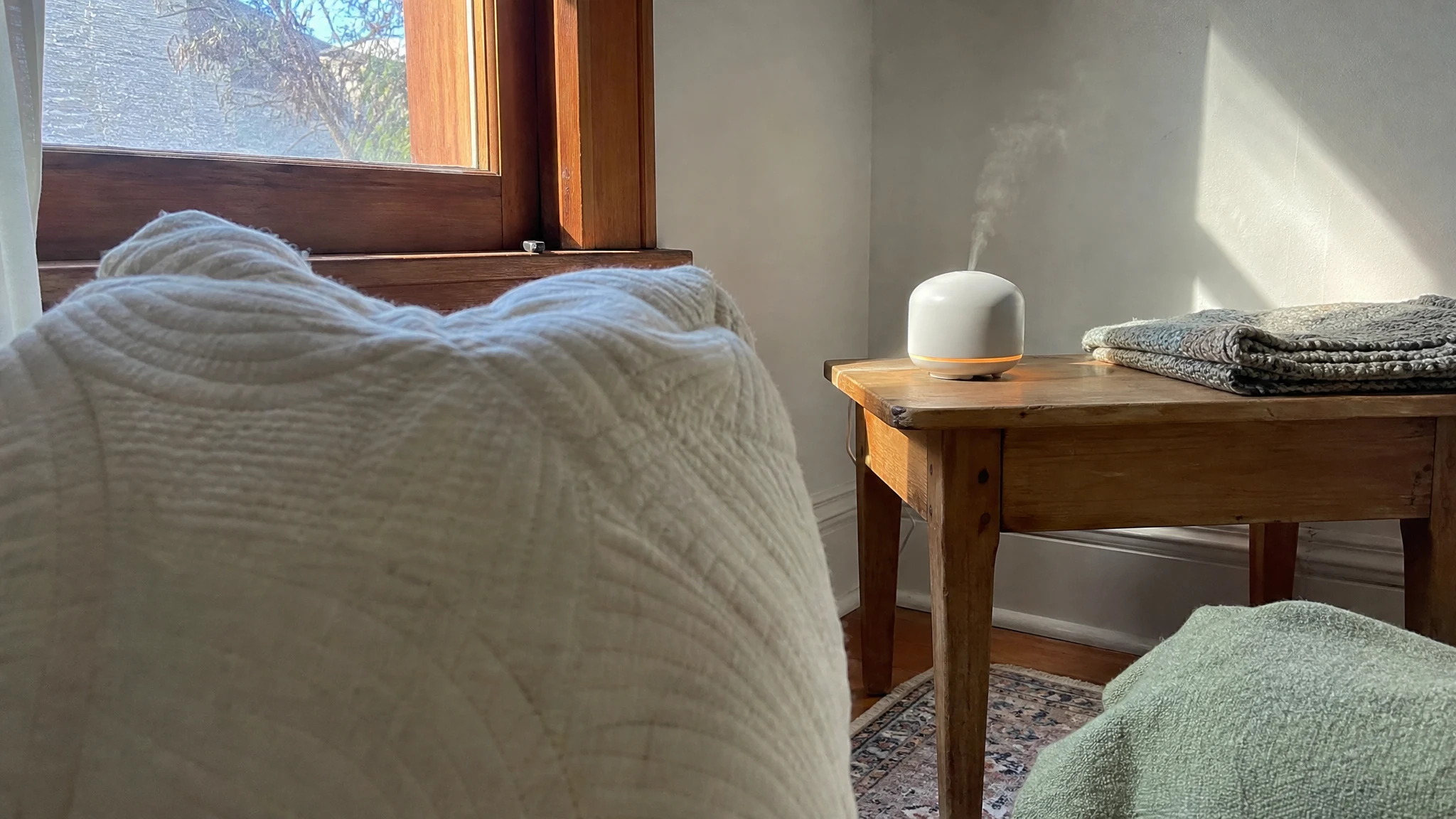
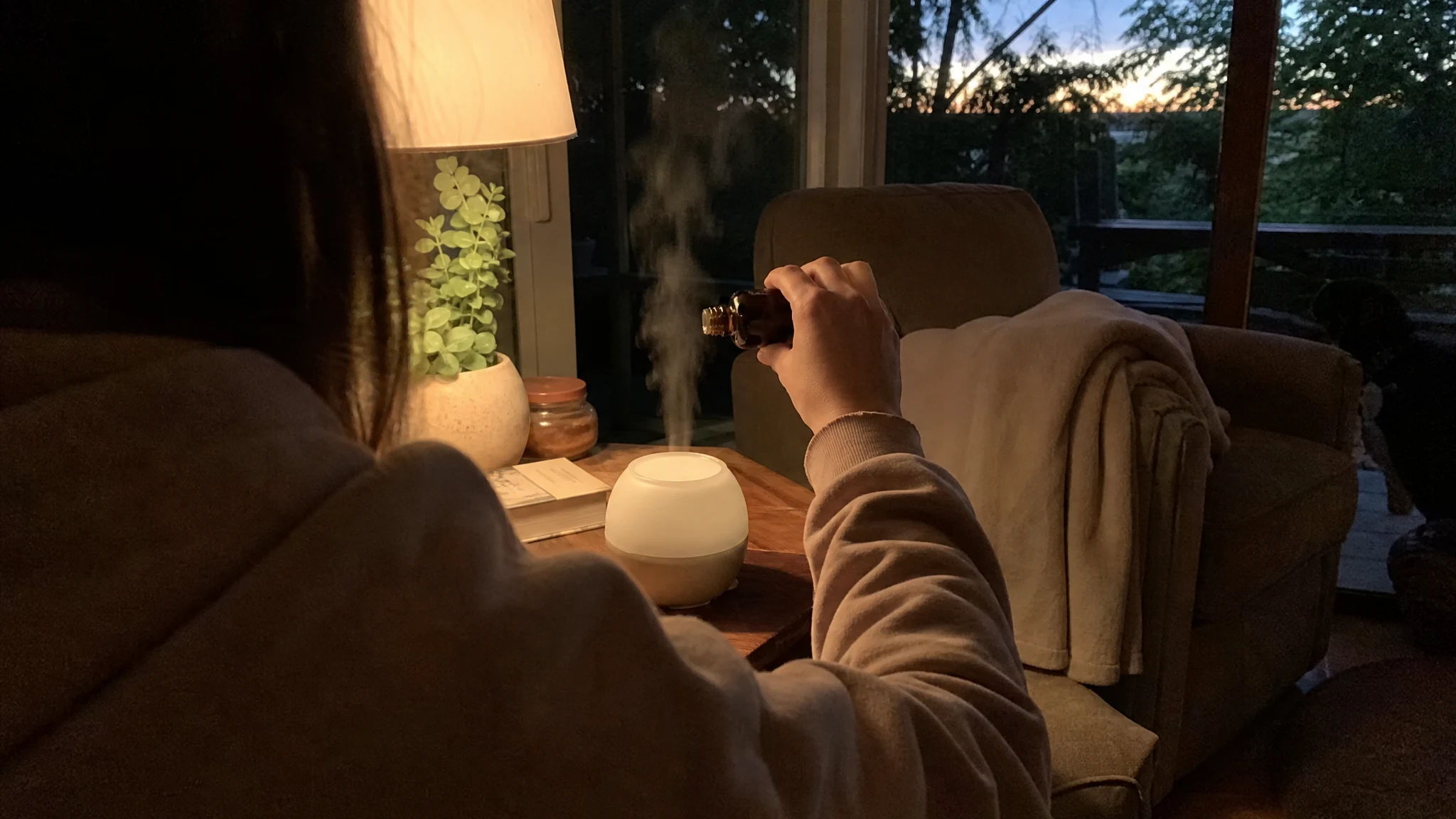
A diffuser running in a living room or office is the most straightforward way to keep this in the air during a wind-down stretch, and it pairs well with cedarwood, vanilla, or sandalwood if you want to deepen the base further. Beyond the diffuser, a small amount stirred into melted soap base or candle wax carries the scent into something you use outside of diffusing hours. A cotton pad tucked into a dresser drawer or gym bag holds the fragrance there for weeks without any equipment at all. Mixed into unscented lotion, or into a spray bottle with witch hazel and water, it becomes a simple room mist you can use anywhere a diffuser isn't practical.
Where to be careful
Cold-pressed bergamot oil naturally contains bergapten, a compound that makes skin more reactive to UV light — a well-established phototoxic effect in citrus peel oils (Tisserand and Young, 2014). That's a skin-contact issue, not a diffusing one, but if you're applying any blend containing bergamot topically, keep the area out of direct sun afterward and always dilute in a carrier oil first; a dermatologist can advise on sensitive skin specifically. Anyone pregnant, nursing, or managing a diagnosed health condition should check with their doctor before using any essential oil regularly. And if you share a home with cats, talk to a veterinarian before diffusing around them — cats process certain plant compounds differently than dogs or humans do, and veterinary toxicology sources generally recommend caution with ambient essential oil use around them.
None of this is a reason to skip scent as part of a wind-down routine. It's a reason to stop asking which single family is "the calming one" and start paying attention to how a blend is actually built — because that structure, more than the botanical name on the label, decides whether you'll still be smelling it an hour from now.
Frequently Asked Questions
Why does a single-scent candle or oil seem to fade after a while?
It's due to olfactory adaptation, where smell receptors stop sending a strong signal to the brain after minutes of steady exposure. The molecules are still in the air, but your nose stops reporting them. This is why the article argues a single-note oil struggles to hold attention during a full wind-down session.
What is the evidence behind lavender's calming reputation?
Lavender has the most research of the three families discussed, with reviews pointing to linalool and linalyl acetate interacting with GABA pathways in the nervous system. A frequently cited 2013 review in Evidence-Based Complementary and Alternative Medicine outlines these mechanisms. It's described as the family with the deepest paper trail for relaxation and sleep quality.
Is chamomile's calming effect proven when diffused as a scent?
No, the article says most controlled chamomile-and-anxiety research used oral extracts for diagnosed anxiety conditions, not inhaled or diffused aroma. It calls herbaceous the thinnest leg of the stool for inhaled use specifically. It cautions not to blur drinking a supervised extract with simply scenting a room.
Why blend lavender, chamomile, and bergamot instead of using one oil?
The blend works because the three oils evaporate at different rates, creating a top, middle, and base note that keeps changing as you smell it. Bergamot gives a bright opening, lavender settles as the middle, and chamomile lingers as the finish. This shifting composition is what keeps the nose from fully adapting the way it would to a single-note oil.
What's the best way to use this kind of blend for winding down?
The article suggests running it in a diffuser during a longer wind-down stretch, such as while reading or bathing, since adaptation matters less when the scent composition keeps shifting. It can also be mixed into melted soap base or candle wax, added to unscented lotion, or combined with witch hazel and water as a room mist. A cotton pad in a drawer or gym bag is a no-equipment option.
Does scent choice alone help with diagnosed anxiety?
The article is explicit that it does not — it states that managing a diagnosed anxiety condition is a conversation for a physician or licensed therapist, not a scent choice. This distinction is drawn directly from the chamomile research, which tested oral extracts under medical supervision rather than diffused aroma.