 DIY Recipes
Beyond Straight Lavender: How Bergamot and Chamomile Round Out a Lavender Diffuser Scent
Run a diffuser with nothing but Lavandula angustifolia for a few hours and you'll notice something odd: the room doesn't smell the same at minute five as it does at minute ninety. It opens soft and floral, then somewhere past the halfway mark it turns sharper, almost medicinal. That's not a bad bottle of lavender. It's just what happens when a single-note oil has to carry a whole diffusion cycle on its own.
Table of Contents
Key Takeaways
- Lavender alone smells sharper and more medicinal after about half a diffusion cycle.
- Linalool and linalyl acetate evaporate at different rates, skewing lavender's scent over time.
- Bergamot, lavender, and chamomile occupy different points on the evaporation curve.
- Cold-pressed bergamot contains phototoxic furanocoumarins, a concern for skin use in sun.
- Cats metabolize aromatic compounds slowly, so diffusers should run in ventilated, escapable rooms.
Lavender's scent comes mainly from two compounds, linalool and linalyl acetate (Cavanagh & Wilkinson, 2002, Phytotherapy Research). They don't evaporate at the same rate. Early on, both are present and the floral-herbaceous balance reads as rounded. As the lighter, sweeter fraction burns off faster in an open diffuser, what's left skews toward the sharper, more camphoraceous side of lavender's profile. Perfumers have a name for this problem: a composition with only one note in it has nothing to fall back on once that note starts to change. That's the actual argument for blending lavender with something else in a diffuser, and it's a different argument than most "lavender diffuser blend" lists online ever make. They'll hand you a recipe — two drops of this, three drops of that — without explaining why the combination holds together longer than lavender alone does.
Three oils, three jobs
A blend that actually solves the fade-out problem needs oils that occupy different positions on the evaporation curve, not just oils that smell nice next to lavender. That's the logic behind combining lavender with bergamot and chamomile.
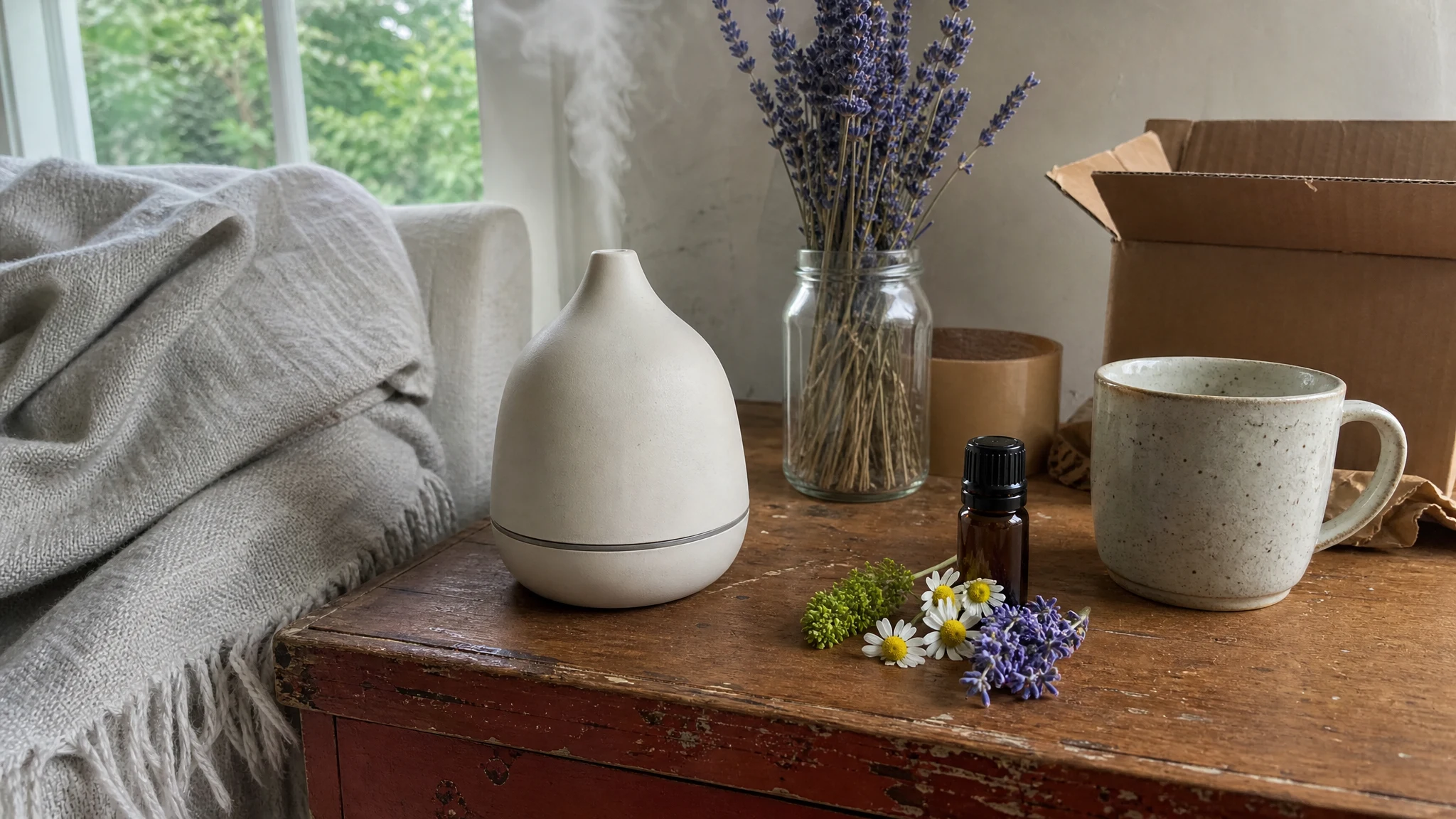
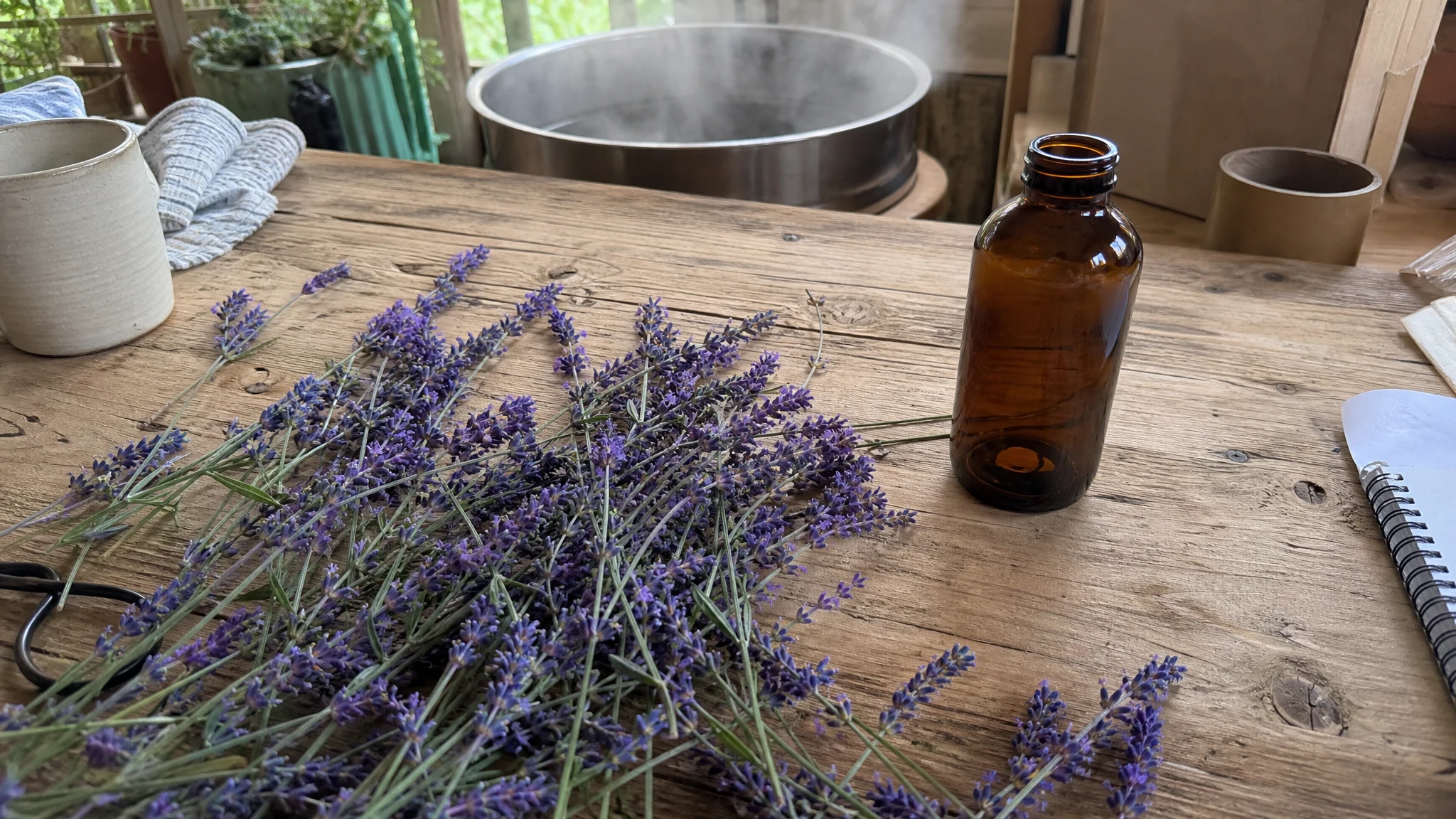
Bergamot peel oil (Citrus bergamia) is cold-pressed rather than distilled, which keeps its volatile citrus terpenes, mostly limonene, close to intact. That makes it the fastest-moving part of the blend: the bright snap you smell in the first few minutes a diffuser is running. Lavender, steam-distilled from the purple flower spikes, sits in the middle of the arc, carrying the floral body of the scent once the citrus top has faded. Chamomile (Matricaria chamomilla), also steam-distilled but from the small white and yellow blooms, is the slowest and warmest of the three, with an apple-like quality that lingers after the bergamot and lavender have largely evaporated. Instead of one note degrading on its own, you get a sequence: citrus first, floral through the middle, soft and fruity at the end. That's the actual mechanism behind why this combination is often described as "rounded" rather than sharp — it isn't a flattering adjective, it's a description of an evaporation sequence that doesn't collapse into a single flat note.
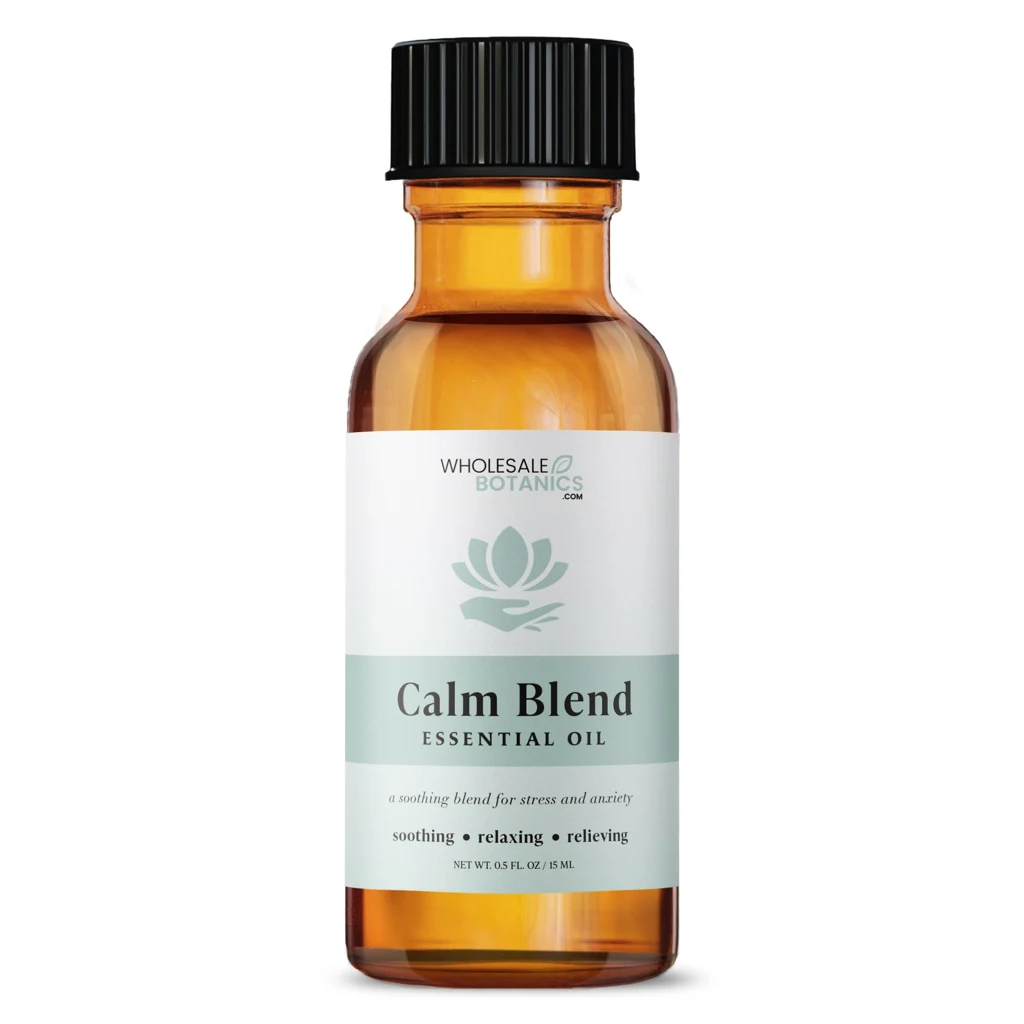
This is also why we combine the three in fixed proportions for our Calm Essential Oil Blend rather than leaving it to guesswork. Getting the ratio wrong in either direction (too much bergamot, not enough lavender) throws off the sequence and you're back to a lopsided scent, just a different one.
Ready to try Calm Essential Oil Blend?
Sold in sizes from 0.5 oz to 16 oz, lab-tested and shipped fast.
Shop Calm Essential Oil BlendBuilding it out in a diffuser
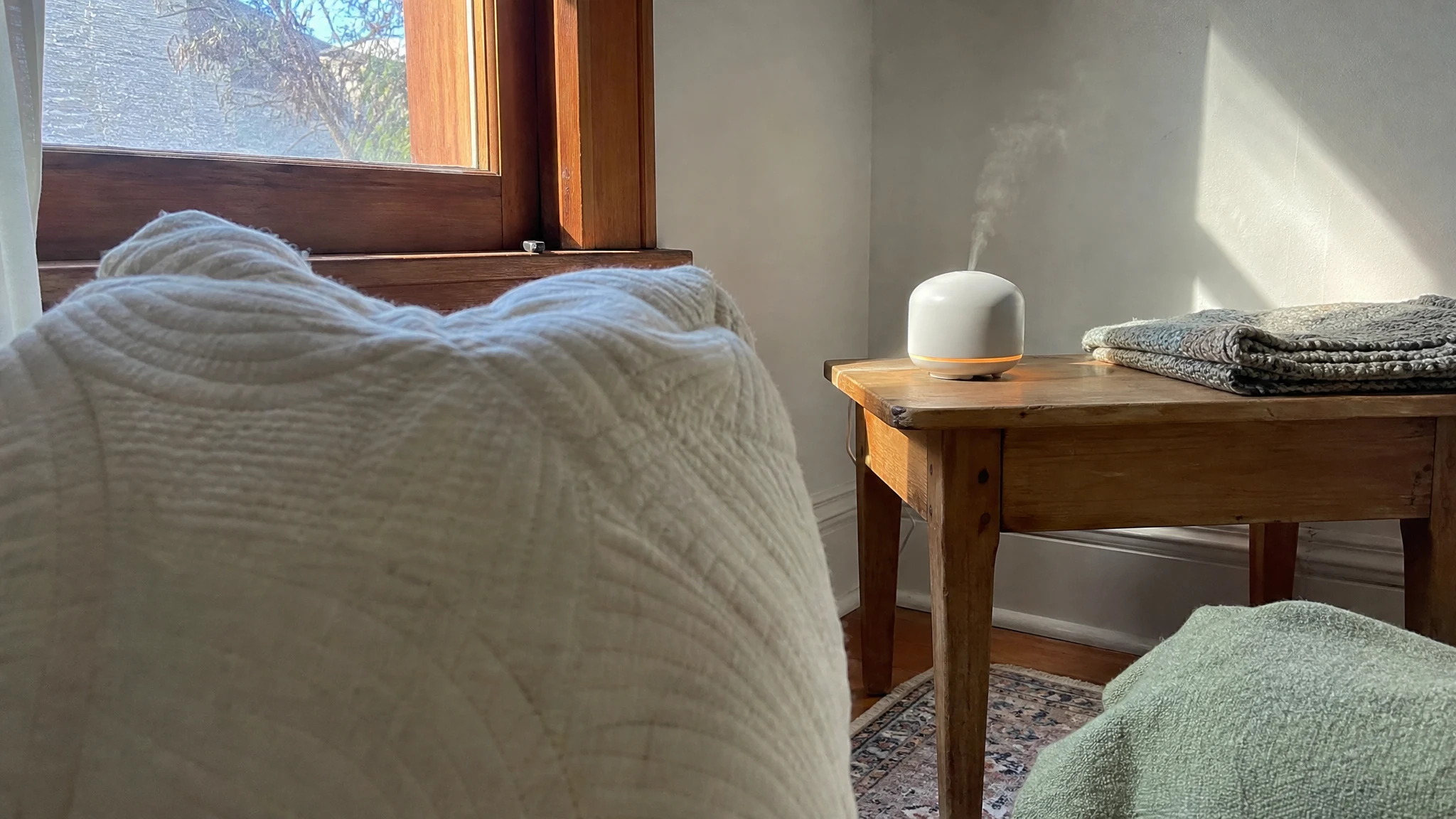
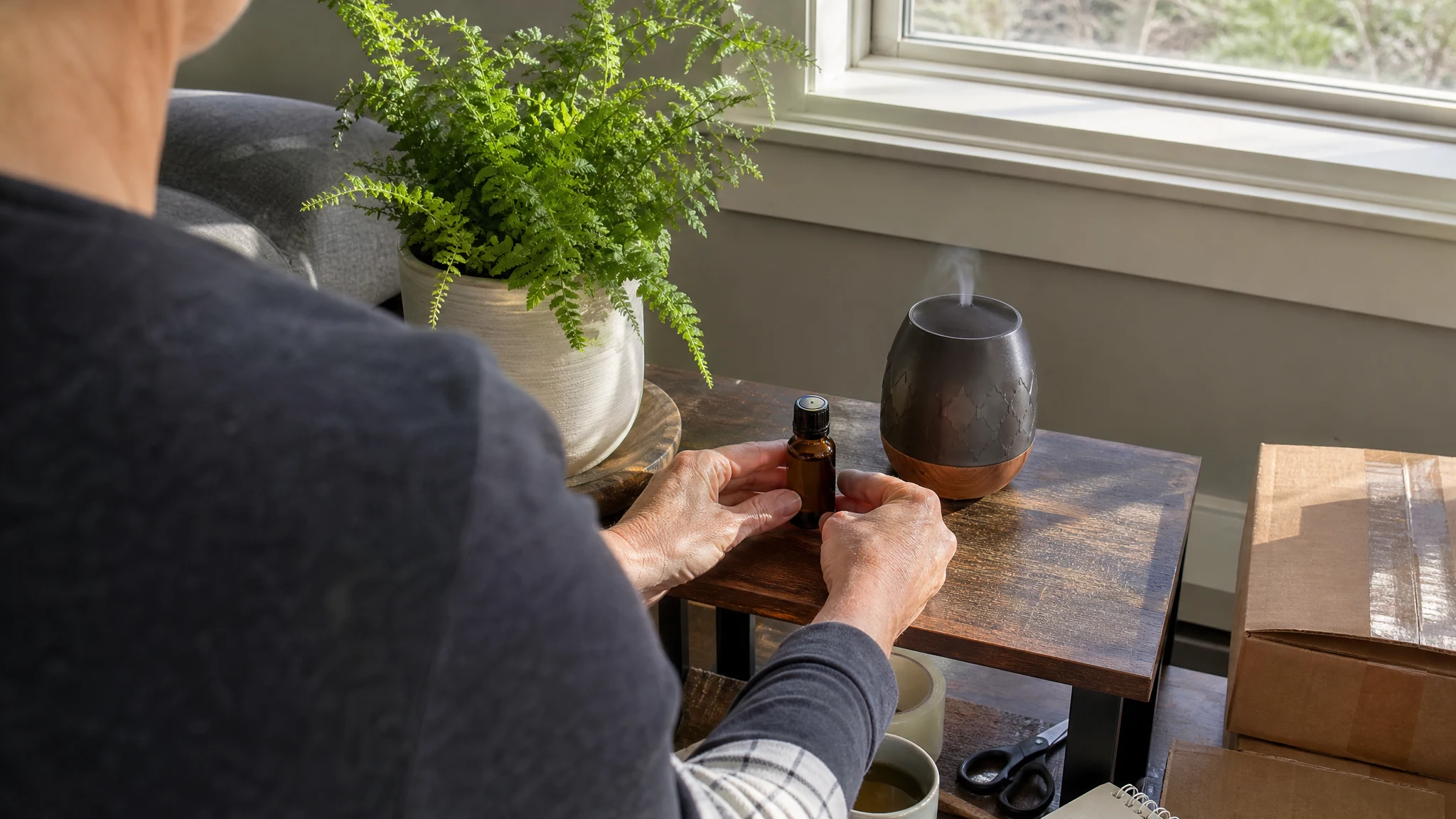
On its own, Calm reads as floral, citrusy, and herbaceous, and it's suited to the kind of all-day, low-key scenting people want in a living room or office rather than a single showcase note. If you want to extend the base further, it layers cleanly with cedarwood, vanilla, or sandalwood, all of which sit on the slower end of the evaporation curve and reinforce the chamomile's warmth rather than compete with the citrus opening.
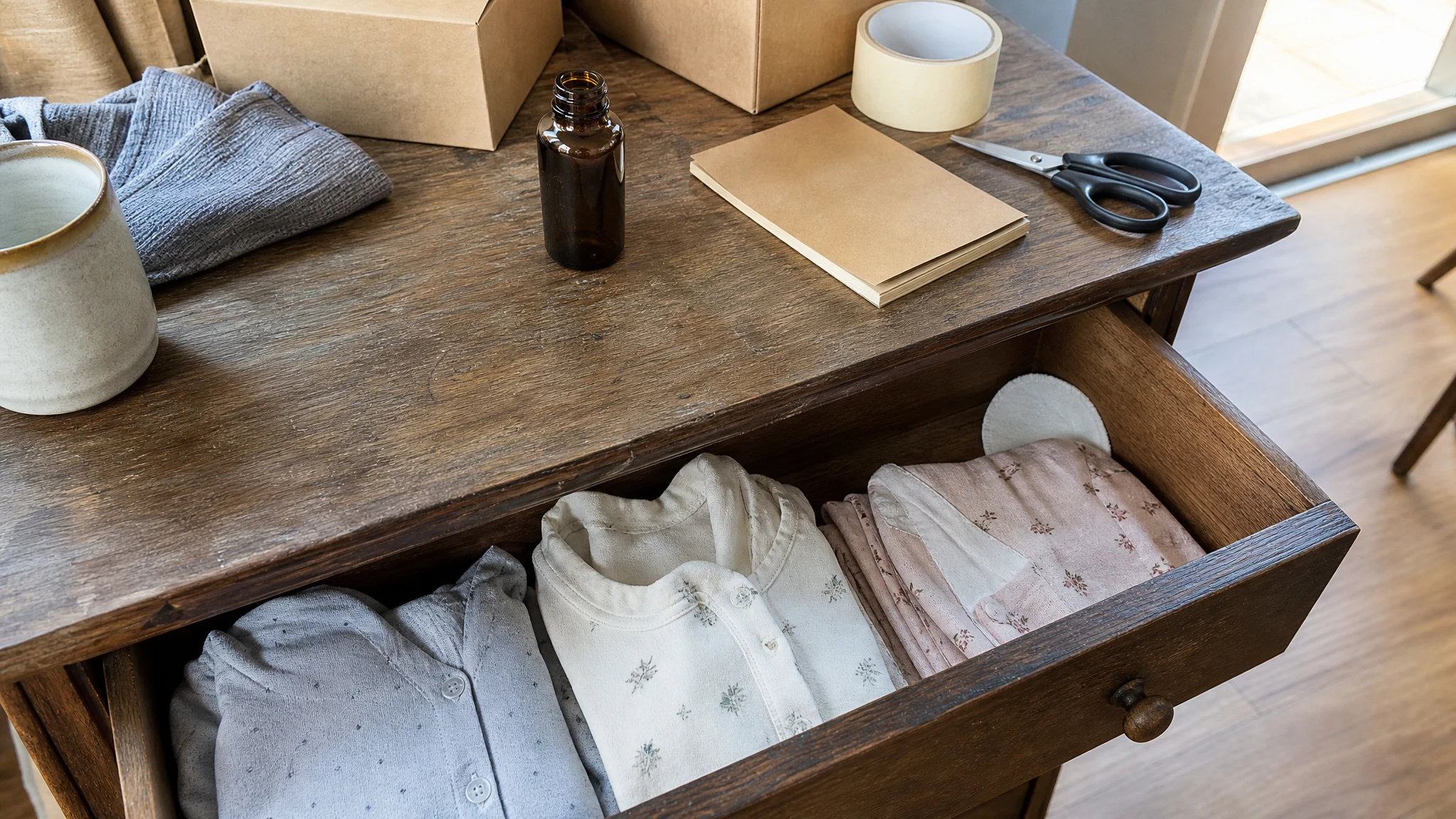
The blend isn't limited to a diffuser. A small amount stirred into melted soap base or candle wax carries the scent into a finished product. A cotton pad dropped into a dresser drawer or gym bag holds the fragrance for weeks without a diffuser running at all. Mixed into an unscented lotion, or into a spray bottle with water and witch hazel for a simple room mist, it works as scent rather than as an active skincare ingredient — these are cosmetic, aroma-driven uses, not treatments.
Where this blend needs a second thought
Cold-pressed bergamot oil contains furanocoumarins, including bergapten, which are phototoxic on skin exposed to UV light after application (Tisserand & Young, Essential Oil Safety, 2nd ed., 2014). That's a concern for the lotion or skin-mist uses mentioned above, not for a diffuser running in a room, since inhalation doesn't carry the same photosensitivity risk. If you're putting this blend on skin that will see sun, keep it covered or plan around that.
Chamomile belongs to the Asteraceae (daisy) family, and people with a known sensitivity to ragweed, daisies, or chrysanthemums can show cross-reactivity to other plants in that family, including chamomile (Paulsen, Contact Dermatitis, 2002). If that applies to you, patch-test before any skin use and go slowly with diffusion in a small space.
Diffusing around cats deserves its own caution. Cats process certain aromatic compounds far more slowly than dogs or humans because they lack some of the liver enzymes involved in metabolizing them, and veterinary sources recommend running diffusers only in well-ventilated rooms the cat can leave (Cornell Feline Health Center). If you share a small space with a cat, crack a window or diffuse somewhere your cat isn't confined for hours at a stretch.
Pregnant people, infants, and anyone with asthma or a history of fragrance sensitivity should check with their physician or a board-certified aromatherapist before making a diffuser blend part of a daily routine. None of this is a reason to avoid the blend; it's just the honest list of who should be more deliberate about how and where they use it. For everyone else, it's a straightforward case of understanding why a blend outlasts a single oil, and using that to scent a room on purpose rather than by accident.
Frequently Asked Questions
Why does lavender oil smell different partway through a diffuser cycle?
Lavender's scent comes mainly from linalool and linalyl acetate, which evaporate at different rates. The lighter, sweeter fraction burns off faster, leaving a sharper, more camphoraceous note behind as diffusion continues.
What role does bergamot play in the Calm Essential Oil Blend?
Bergamot is cold-pressed, which keeps its volatile citrus terpenes, mostly limonene, close to intact. That makes it the fastest-evaporating part of the blend, giving the bright citrus snap noticeable in the first few minutes of diffusing.
Is it safe to put this blend on skin before going outside?
Not without caution, because cold-pressed bergamot contains furanocoumarins like bergapten, which are phototoxic on skin exposed to UV light. The article says this concern applies to lotion or skin-mist uses, not diffusing, and recommends keeping treated skin covered.
Can I diffuse this blend if I have a cat?
Yes, but with care, since cats lack some liver enzymes needed to metabolize certain aromatic compounds as quickly as dogs or humans. The article advises running diffusers only in well-ventilated rooms the cat can leave, per Cornell Feline Health Center guidance.
What other oils pair well with this blend?
The article says the blend layers cleanly with cedarwood, vanilla, or sandalwood. These sit on the slower end of the evaporation curve and reinforce chamomile's warmth rather than competing with bergamot's citrus opening.
Who should be cautious before using this blend regularly?
The article flags people sensitive to ragweed, daisies, or chrysanthemums due to chamomile's Asteraceae family, plus pregnant people, infants, and those with asthma or fragrance sensitivity. It recommends patch-testing or consulting a physician or aromatherapist first.