 DIY Recipes
Why Lavandula angustifolia Is Paired with Chamomile and Bergamot Instead of Used Alone
Search "lavender calming oil" and nearly every result tells you the same thing: lavender is the oil for relaxation, use it on its own, done. What that advice skips is what's actually in the bottle — and why a straight lavender oil doesn't always behave the way the single-note story suggests, especially once it's running in a diffuser for more than a few minutes.
Table of Contents
Key Takeaways
- Linalool and linalyl acetate often make up over half of lavender oil's volume.
- Lavender alone can turn sharp and camphoraceous as lighter fractions evaporate.
- Bergamot's monoterpenes evaporate fastest, creating the blend's initial citrus top note.
- Chamomile's heavier sesquiterpenes, including chamazulene, linger longest as the base note.
- Bergamot peel oil contains furanocoumarins like bergapten, which raise UV phototoxicity risk on skin.
Lavender's aroma comes from mostly two molecules
Lavandula angustifolia essential oil is chemically simpler than its reputation implies. Gas chromatography studies on lavender oil consistently find linalool and linalyl acetate making up the bulk of the oil, often together accounting for well over half its volume (Cavanagh & Wilkinson, 2002, Phytotherapy Research). That's not a flaw — it's exactly what gives lavender its clean, floral-herbaceous signature. But it also means a lavender-only oil reads as one note held for a long time: soft at first, then increasingly sharp and camphoraceous as the lighter fractions evaporate and the heavier, more herbal compounds are what's left in the air.
A diffuser doesn't smell the same at minute one and minute forty
This is the part generic "best oils for calm" lists almost never mention: essential oils evaporate at different speeds depending on molecular weight, and that changes how a scent reads over time. In classic perfumery, this is why blends are built from top, heart, and base notes rather than from a single ingredient (Calkin & Jellinek, Perfumery: Practice and Principles, 1994). Citrus bergamia (bergamot) peel oil is loaded with small, volatile monoterpenes like limonene, so it hits first and fastest — that's the bright citrus snap at the top of this blend. Lavandula angustifolia sits in the middle, carrying the floral body for most of the time it's in the air. Matricaria chamomilla (chamomile) brings heavier sesquiterpene compounds, including the chamazulene that gives true chamomile oil its blue-green tint and apple-like warmth, and those molecules linger longest, anchoring the scent after the citrus has faded (McKay & Blumberg, 2006, Phytotherapy Research). Put a single-note lavender oil in a diffuser and you get one evaporation curve. Put three oils with three different volatilities in the same bottle and you get a scent that actually moves — bright, then floral, then warm — instead of fading in place.
So why not just add more lavender?
This is where we'd push back on the generic advice a little. More lavender doesn't fix the one-note problem — it just makes that note louder for longer, and depending on your nose, the camphoraceous edge gets more noticeable, not less. Rounding out an aroma isn't about concentration, it's about layering compounds with different evaporation rates and different character. That's the actual reasoning behind this blend: bergamot opens it, lavender carries it, chamomile closes it, and together they read as rounded and herbaceous rather than sharp or sweet — a different aromatic goal than a single-oil lavender bottle is built for.
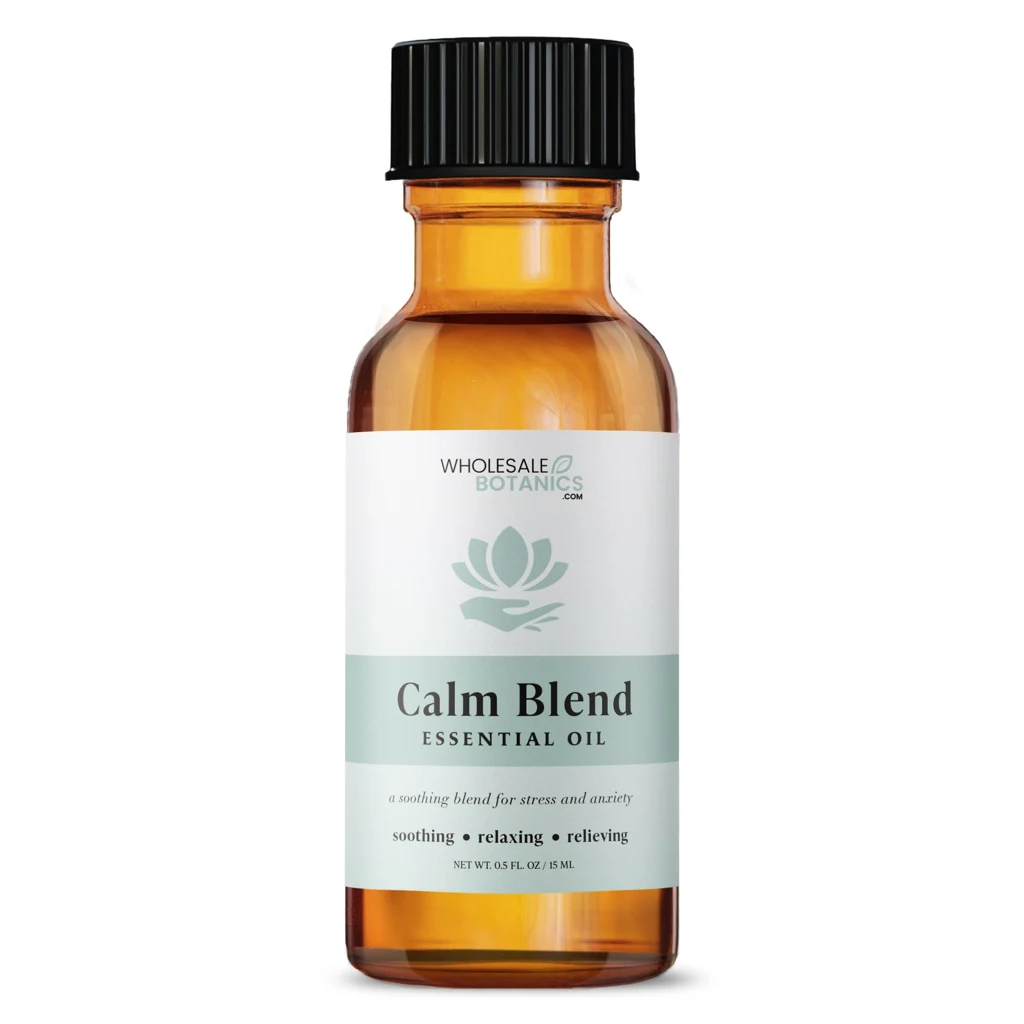
Ready to try Calm Essential Oil Blend?
Sold in sizes from 0.5 oz to 16 oz, lab-tested and shipped fast.
Shop Calm Essential Oil BlendWhat you give up by blending
To be fair about the trade-off: if what you actually want is the true, unaccompanied scent of Lavandula angustifolia — for a recipe that calls for it specifically, or because you just prefer that one note on its own — a blend isn't the right tool, and we wouldn't pretend otherwise. We don't make Calm as a single-oil lavender product; it's built from the start as a three-oil blend of steam-distilled lavender, steam-distilled chamomile, and cold-pressed bergamot peel oil, combined in careful proportions in small batches. That's a different product with a different purpose than a straight lavender oil, and it's worth knowing which one you're actually reaching for.
Where it's actually used
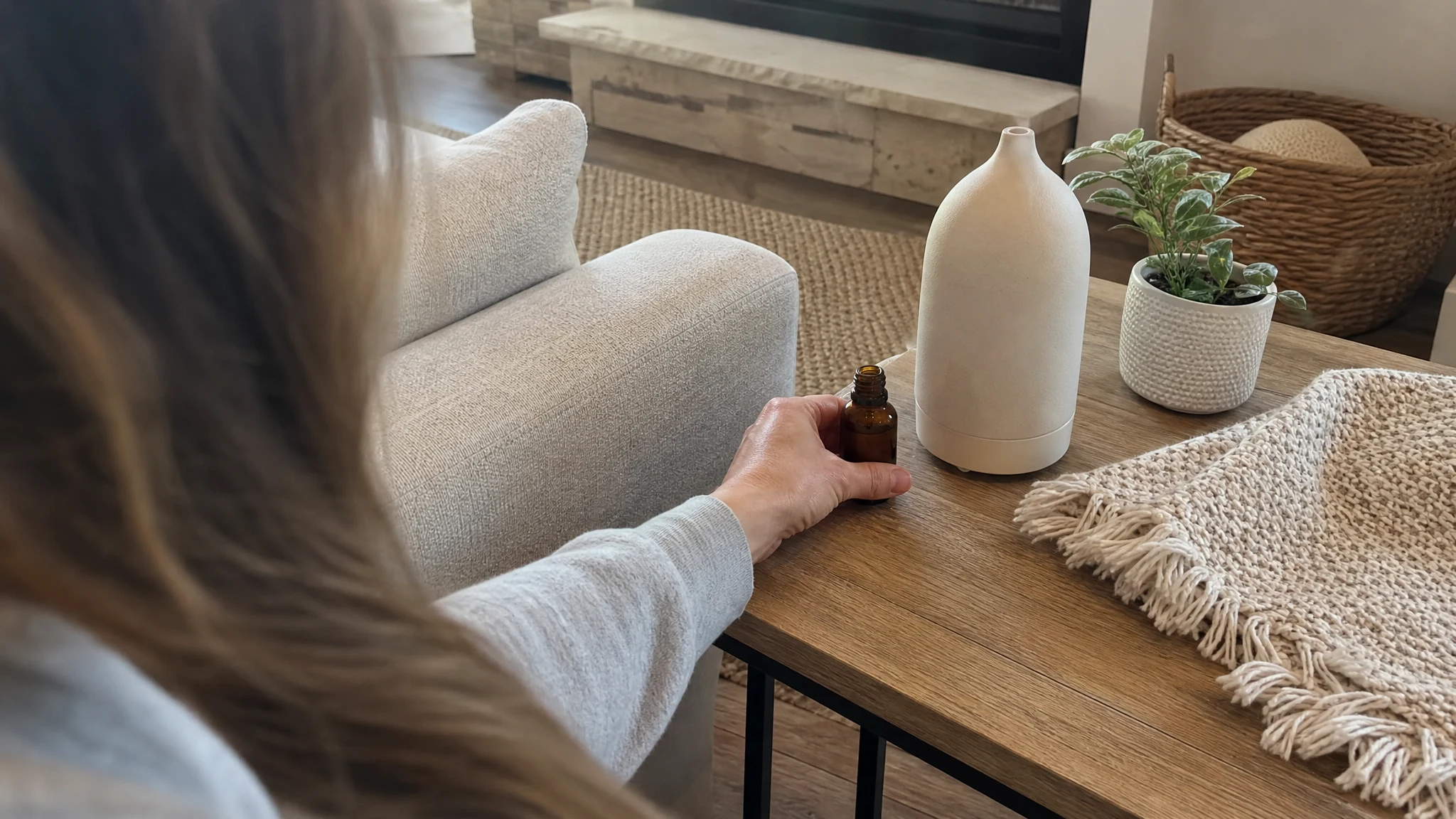
In practice, most people keep this blend near a diffuser for everyday scenting of a living room or office, and it layers well alongside cedarwood, vanilla, or sandalwood if you want to build something more custom. Beyond the diffuser, stirring a small amount into melted soap base or candle wax carries the fragrance into finished goods, a scented cotton pad tucked into a dresser drawer or gym bag holds the scent for weeks, and a few drops in unscented lotion — or in a spray bottle with water and witch hazel — makes a simple room mist. The Calm Essential Oil Blend itself is available at /shop/ if you'd rather start from the finished blend than build your own.
What to know before it touches skin
Because this blend includes cold-pressed bergamot peel oil, it's worth knowing that expressed bergamot oil naturally contains furanocoumarins, including bergapten, which can make skin more reactive to UV light — a genuine phototoxicity concern that the International Fragrance Association restricts for leave-on skin products (IFRA). The practical takeaway isn't "never touch it," it's: dilute before any skin contact, patch test first, and avoid direct sun exposure on treated skin for the rest of the day. Beyond that, treat it like any essential oil blend — keep it away from eyes, don't ingest it, store it out of reach of children and pets, and if you're pregnant, nursing, or have particularly reactive or photosensitive skin, check with a dermatologist or a certified aromatherapist before using it on skin at all (FDA). None of that is a reason to skip the diffuser or candle-wax uses above — it's specifically a skin-and-sunlight issue, not a reason to avoid the blend altogether.
The short version: Lavandula angustifolia on its own is a fine, simple oil, and there's nothing wrong with wanting it straight. But if what you're after is something that still reads as rounded and recognizably floral forty minutes into a diffuser cycle instead of one note held at increasing intensity, that's a different design problem — and it's the one chamomile and bergamot are there to solve.
Frequently Asked Questions
Why does lavender oil alone smell sharper over time in a diffuser?
Because lavender's lighter, volatile compounds evaporate first, leaving behind heavier, more herbal and camphoraceous molecules. The article explains this is a natural result of lavender's chemistry, dominated by linalool and linalyl acetate, not a flaw in the oil itself. Blending with other oils of different volatilities avoids this one-note effect.
Does adding more lavender oil fix the sharp, one-note problem?
No, the article states more lavender just makes the same note louder for longer, often intensifying the camphoraceous edge rather than softening it. Rounding out an aroma requires layering compounds with different evaporation rates and characters, which is why bergamot and chamomile are added instead of extra lavender.
Is it safe to put this blend directly on skin?
Not without precautions, because the cold-pressed bergamot peel oil contains furanocoumarins like bergapten, which can increase skin's reactivity to UV light. The article advises diluting before skin contact, patch testing first, and avoiding sun exposure on treated skin for the rest of the day.
What scents pair well with this lavender, chamomile, and bergamot blend?
The article says it layers well with cedarwood, vanilla, or sandalwood in a diffuser blend for a more custom aroma. It also layers nicely with unscented lotions or candle wax for scenting finished goods.
How can I use this blend beyond a diffuser?
The article lists several uses: stirring it into melted soap base or candle wax, tucking a scented cotton pad into a drawer or gym bag, or adding drops to unscented lotion or a water-and-witch-hazel spray for a room mist. Each method carries the scent into a different everyday context.
Who should avoid using this blend on their skin?
The article recommends that pregnant or nursing individuals, or those with particularly reactive or photosensitive skin, check with a dermatologist or certified aromatherapist before skin use. This caution stems from the bergamot component's phototoxicity risk, not a general restriction on the blend's diffuser or wax uses.