 Safety & Dilution
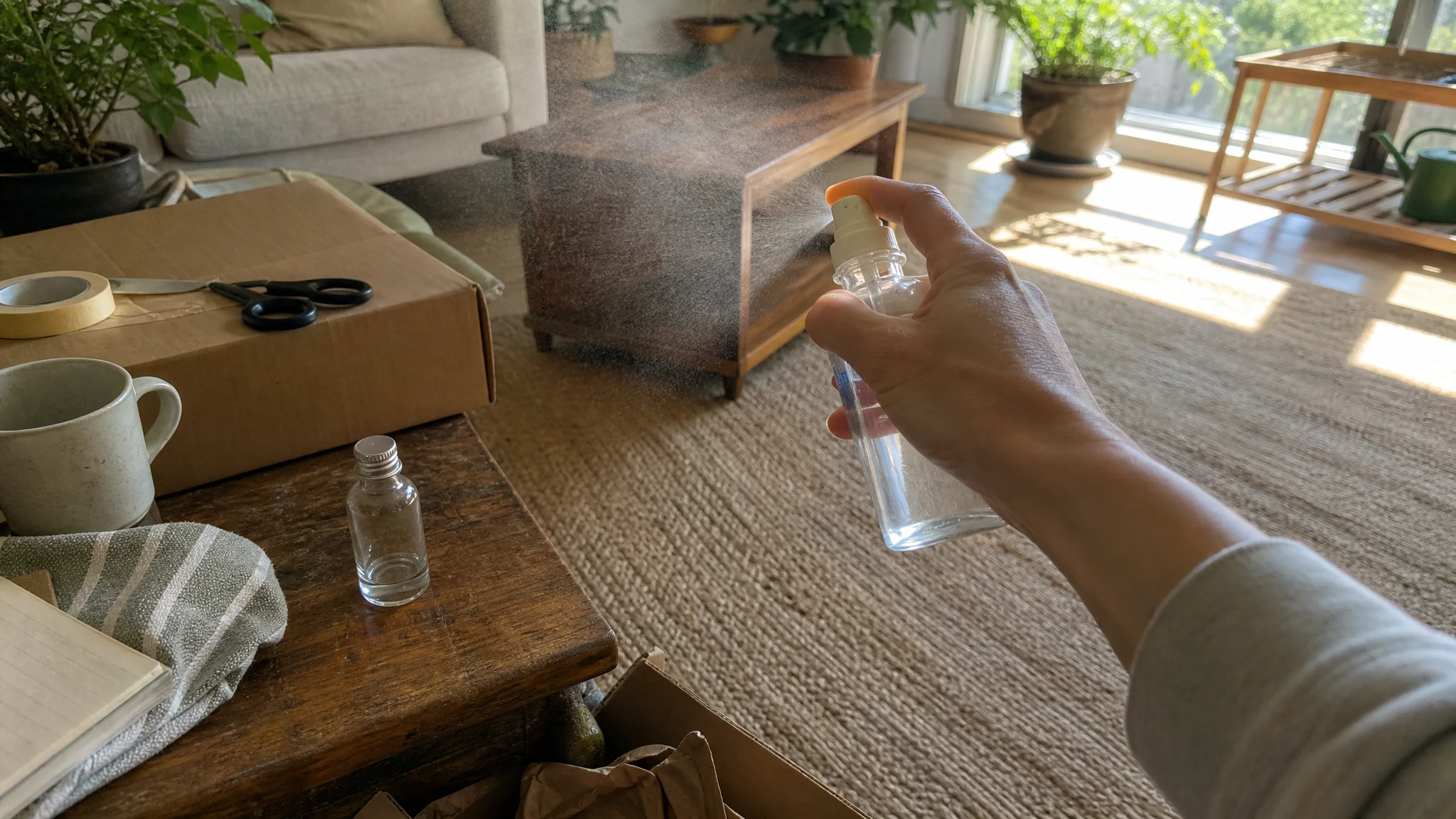
Making a Simple Room Mist: Mixing Essential Oil with Water and Witch Hazel in a Spray Bottle
Search for a DIY room spray recipe and you'll land on some version of the same three ingredients: water, witch hazel, and a handful of drops of essential oil. Almost nobody explains why witch hazel is in there, though, which is a shame, because once you understand its actual job, the whole recipe makes a lot more sense — and you'll stop expecting it to do something it can't.
Table of Contents
Key Takeaways
- Essential oils are lipophilic and separate from water within minutes regardless of shaking technique.
- Witch hazel is a dispersant, not a true emulsifier, so the bottle must be shaken before every use.
- Witch hazel's roughly 14% alcohol content helps hold oil in suspension but doesn't preserve the mixture.
- A 2 oz bottle recipe uses 1 tablespoon witch hazel and 10-15 drops of oil, under 1.5% by volume.
- Bergamot's bergapten can cause phototoxic skin reactions if mist drifts onto skin later exposed to sun.
Oil and water really don't mix
Essential oils are lipophilic — they're built from small, oil-soluble molecules that have no attraction to water molecules at all. Shake lavender oil into a bottle of plain water and it will float back to the surface within minutes, every time, no matter how hard you shake. That's not a flaw in your technique; it's basic polarity. Anything you spray from that bottle in the first few seconds after shaking will carry far more concentrated oil than what comes out a minute later, which is how you end up with a faint mist followed by a greasy spot on the sofa.
What witch hazel is actually doing in there
This is where witch hazel earns its place, though not quite the way most recipes imply. Witch hazel extract (distilled from Hamamelis virginiana bark and twigs) is mostly water, but commercial versions typically include a small amount of alcohol — often in the range of 14% — added during processing as a solvent and preservative (Cosmetic Ingredient Review, 2021 safety assessment of Hamamelis virginiana-derived ingredients). That modest alcohol content gives witch hazel a slightly better ability to hold oil molecules in suspension than plain water alone.
What it is not doing is emulsifying the mixture in any permanent sense. A true emulsifier, like polysorbate 20, has a molecular structure that bonds to both oil and water and keeps them locked together indefinitely. Witch hazel doesn't do that. It's a dispersant, not an emulsifier, which is exactly why every homemade room spray recipe tells you to shake the bottle before each use — and why you actually need to, every single time, not just once after mixing.
Getting the ratio right for a mist, not a lotion
It's worth separating this from skin-dilution math, because the two aren't the same problem. Topical dilution guidelines exist to keep essential oil concentration low enough on skin that stays in contact with it for hours — commonly cited guidance from Tisserand and Young's Essential Oil Safety (2nd ed., 2014) puts everyday adult skin dilution around 2–5%. A room mist is airborne for seconds and lands on surfaces, not skin, so it doesn't need to follow that same ceiling.
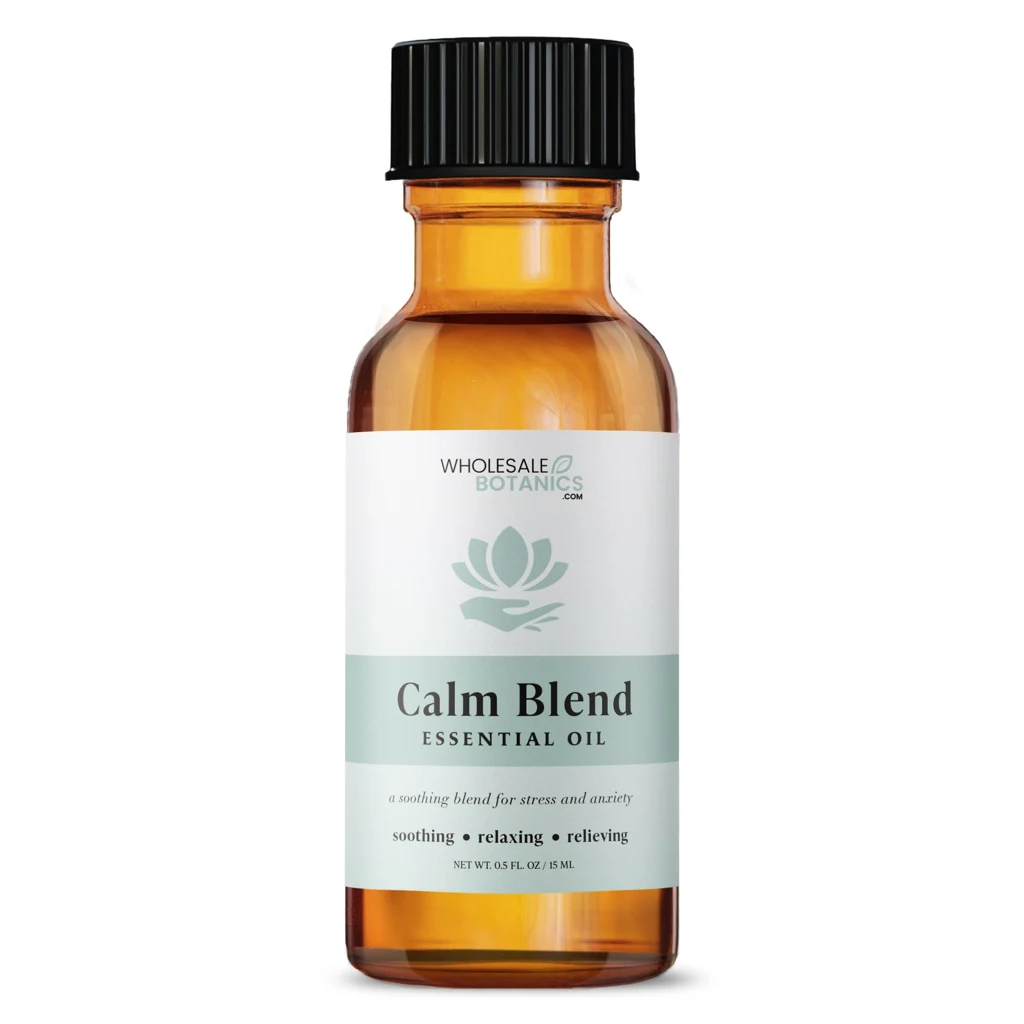
A reasonable starting point for a 2 oz (60 mL) glass spray bottle is about 1 tablespoon (15 mL) of witch hazel, 10–15 drops of essential oil, and the rest filled with water. At roughly 20 drops per mL, that's about 0.5–0.75 mL of oil in 60 mL total — under 1.5% by volume. Our Calm Essential Oil Blend, a lavender, chamomile, and bergamot blend, works fine at that ratio; its floral-citrus profile comes through clearly without needing to push the drop count higher. If the scent feels thin after a day or two, add a few more drops rather than assuming the recipe is wrong — oil settles and fades at different rates once it's airborne.
Ready to try Calm Essential Oil Blend?
Sold in sizes from 0.5 oz to 16 oz, lab-tested and shipped fast.
Shop Calm Essential Oil BlendMixing and bottling it
Add the witch hazel to the bottle first, then the essential oil, then top with water — mixing the oil into the witch hazel briefly before the water dilutes everything helps it disperse a little more evenly. Use a glass spray bottle rather than plastic if you can. Cold-pressed citrus oils like the bergamot in this blend contain monoterpenes that can slowly soften or degrade some plastics with repeated contact, which isn't a safety issue so much as a reason your spray trigger might eventually stick or the bottle might cloud.
Where to spray it, and where not to
Test any new mist on a hidden corner of fabric or finished wood before spraying it broadly — upholstery dyes and some wood finishes react to oil contact with discoloration, and that's worth knowing before you mist the whole couch.
One caution specific to this particular blend: cold-pressed bergamot oil contains bergapten, a furocoumarin compound known to cause phototoxic skin reactions when oil-contaminated skin is exposed to UV light (Tisserand & Young, 2014). A room mist isn't applied to skin on purpose, but if it drifts onto an exposed arm or neck and that skin then gets direct sun, that combination is where phototoxicity shows up. It's a reasonable argument for misting a room before you're in it rather than while you're standing under the spray, and for being mindful near sunny windows.
If there are cats in the house, be thoughtful about where and how often you use any essential oil mist. Cats lack some of the liver enzymes that let other mammals metabolize certain plant compounds efficiently, and veterinary poison control resources flag essential oil exposure — including from diffusers and sprays in enclosed spaces — as a reason for caution around cats specifically (Pet Poison Helpline, Essential Oils). A light mist in a well-ventilated room is a different exposure than a sealed room with a running diffuser, but if you share your home with a cat, keep rooms ventilated, don't spray directly on or near them, and check with your veterinarian if you're unsure. The same goes for anyone in the house with asthma or a diagnosed fragrance sensitivity — scented sprays in a closed room can be enough to trigger a reaction, so crack a window or door when you use one.
And to be clear about what this product is and isn't: this is a fragrance blend for scenting a room, not a cleaning or disinfecting product, and it isn't formulated or sold as a skin-care treatment.
How long a batch actually lasts
This is the part most recipes skip entirely. A water-based mixture without a full preservative system is a reasonable environment for mold and bacteria to grow over time — the alcohol in witch hazel, at roughly 14%, isn't concentrated enough to preserve the mixture the way a true alcohol-based linen or room spray (usually 60–70% alcohol) would be. That's not a reason to avoid this recipe; it's a reason to treat it as something you make in small batches and use up, rather than a shelf-stable product. Mix only what you'll use in a couple of weeks, store the bottle out of direct sunlight and away from heat (both the alcohol and the citrus component degrade faster in warmth and UV), and if it ever smells off or looks cloudy in a new way, toss it and mix a fresh batch instead of troubleshooting the old one.
None of this makes a spray-bottle mist complicated — it's a five-minute project. It just helps to know that the witch hazel is there to buy you a few better seconds of mixing, not to solve the oil-water problem permanently, and that the bottle in your hand is something to use up, not something to shelve.
Frequently Asked Questions
Why does my homemade room spray need to be shaken before every use?
Because witch hazel only disperses oil temporarily rather than permanently binding it to water. Essential oils are lipophilic and will separate back out within minutes, so the article explains that shaking right before each spray is necessary every single time, not just once after mixing.
Can I use a higher concentration of essential oil for a stronger scent?
The article's starting ratio of 10-15 drops in a 2 oz bottle is under 1.5% by volume, well below topical skin-dilution limits, since room mist lands on surfaces rather than skin for hours. If scent fades after a day or two, it suggests adding a few more drops rather than assuming the recipe is wrong.
Is it safe to use this room mist around cats?
The article advises caution, noting cats lack certain liver enzymes needed to metabolize some plant compounds in essential oils. It recommends keeping rooms ventilated, avoiding spraying directly on or near cats, and checking with a veterinarian if unsure.
Why should I use a glass bottle instead of plastic?
Cold-pressed citrus oils like bergamot contain monoterpenes that can slowly soften or degrade some plastics with repeated contact. The article notes this isn't a safety issue but can eventually cause a spray trigger to stick or the bottle to cloud.
How long does a batch of homemade room mist actually last?
The article states this is often skipped in recipes: a water-based mixture without a full preservative system is a reasonable environment for mold and bacteria growth over time, since witch hazel's roughly 14% alcohol isn't concentrated enough to preserve it like a true alcohol base.
Where shouldn't I spray this essential oil mist?
Test on a hidden corner of fabric or finished wood first, since upholstery dyes and some wood finishes can discolor from oil contact. The article also advises care near sunny windows due to bergamot's phototoxicity risk and suggests misting a room before entering it rather than while standing in the spray.