 Safety & Dilution
Understanding the Word 'Therapeutic' on Essential Oil Labels: What It Does and Does Not Tell You
Scroll through enough essential oil listings and you'll start seeing the same phrase over and over: "100% therapeutic grade," "clinical grade," "certified pure therapeutic." It reads like an official classification, something handed down by a lab or a regulatory agency. It isn't, and that gap between how the phrase sounds and what it actually means is worth understanding before you buy anything labeled this way.
Table of Contents
Key Takeaways
- The FDA states there is no legal or regulatory definition for terms like "therapeutic grade."
- Essential oils sold for scent are regulated by the FDA as cosmetics, not drugs.
- In September 2014 the FDA warned doTERRA and Young Living over disease-cure marketing claims.
- ISO 3515:2002 sets checkable composition standards for Lavandula angustifolia lavender oil.
- Cold-pressed bergamot oil contains bergapten, which can cause phototoxic reactions in sunlight.
There's no agency behind the word
In the United States, essential oils sold for scent are regulated by the FDA as cosmetics, the same category as lotion or perfume. The agency's own guidance on aromatherapy products states plainly that there is no legal or regulatory definition for grading terms like "therapeutic grade" (U.S. Food and Drug Administration, "Aromatherapy," fda.gov). No government body inspects a lavender farm and stamps a bottle "therapeutic." No independent board issues that certification either. A company can print it on a label because it chose to, not because it passed anyone's test.
That matters because the word borrows credibility from medicine while carrying none of medicine's oversight. Cosmetics can be marketed for fragrance, for a pleasant scent, for supporting the skin's natural moisture barrier. The moment a product's marketing suggests it can affect a disease or a specific health condition, it crosses into drug territory under the Food, Drug, and Cosmetic Act, and that requires an entirely different, far more rigorous approval process that essential oil companies don't go through.
What happens when that line gets crossed
This isn't theoretical. In September 2014, the FDA sent warning letters to two multi-level-marketing essential oil companies, doTERRA and Young Living, over consultant and company materials asserting their oils were effective against serious illnesses, including Ebola and several forms of cancer (FDA, 2014). Those claims had nothing to do with "grade" and everything to do with marketing language outrunning what any cosmetic-classified product is permitted to say. It's a useful case study: the companies selling the highest-graded, most expensively labeled oils on the market were the ones the FDA stepped in on, precisely because a premium-sounding label doesn't come with premium regulatory backing.
What is actually standardized
None of this means essential oil quality is unmeasurable. It just isn't measured by a word like "therapeutic." The International Organization for Standardization publishes species-specific composition standards for a number of oils, including ISO 3515:2002 for lavender oil derived from Lavandula angustifolia, which sets expected ranges for the oil's chemical constituents. Gas chromatography–mass spectrometry (GC/MS) testing is the lab method actually used to check an oil against that kind of standard, confirming which compounds are present and in what proportion. If a seller references a specific ISO standard or publishes GC/MS results, that's a concrete, checkable claim. "Therapeutic grade" is not.
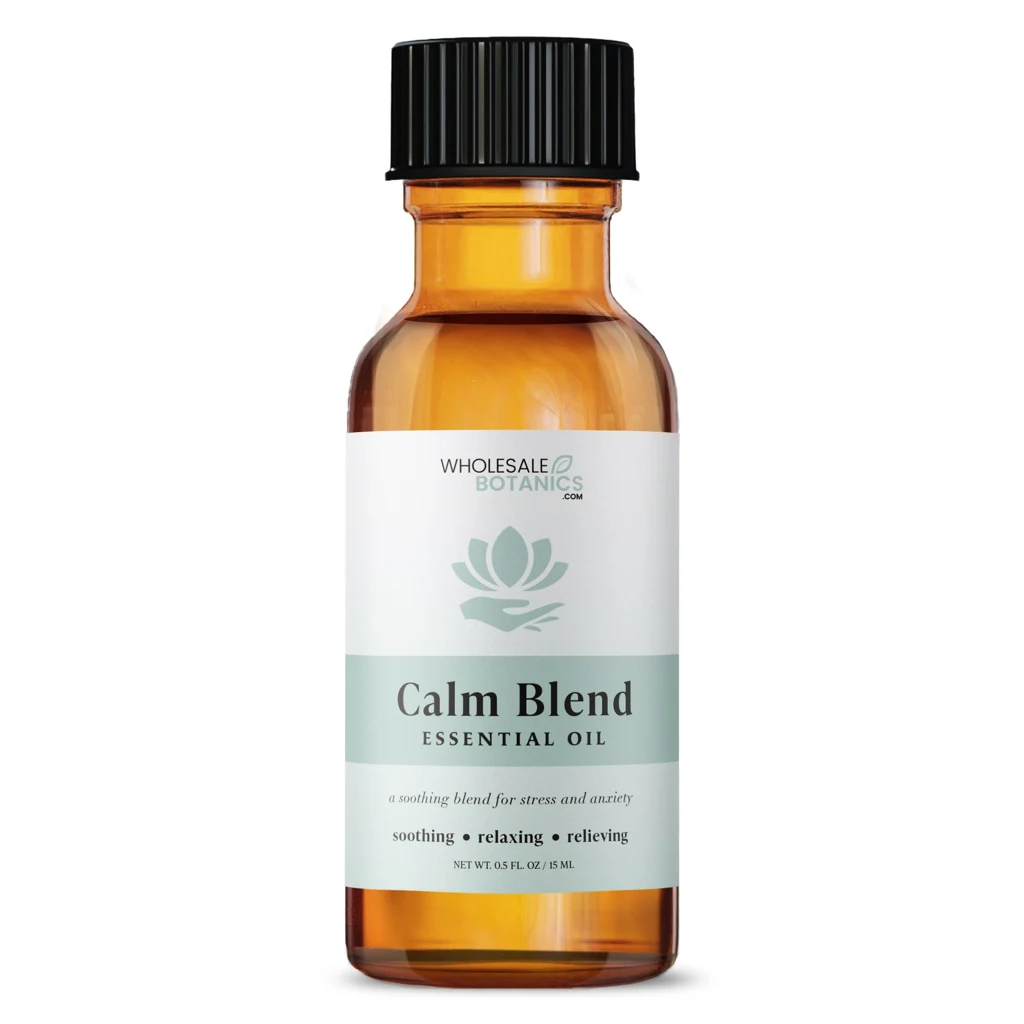
Ready to try Calm Essential Oil Blend?
Sold in sizes from 0.5 oz to 16 oz, lab-tested and shipped fast.
Shop Calm Essential Oil BlendWhat to look at on a label instead
- The Latin botanical name (Lavandula angustifolia, not just "lavender"), which tells you the actual species and rules out cheaper look-alikes
- The extraction method — steam distillation and cold pressing produce oils with different chemical profiles even from the same plant
- Whether you're buying a single oil or a blend, and what proportions make up that blend
- Whether the seller offers batch testing or composition data, rather than just a grading adjective
Those details describe the product. "Therapeutic grade" describes a feeling the label is trying to give you.
Where caution is genuinely warranted
A couple of the oils common in aromatherapy blends carry specific, well-documented handling notes worth knowing regardless of what the label calls them. Cold-pressed bergamot oil, for instance, contains furanocoumarins such as bergapten, which researchers have shown can cause a phototoxic skin reaction when applied to skin that's then exposed to sunlight (Kejlová et al., "Phototoxicity of Bergamot Oil," Food and Chemical Toxicology, 2010). That's a reason to avoid applying undiluted bergamot-containing oils to skin before time outdoors, not a reason to avoid the oil in a diffuser or candle, where it isn't in sun-exposed contact with skin.
More generally, essential oils aren't a substitute for a conversation with a physician, dermatologist, or a credentialed aromatherapist about an actual health concern. If you're buying a blend hoping it will do something specific for a particular health condition, that's a conversation worth having with one of those professionals first, not a question a scent label can answer.
Where our Calm blend fits into this
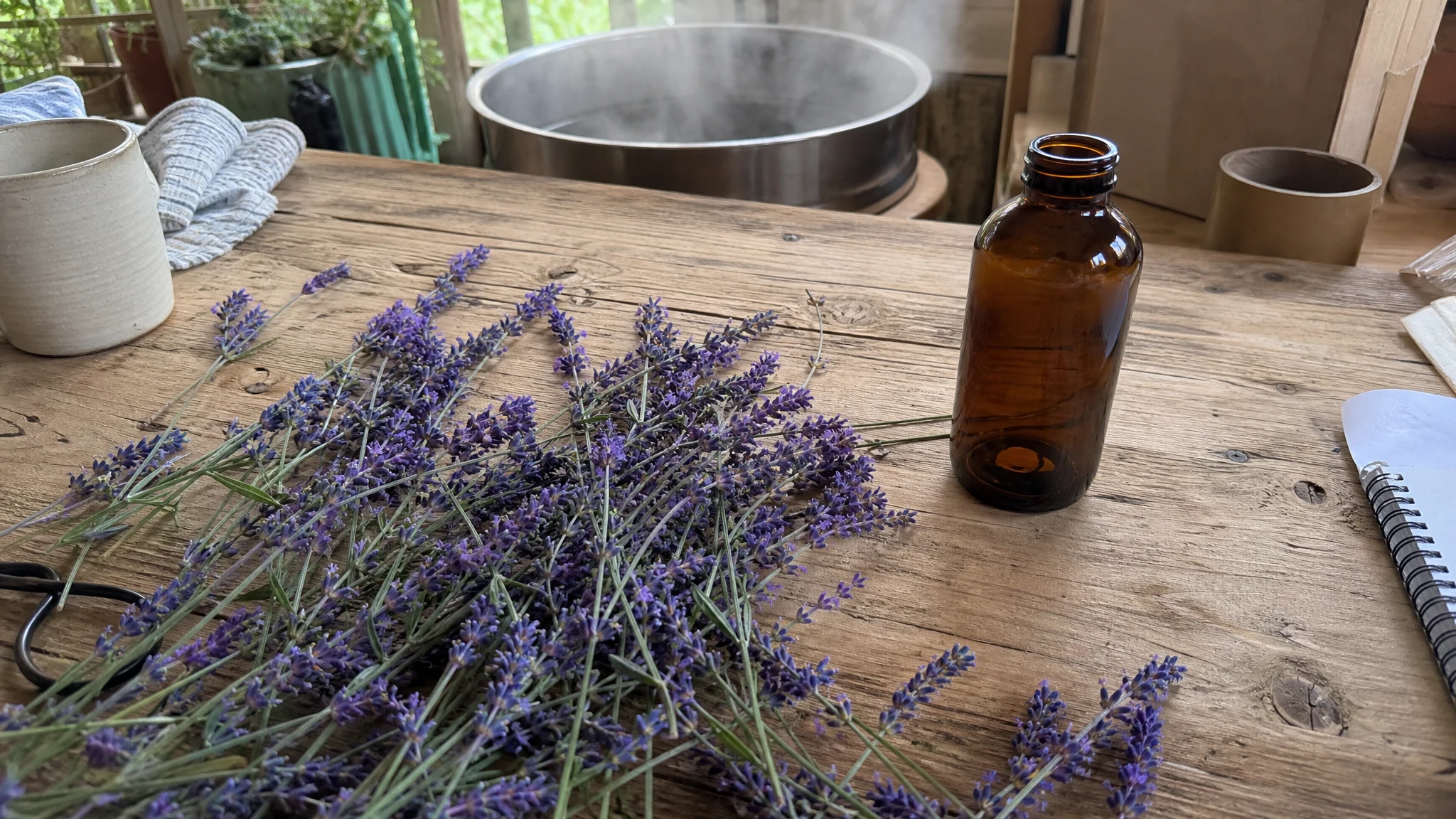
We make our Calm Essential Oil Blend from three oils processed separately before they're combined: lavender (Lavandula angustifolia) and chamomile (Matricaria chamomilla) are both steam-distilled from their flowers, and bergamot is cold-pressed from the peel of the fruit. We blend them in small batches to get a consistent result — bergamot's citrus brightness up front, lavender's floral center, chamomile's warm, apple-like finish underneath. You can see how it's built on the product page.
We don't call it therapeutic grade, because that phrase wouldn't tell you anything we haven't already told you directly: what's in it, how each oil was extracted, and how people tend to use it — in a diffuser, stirred into melted soap or candle wax, on a scented cotton pad tucked in a drawer, or added to unscented lotion. It's sold and meant to be enjoyed as a scent blend, not as a stand-in for medical care. If you're weighing a grading claim on any bottle, ours or someone else's, asking what's actually being measured is a better question than taking the adjective at face value. For more on how to read labels like this, our other articles cover related ground.
Frequently Asked Questions
Does "100% therapeutic grade" mean an oil passed an official test?
No. The FDA's own guidance says there's no legal or regulatory definition for grading terms like "therapeutic grade," and no agency or independent board inspects or certifies oils to that standard. A company prints it because it chose to, not because it passed anyone's test.
Why did the FDA take action against doTERRA and Young Living?
In September 2014 the FDA sent warning letters to both companies over consultant and company materials claiming their oils were effective against serious illnesses like Ebola and cancer. This crossed from cosmetic marketing into unapproved drug claims under the Food, Drug, and Cosmetic Act, regardless of the oils' "grade" labeling.
What can actually be measured or verified about an essential oil's quality?
Species-specific standards like ISO 3515:2002 for lavender set expected ranges for chemical constituents, and GC/MS testing checks an oil against those ranges. A seller citing a specific ISO standard or publishing GC/MS results makes a concrete, checkable claim, unlike the adjective "therapeutic grade."
Is it safe to put bergamot oil on skin before going outside?
Undiluted, cold-pressed bergamot oil contains furanocoumarins like bergapten, shown to cause phototoxic skin reactions when sun-exposed skin has been treated with it. The article notes this is a reason to avoid skin application before sun exposure, not a reason to avoid bergamot in a diffuser or candle.
What should I check on a label instead of trusting a "therapeutic grade" claim?
Look for the Latin botanical name, the extraction method, whether it's a single oil or blend with stated proportions, and whether the seller offers batch testing or composition data. These details describe the actual product rather than just giving a feeling, as the article puts it.
Does the Calm Essential Oil Blend call itself therapeutic grade?
No. The article states the makers don't call it therapeutic grade because that phrase wouldn't add anything beyond what they already disclose: the lavender, chamomile, and bergamot ingredients, how each was extracted, and how people typically use the blend.