 Sourcing & Science
Reading the Label: Lavandula angustifolia, Citrus bergamia and Matricaria chamomilla Explained
Flip over a bottle of essential oil and you'll usually find two names stacked on top of each other: something familiar, like "Lavender Oil," and something in italics underneath that looks like it belongs in a botany textbook. Most people skip straight past the italics. That's a mistake, because the italic name is doing almost all of the actual work on that label — and understanding why changes how you shop for oils, not just how you read about them.
Table of Contents
Key Takeaways
- The FDA requires cosmetic ingredients to be listed by standardized botanical names under federal labeling rules.
- Lavandula angustifolia (true lavender) is chemically distinct from lavandin, which yields more oil per acre.
- German chamomile (Matricaria chamomilla) and Roman chamomile are different plants in different genera.
- Cold-pressed bergamot retains bergapten, a compound that can make skin more sensitive to UV light.
- The blend's photosensitizing bergamot component makes it better suited for diffusing than topical skin use.
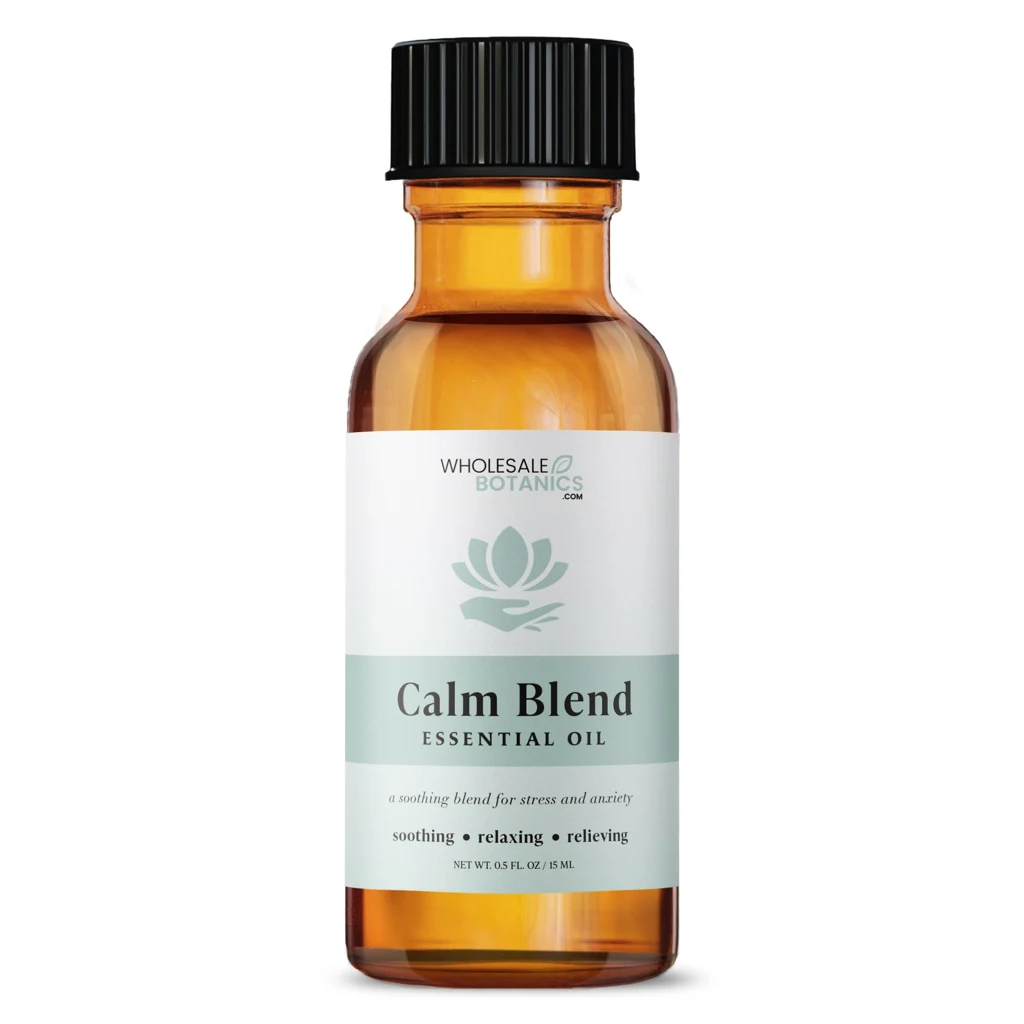
Our Calm Essential Oil Blend lists three of these binomials: Lavandula angustifolia, Citrus bergamia, and Matricaria chamomilla. None of that is decoration. Each one answers a specific question a common name can't.
Why the Latin name is on there at all
This isn't a European affectation. The FDA requires cosmetic ingredients to be listed by their standardized botanical names under federal labeling rules for ingredient declarations (U.S. Food and Drug Administration, 2024, fda.gov). The International Nomenclature of Cosmetic Ingredients (INCI) system, which underlies that requirement, exists precisely because common names are unreliable across regions, languages, and marketing departments. "Lavender" means one thing to a grower in Provence and something else entirely on a candle aisle. Lavandula angustifolia does not.
The misconception worth correcting: "lavender" is not one plant
Here's where most explanations stop short, and where it's worth being blunt instead. Lavandula angustifolia — often called true or English lavender — is a different species from Lavandula x intermedia, the hybrid known as lavandin, which is far more widely cultivated because it yields more oil per acre. The two don't smell or behave the same. True lavender runs higher in linalool and linalyl acetate, the compounds behind its soft, rounded floral character, while lavandin carries more camphor and a sharper, more medicinal edge (Lis-Balchin, "Lavender: The Genus Lavandula," 2002). A bottle labeled simply "lavender oil" with no species listed could reasonably be either one. That's not a quality judgment against lavandin — it has its own uses — but it is a reason the species name matters more than almost anything else on the label.
Chamomile has the same problem in reverse. Matricaria chamomilla (also written Matricaria recutita), the German chamomile in this blend, is botanically distinct from Chamaemelum nobile, Roman chamomile. They're not interchangeable varieties of the same herb — they're different plants in different genera, with different dominant compounds. German chamomile is the one known for chamazulene, the compound that gives steam-distilled chamomile oil its characteristic deep blue tint before it's blended into something else (National Center for Complementary and Integrative Health, 2023, nccih.nih.gov). If a label just says "chamomile," you genuinely don't know which plant you're getting until you see the binomial.
Why extraction method is the other half of the story
A species name tells you what plant you're dealing with. The extraction method tells you what's actually in the bottle, because the same plant part processed two different ways can yield chemically different oils. This blend is honest about using two methods: lavender and chamomile are steam-distilled from their flowers, while the bergamot is cold-pressed from the peel of Citrus bergamia fruit.
That distinction isn't academic for bergamot specifically. Cold-pressing citrus peel retains furanocoumarins, including bergapten, compounds that steam distillation mostly leaves behind. Bergapten is what makes cold-pressed bergamot oil phototoxic — it can increase skin sensitivity to UV light and contribute to burns or discoloration if applied to skin that then sees sun exposure (Tisserand & Young, "Essential Oil Safety," 2nd ed., 2014). The International Fragrance Association sets specific restriction limits on bergapten-containing bergamot oil in leave-on skin products for exactly this reason (IFRA, Standard on Furanocoumarins, 2023, ifrafragrance.org). This is the kind of thing a generic "essential oil ingredients" roundup glosses over, but it's genuinely the most useful fact on this label: it tells you this blend is better suited to scenting a room than to being massaged into skin that's about to see sunlight.
Ready to try Calm Essential Oil Blend?
Sold in sizes from 0.5 oz to 16 oz, lab-tested and shipped fast.
Shop Calm Essential Oil BlendWhat this actually means for how you'd use the blend
Given that mix of a photosensitizing citrus oil and two gentler floral distillates, the sensible use case for this blend is ambient, not topical. A few drops in a diffuser let the bergamot's bright citrus opening, the lavender's soft floral middle, and the chamomile's warm, apple-like finish unfold the way they're meant to, without any skin contact to worry about. It layers well with cedarwood, vanilla, or sandalwood in a diffuser blend if you want more depth. Stirred into melted soap base or a batch of candle wax, it carries that same scent profile into a finished product. A cotton pad with a few drops tucked into a dresser drawer or gym bag will hold the fragrance for weeks. If you do want it on skin or in a room spray — mixed into an unscented lotion, or into water and witch hazel for a simple mist — keep sun exposure in mind for a few hours afterward, and if you have sensitive or sun-exposed skin generally, a dermatologist or a certified aromatherapist is the right person to ask about safe dilution for your specific situation, not a blog post.
What this blend is not
It's worth saying plainly: this is a three-oil blend, not a single-species pure oil, so it isn't the right product if you specifically need an isolated Lavandula angustifolia or Matricaria chamomilla oil for a formulation that calls for one ingredient at a time. And because the bergamot component is cold-pressed rather than the furanocoumarin-reduced "FCF" bergamot some skincare lines use, this blend is a better fit for diffusing, candle- and soap-making, and linen scenting than for leave-on skin products ahead of sun exposure. None of that is a flaw in the blend — it's just what cold-pressed citrus oil is, and a label that tells you that honestly is more useful than one that doesn't.
The actual checklist for reading a label
Next time you're comparing bottles, the binomial and the extraction method are the two lines worth reading closely. If a lavender oil's label has no species name, assume you can't tell true lavender from lavandin apart from scent alone. If a chamomile oil doesn't specify German or Roman, you don't know which chemistry you're getting. And if a citrus oil doesn't say how it was extracted, ask — because cold-pressed and steam-distilled citrus oils carry different sun-exposure considerations, and that's not something you want to guess about after the fact. You can see how we list all three on the Calm Essential Oil Blend page, and more on how we talk about sourcing across the rest of our articles.
Frequently Asked Questions
Why does this blend list Latin names instead of just 'lavender' or 'chamomile'?
Common names are unreliable across regions and marketing, so the FDA requires standardized botanical names under INCI labeling rules. 'Lavender' could mean Lavandula angustifolia or lavandin, and 'chamomile' could mean German or Roman chamomile — very different plants with different chemistry. The Latin name removes that ambiguity.
Is it safe to put this blend directly on skin before going outside?
It's not the best choice, because the cold-pressed bergamot contains bergapten, a compound that increases skin sensitivity to UV light. The article recommends ambient use like diffusing, soap, or candles instead, and suggests asking a dermatologist or certified aromatherapist about safe topical dilution.
What's the difference between true lavender and lavandin?
True lavender (Lavandula angustifolia) runs higher in linalool and linalyl acetate, giving it a soft, rounded floral scent, while lavandin is a hybrid with more camphor and a sharper, medicinal edge. Lavandin is more widely grown because it produces more oil per acre.
Why is this blend cold-pressed for bergamot but steam-distilled for lavender and chamomile?
Different extraction methods suit different plant parts and yield different chemistry. Lavender and chamomile flowers are steam-distilled, while bergamot is cold-pressed from citrus peel, a process that retains furanocoumarins like bergapten that steam distillation mostly leaves behind.
How should I use this blend if not on skin?
The article suggests diffusing it, stirring it into melted soap base or candle wax, or placing a scented cotton pad in a drawer or gym bag. It also pairs well with cedarwood, vanilla, or sandalwood in a diffuser blend.
What gives German chamomile its blue color?
Chamazulene, a compound found in German chamomile (Matricaria chamomilla), gives steam-distilled chamomile oil its characteristic deep blue tint before it's blended into other products. This is one way German chamomile is distinguished from Roman chamomile.